


Thirty years ago, Phil Jackson of Des Plaines, Illinois, was working in a demanding and stressful career. A faithful Catholic, he felt called to find a healthier way to live and knew prayer needed to become a daily part of his life.
“I was leaving a very stressful career, and I ended up having a lot more time on my hands,” shares Phil. “I started looking at different religions. I began with Buddhist meditation, but it was too complicated.”
Discovering Centering Prayer
The answer to Phil’s search ultimately had an unexpected connection to Buddhism. It began at a Trappist monastery located near a Buddhist monastery on the East Coast.
“They were down the road from a Buddhist monastery and in the 1960s, hippies would stop at the Trappist monastery asking if it was the Buddhist monastery,” explains Phil.
The monks wanted to create a meditative form of prayer rooted in Catholic theology. The result was centering prayer—a contemplative practice based on the prayer of the monastery but adapted for people living in the world.
Growing in Relationship with God
Centering prayer follows four simple steps and begins by choosing a sacred word that gently helps refocus attention whenever needed while sitting quietly and opening oneself to God’s presence.
“I pray through centering prayer twice a day. Without it, I do not think I would have a stable life,” Phil says of his 26-year practice.
“I pray through centering prayer twice a day. Without it, I do not think I would have a stable life.”
Phil Jackson
“St. John of the Cross said that God’s first language is silence. I have found that to be an important message in my life. Prayer and silence are an important part of the Passionist way. I feel when I can get myself out of the way, then God comes in, and I can somehow understand more of who I am supposed to be.”
While centering prayer shares some similarities with Eastern meditation, Phil explains that its purpose is not to empty the mind. Thoughts naturally arise, and when someone becomes attached to them, they simply return to their sacred word and renew their awareness of God’s presence.
“I feel like I am in a deeper part of my relationship with God. Prayer is relationship,” shares Phil. “Contemplative prayer is part of a relationship with God that has more intimacy. I can sit in silence and feel connected. These real deep connections do not come from words. Words are limited, and silence seems to be unlimited.”
Letting Go of Control
Centering prayer changed not only Phil’s prayer life but also the way he approached everyday life.
“I only took my prayer life really seriously when I started the centering prayer. That was after a long career of 60-hour work weeks and stress. I was a real Type A personality,” he explains.
“Ironically, I think I am more successful after letting go. Before I started centering prayer, I thought it was gobbledygook when people talked about having a relationship with God. I now think of God as much bigger and more intimate at the same time.”
“Listening to God is the best way to find the best road for us.”
Phil Jackson
Praying Together in Silence
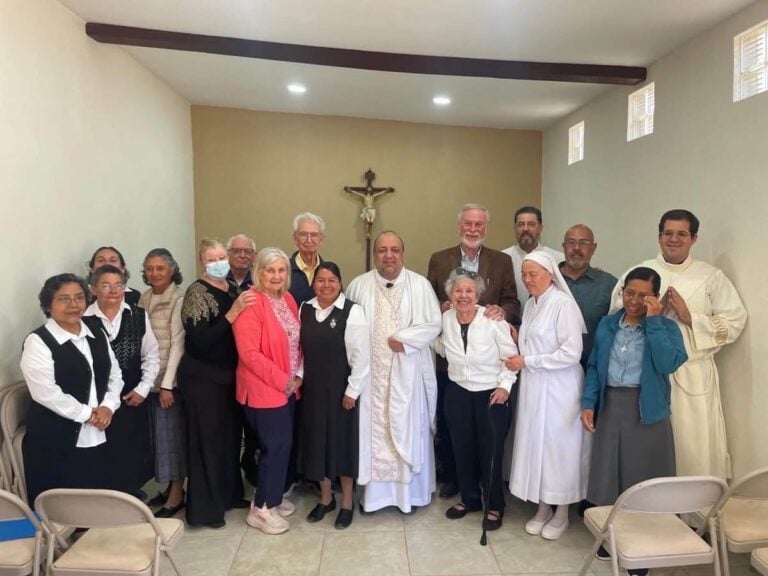
Centering prayer can also be practiced in community. Phil participates in a centering prayer group at Mary, Seat of Wisdom Catholic Church.
He compares praying together in silence to making a silent retreat.
“You really get to know people in the silence,” Phil says. “We meet in the chapel and begin with a vestibule prayer. The idea is to empty the thoughts and emotions bothering you.”
Following God’s Path
Phil believes his relationship with God through centering prayer has been one of the greatest blessings of his life.
“I really believe we are not the best judge of what is best for us,” he shares. “Listening to God is the best way to find the best road for us.”
Extended Video Interview
This transcript has been prepared for clarity, accessibility, searchability and readability, though minor variations from the original video may occur.
Centering prayer twice a day
Interviewer: How would you say prayer is a part of your day?
Phil: I pray through centering prayer twice a day, and without it, I don’t think I’d have a stable life. I think my life would be the way it was maybe 30 years ago, before I started this. It’s been very helpful, and I’m glad for the way it’s changed. So I pray through centering prayer twice a day for 20 minutes. I also do other types of prayer. I do intercessory prayer sometimes in the morning, and church on Sundays, and receive the Eucharist as much as I can.
“God’s first language is silence”
Phil: Because this concept of centering prayer is new to a lot of people and strange to a lot of people: St. John of the Cross said that God’s first language is silence, and my favorite teacher, Thomas Keating, adds to that: everything else is just a bad translation. I found that to be an important message in my life. Prayer and silence is one of the essential elements of the Passionist way.
To me, this type of silent prayer changed my life. I feel as if when I can get myself out of the way—my thoughts, even good thoughts—then God comes in, and I can somehow understand more of who I’m supposed to be, which is what God wants, which is, I think, the most fulfilled life that God could imagine for me. Only I think we’re not very good—I’m not very good—at recognizing what is good for me.
What is centering prayer?
Interviewer: So centering prayer is essentially bringing yourself to God and being silent? Explain a little bit about how to use centering prayer.
Phil: Yes. There’s a formal prayer called centering prayer, created by the Trappist monk Thomas Keating, along with Basil Pennington and William Meninger. These monks used The Cloud of Unknowing, an old text written in Old English, I believe, by a monk, though they’re not sure. They used this text to create a method for people who are not in monasteries to open the door to contemplation. It’s a silent prayer, meaning that nothing is spoken out loud, and even more than that, it’s silent in that internally we try to silence our thoughts.
How to do it: a sacred word and 20 minutes
Phil: There are four simple steps to centering prayer, and like a lot of important, really profound things, it’s simple in itself. Maybe I shouldn’t condense the four steps into two, but in a nutshell, you could say all centering prayer is, first, choosing a word—what we call a sacred word—to represent that you’re in God’s presence, to remind yourself that you’re accepting God and opening yourself to God’s presence within. So you pick a sacred word, and then you simply sit in a quiet place for 20 minutes, and whenever you realize you’re engaged with a thought, you gently return to that word. And that’s really it. If you want to look it up on the Contemplative Outreach website or something, you can find a lot more about it, and they explain all the kinds of thoughts.
Interviewer: I like the idea of bringing yourself back, because I know that’s always the problem I have with just trying to be silent with God: my brain is always going. So I like that idea of centering yourself back using the word. That’s really great. How long have you been practicing it?
Phil: I think it’s about 26 years now.
How he started: centering prayer or golf
Interviewer: What inspired you to start using centering prayer in your life?
Phil: About 26 years ago, I was leaving a very stressful career, and I wound up having a lot more time on my hands, so I thought I would look at different types of religions. I tried to learn Buddhist meditation, and frankly, it was just complicated for me, mainly because I wasn’t familiar with the terms: dharma and karma and everything. Somebody at Immaculate Conception Parish here, Penny Jaworski, had a ministry fair and invited people to this Christian form of meditation called centering prayer. I tried it. I was looking for something to do with my time, and I thought, “I’m either going to look into this or I’m going to take up golf.” I still can’t golf, but this has been terrific for me.
Ancient roots: Matthew 6:6 and the monks who revived it
Phil: People seem to think that there’s a very limited number of ways to be a Catholic, or to find God for that matter, but I think there’s in fact an unlimited way to do both. Centering prayer, in a way, is a very ancient prayer. They base it on Matthew 6:6, where Jesus says to go into your inner room, close the door, and pray in secret, and God, who sees in secret, will be there. It also has a similar effect to living in a monastery, or at least it’s similar to what living in a monastery winds up giving you, and that’s why it was created by these monks.
The monks who created centering prayer were apparently somewhere in New England—I think it was either Rhode Island or Boston—and they were down the road from a Buddhist monastery. In the ’60s, all the young hippies were going there to learn meditation and would occasionally knock at their door and ask, “Is this the place?” So the Catholic monks thought that they have what the Buddhists also have, and that some young people might be interested in learning the experience in a Christian way, which is really very similar. Once you pray in secret, whether you’re with a Buddhist or a Hindu or a Sufi, they all seem to get to the same place spiritually. They speak in similar ways. But these Catholic monks thought that we had lost that ability to pray that way. It used to be very common to pray in silence and to try to keep your mind empty so that God could find you.
Choosing your sacred word
Interviewer: How do you select your word? Do you use the same word all the time, or what inspires you in centering prayer?
Phil: The meaning of the sacred word is not as important as the intention. We typically tell people to just pick a word and stick with it, unless for some very unusual reason it creates some emotional feelings for you. The intention is supposed to be to consent to God’s presence and action within. Many people will say, “I had a stressful day, so I’m going to use ‘peace’ today,” or, “I had a boring day, so I’m going to use ‘action,’” or whatever. Even picking a word like that is overlaying your intention or your belief about what you think you need over what God may think you need. So we tell people to just pick a word. It’s supposed to be one or two syllables, maybe something like “Shalom” or “Jesus” or “peace.” And once you have the word, don’t worry about it, especially during your 20 minutes of sitting, because thinking about the word is being engaged in a thought itself.
Making friends with your thoughts
Phil: Centering prayer is different from prayers that use a mantra, and it’s a subtle difference. A mantra is something you would say whenever you realize you’re not saying it, so you try to constantly use the mantra to keep other thoughts out of your mind. In centering prayer, we recognize that thoughts are inevitable, and they’re really a part of the prayer. They’re part of your life. You’re going to have thoughts until you’re brain-dead, until you’re dead. So becoming friends with your thoughts is important, just so long as you don’t get wrapped up in them.
Watching your life like a bad movie
Phil: Related to thoughts, here’s an interesting thing I think we all see: if we had a friend who spoke to us the way our brain does all the time, we wouldn’t want to be around them much. We’d tell them to shut up. But these things happen in our minds. When you use centering prayer enough, you get to the point where you watch your life as if it’s just a bad movie, where you’re not engaged with the characters, even yourself, or the plot, and you can get up and walk away from it if you want.
When that happens, I think I can be more objective about what’s happening, and not play the recordings that are built into my mind about what this person must be thinking about me, or “Here we go again,” or something that may have triggered me that may go back to my childhood. I can let go of those things. And when you let go, you might say, “Well, then what do you have?” We’re so used to having these thoughts and motivations, and thinking of the next thing we’re going to say or do. But I really do believe that we’re not the best judge of what’s best for us, and listening to God is a way to find out what the best road for us is.
Mother Teresa: “God just listens to me”
Phil: And you might ask, “What does God say? How do you listen to God?” Mother Teresa, I think, said that when she prayed, she just sat and listened to God. She was asked, “What does God say?” and she said, “Nothing. God just listens to me. And if you don’t understand that, you’re never going to get it.”
Accepting yourself and others
Phil: One thing that happens in centering prayer is that you come to accept yourself as you are. You feel that when you’re doing literally nothing, you’re still okay. Occasionally, this door opens to what we call contemplation, which is sort of an unmediated experience of God, where you just feel something. When you feel that you’re okay with God just as you are, doing nothing, with all your flaws and with all the good things and bad things you’ve done, and that you’re still loved, you develop confidence. You get over a lot of your feelings of inadequacy or insecurity.
But the next thing that happens is you feel that if God’s okay with you, then you should be okay with everybody else. I feel that if I’m okay with my flaws, then I can, and I want to, accept other people with their flaws. So it’s a big step in connecting with other people and accepting yourself.
Prayer as relationship: acquaintance, friendship, intimacy
Phil: One thing in the spiritual journey is learning how deep messages are meant to be understood: messages like “God lives in me,” messages like “God is in the trees and the Earth.” They have to be understood, I’d say, in a contemplative way. When I say God is in me, I’m not saying I am God. I’m not saying I worship a tree, other than that I worship it as part of God’s overall creation, or maybe even part of the living God. I just feel like I’m in a deeper part of a relationship with God.
Prayer is relationship. There are many forms of prayer I use and like. The ones where I’m reading, especially if it’s a rote prayer, now feel more like an acquaintanceship with God. I’m just saying something, like I’d say hello to the mailman. Then an interactive prayer may be a friendship with God. But the relationship that comes about through contemplative prayer, of which centering prayer is the gateway, is a relationship with God that’s an intimacy. It’s just like an old couple, or even a new couple that’s really well connected, who can sit together watching a sunset in silence and feel very, very connected with each other. They don’t need a word, and they may feel much closer than if they were just rattling on and on. Or a look in the eyes of a person you love. These real, deep connections usually don’t come from words themselves. Words may help us get there, and words may be the only way we can try to explain things—probably not the only way—but words are limited, and silence seems to be unlimited.
Growing up Catholic and finding prayer at 40
Interviewer: Were you always engaged in prayer, Phil? You said you grew up Catholic. Was prayer a part of your life as a kid, or was it something you came to as an adult?
Phil: I came to prayer this way as an adult, but I had a pretty typical Catholic boy’s upbringing. I went to a Catholic grammar school, and I loved it. I’m very thankful now, especially in retrospect. We would go to Mass, the nuns would teach us, and we would pray every day. I would pray my nighttime prayers every day. In college, I kind of drifted away from it and didn’t go to church much at all, and my prayers were almost always the “give me your help” kind of prayers. Then I got married and got involved with the church again when the children were small. It was something I wanted to expose the children to, and we were finding deeper meaning in Mass at Immaculate Conception.
I got into my prayer life seriously after a long career of 60-hour work weeks and stress. I was a real Type Eight personality, which is helpful in many of the ways the world wants you to be successful, but I think everybody will tell you I’m easier to live with now. I feel more content, more happy, and ironically, I think I’m more successful since I started letting go. To your question about whether I always prayed like that: I had a pretty conventional life until I was about 40, and then I learned centering prayer.
Interviewer: Great. I think the aging process does something too. As you get older, you start to have a little more wisdom about how the world works, and I think that helps a lot.
Praying with his wife, groups, and silent retreats
Interviewer: How and when does your family pray together, Phil? Is this something you share with your family?
Phil: Yes. It’s interesting, because as a silent prayer, you sometimes think, “Why would it be a benefit to be with anybody?” But my wife does centering prayer, and we try to do it every morning together. It’s part of our routine. I also belong to a prayer group at Mary Seat of Wisdom here locally that’s been going for over 20 years. It originally started at a local Episcopal church.
Praying with a group has an energy that’s really hard to explain, because you’re just sitting in silence. For instance, when you go on a silent retreat—I’ve been on silent retreats as long as 16 days—you might sit in silence for five hours a day, and on some of these you really don’t talk the whole day. You may go days without saying a word, but boy, you get to know these people so well in the silence. There’s such a connection.
So, to answer your question, my family that lives here right now is just my wife and me, and we pray together. We try to pray twice a day, and usually the second time is on our own, just because you’re busier after you wake up and are going places. I’ve introduced my children to centering prayer, and they’ve all practiced, and I think two of the four practice silent meditation now. But we didn’t sit together as a family; that would have been a good idea. Very young children usually can’t handle 20 minutes, but there are ways to introduce them to it at an early age. Some people say one minute for every year they are, so a seven-year-old could maybe sit for seven minutes.
But I also go to church. I don’t want to imply that once you do this prayer, it’s the only prayer. It’s good to have multiple things in your arsenal, I find, because life tends to throw a lot of things at us.
Centering prayer in the workplace
Interviewer: Say you had your dream moment and could introduce this into the workplace. How would you do it? Do you think it would work?
Phil: If I had my dream moment, I would teach groups of people at work with what we call an introductory session to centering prayer. It’s about a four- to six-hour event, and it’s encouraged to have follow-ups: gatherings where people practice praying and then maybe have a half hour of questions and answers, for at least six weeks, because it really takes that long for anybody to know how to do it. As Americans, we want to learn something quickly and say, “Okay, we’ve got that taken care of. I’m done.” It’s hard even to learn how to do it well. I described the very simple steps to you, but as soon as you try it, you’ll ask, “What happened? I had a million thoughts in my head, and I couldn’t get them to shut off.” Or you might say, “Wow, I had five minutes of bliss there,” and then the next day you don’t get it, and you give up. There’s a myriad of very common initial reactions, and people don’t clearly understand those few simple steps. It takes a few sessions to go over them.
But if you did that, then you could have an optional weekly time for the group it’s presented to, even in a workplace, to get together, maybe over a lunch hour, and pray. Occasionally—I don’t close the door—I’ll just turn my desk around at work. There’s another prayer that’s taught along with centering prayer, called the welcoming prayer. Once you get used to practicing it, you can use it at a stoplight or when somebody cuts you off in traffic.
My ideal way to do this would be to teach it to the group the right way and encourage people to try it for several weeks. We’re not supposed to encourage people to expect any benefits, but frankly, within a month, virtually everybody I’ve seen try it has had significant change. Ironically, it’s usually the people around them who notice it first. My wife would occasionally say to me, “Have you been centering lately?” which was a very tactful way of saying I was getting ornery. And she was right. Usually when I got that way, I had missed a few days of centering, and so I’d try it again, and it’s very helpful.
Making group prayer comfortable
Interviewer: What are some of the things you do, Phil, to make praying comfortable for other people when they’re praying in a group? Maybe centering prayer has taught you how to help people feel comfortable with different kinds of prayer.
Phil: I think the best way is always a circle, people sitting in a circle. We’ll create a quiet place. Often a candle is helpful. It should be a place where you won’t hear distractions, particularly words. Buzzing or airplanes or erratic noise usually isn’t nearly as bad; if you get attached to it, you just go to that sacred word again. But it’s hard if people are speaking, because your mind just seems to naturally latch on to what the words mean. So a candle and a quiet place. We usually suggest that you sit in a very comfortable way with your feet flat on the floor, because if your legs are crossed, after a while the blood will stop, and you’ll want to be shuffling around. Even feeling body sensations are what we call thoughts that you could get engaged in, so it’s good to eliminate all that. But I think you could do it almost anywhere. I’ve done it on trains and in doctor’s offices, just so long as you don’t hear spoken words.
Interviewer: I think sometimes when people are praying together in a group, the focus is on the prayer instead of making it comfortable enough for people to pray. It’s easy to forget that part, because you just want to dig into the meat: let’s get praying.
Inside a weekly prayer group: vestibule prayer and lectio divina
Phil: That’s a good point. We meet in this little chapel that used to be the chapel for the convent over at Mary Seat of Wisdom. We all come in and start with what we call a vestibule prayer. It’s a very short prayer, 30 seconds or less, that we all say. Think of stepping into a vestibule before you go into a church or somebody’s house. The idea is to empty your thoughts and emotions of the things that were bothering you that day, so that you can just be quiet and be in God’s presence, which really does feel like being in other people’s presence, the presence of God that seems to be within every one of them. So a quiet place, a comfortable place, and a vestibule prayer seem to be the way we start, and we all get comfortable.
Even in my daily prayer, at least when I pray with my wife, we’ll do some sort of vestibule prayer or a body movement. You may pull in the energy and put it in your heart. There are a lot of ways to do it, but it can be helpful to take a moment to realize you’re in a sacred space. Technically, I left this out, but it’s one of the four steps of centering prayer: take two minutes at the end of your prayer to slowly come out of it before you face the world. That’s really critical, for a couple of reasons. That’s very important too.
When we meet at Mary Seat of Wisdom for our weekly prayer group—and there are 40 prayer groups just in Chicago, for instance, and they’re all over the country and all over the world—we’re usually there for an hour and a half. After we’re in this peaceful space, you feel like your mind, and more importantly your heart, is very open, and that’s a time when we might reflect on a reading. We might watch a short inspirational video and then speak about it. We may do lectio divina by reading the Gospel for the upcoming week and then speaking about one word that spoke to us, a thought that came to our mind, and a prayer that came from our heart. That would be a whole centering prayer meeting; that’s pretty typical.
Why parishes need places of peace
Interviewer: It makes me think a lot about my parish whenever I’m doing these interviews with the Passionist people. I think this is maybe something parishes should try to do more often. We try to do Bible studies, and those are all good, but I think a lot of what people need right now is that place of peace and that connection with other people, which has kind of been messed up recently. But that’s okay.
Phil: It’ll be all right. That’s a good point. We try not to speak about politics; politics is the main thing. We all have our own private beliefs, and frankly, it seems like when you pray this way, everybody seems to have a very similar political view. But everyone needs this prayer, and everyone needs to hear everyone else’s view, in reality. The connection with people is important. It’s very tempting to get into the motivation of “Let’s act on our beliefs,” and there is a good place for that. I know there’s a similar type of prayer called Christian Meditation, by the World Community for Christian Meditation, and they believe action is an important part of it.
But getting back to your comment, I think every parish could benefit. There are commissioned presenters who teach centering prayer the proper way, who went through real, clear training, all over the country and all over the world. I think everyone should be exposed to it. It’s not necessarily a prayer for everyone, and an awful lot of people get exposed to it at one time and then come back to it years later.
Everyday contemplation: stars and clouds
Phil: But at least you have a chance to feel the silence, and the silence leads to solitude, to a quiet way of living, and to more of this connection with God that is sometimes called contemplation or mysticism. One of the teachers, Father Meninger, said that you can get into this state in many ways: when you just stand outside, look at the stars, and say “Wow,” or when you’re a kid and you lie on the grass and look at the clouds overhead. We’ve all had this contemplative experience, and it’s virtually always when there are no words. It feels like an unmediated experience with God, a connection.
It’s funny for me to speak this way, because before I started this, I thought it was all woo-woo when people talked about a relationship with God or Jesus. Now I really do feel a connection. I think of God as something both much bigger and more intimate at the same time than I used to. So it is different.
Advice for beginners
Interviewer: What prayer practice do you recommend for somebody who is new to prayer? Do you think centering prayer would be helpful to somebody who’s new, or is there a better place to start?
Phil: I think very few people, once they’re over a few years old, are completely new to prayer, and so I think centering prayer is something you should be exposed to when you’re very young. I think the prayers we learn in church are wonderful: the Our Father, the Hail Mary, bedtime prayers, and certainly intercessory prayers. Learning to ask God, or to put our needs in front of God, is helpful in many ways, if nothing else to remind us how dependent we are. But I think everyone should learn a prayer like centering prayer: a silent prayer, a meditative type of prayer. When I say meditation, I don’t mean guided meditation. I mean emptying your mind of thoughts. And if you’re going to learn a method and you’re Christian, I believe centering prayer is the way you should learn it. It’s simple; it’s only a few steps. But you do have to try it for a little while and, hopefully, have the support of a group for it to sink in. It’s certainly been worth it in my life.


 English
 Español