

This article continues Carl Middleton’s reflection on seafood and ecological justice. Read Part I: Seafood and the Numb Conscience to explore the connections between our food choices, faith and the suffering we may overlook.
An awakened conscience must lead beyond concern for oceans to concern for the people who harvest, farm, process, and distribute seafood. Illegal and inhumane working conditions harm workers and their families while undermining responsible fisheries and supply chains.
NOAA Fisheries recognizes the need for legal, safe, and healthy working conditions throughout the seafood sector. Protecting marine ecosystems and respecting human dignity are inseparable responsibilities.
The People Behind Our Seafood
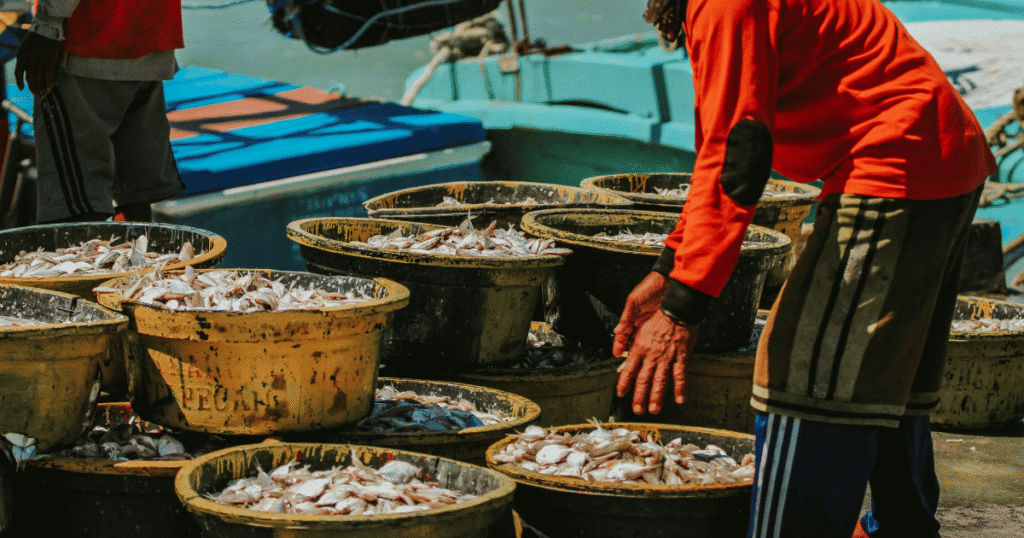
In its 2014 report, the International Labor Organization estimates there are currently more than 20 million individuals being subjected to human trafficking and that forced labor generates $150 billion in illegal profits each year. [International Labour Organization. “Profits and Poverty: The Economics of Forced Labour.” May 20, 2014.]
High demand for cheap seafood and poor regulation of fishing activities in domestic and international waters have produced ripe conditions for exploitation of workers.
According to the Food and Agriculture Organization of the United Nations, 31.4 percent of assessed marine fish stocks were overfished in 2013, while 58.1 percent were fully fished. [Food and Agriculture Organization of the United Nations. The State of World Fisheries and Aquaculture 2016. Rome: FAO, 2016.]
What Fair Treatment Looks Like
Fair labor practices mean
- Fair pay and clear employment terms
- Reasonable working hours and adequate rest
- Safe conditions, protective equipment and training
- Ways to report abuse without retaliation
- Equal access to opportunities and advancement
Justice Beyond the Workplace
Justice also reaches beyond the workplace. Coastal communities should not bear the environmental costs of supplying distant consumers while losing access to their own food and livelihoods.
Buyers and retailers should make respect for workers part of responsible sourcing alongside environmental stewardship. For consumers, the task is to translate concern into informed choices without assuming that a low price, a familiar brand, or a reassuring label tells the complete story.
Ultimately, resolving these systemic issues demands more than technical policy changes; it requires an eco-spiritual transformation. We must move away from a rule-based approach to resource management and embrace a deeply value-based ethic that honors the interconnectedness of all creation.
Recognizing ourselves as companions supporting one another on a shared journey requires us to build a food system rooted in equity, solidarity, and respect for planetary boundaries.
Only by choosing to look directly at the suffering embedded in our supply chains can we overcome structural apathy and cultivate a world where our oceans, lands, and communities can truly flourish together.
Five Ways to Choose Seafood with Care
Ask where it came from
Begin with traceability
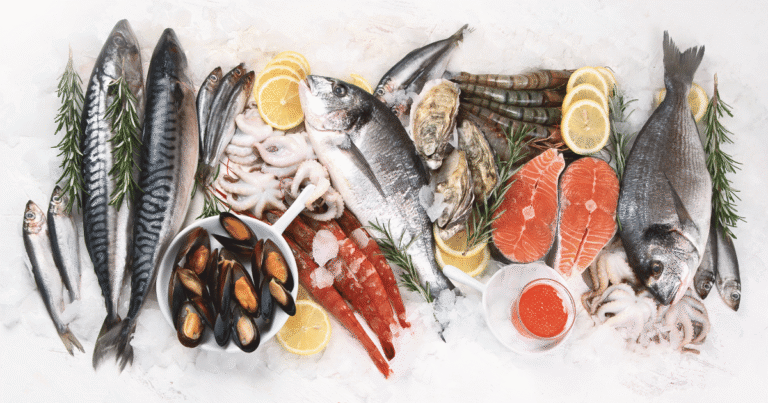
Ask what species you are buying, where it came from, and how it was caught or farmed. Those details make responsible shopping more meaningful than a blanket preference for wild or farmed fish. Consult the Oceanic Society’s seafood guide and the University of Washington’s shopping guidance when assessing the information available at the counter.
When trying to avoid poorly managed, highly polluting, or exploitative factory-farmed fish (such as certain imported tilapia or shrimp), you should focus on these actionable steps:
Check the Country of Origin
Favor the Americas and Domestic Sources: Tilapia and other farmed fish raised in the U.S., Canada, Ecuador, Costa Rica, and Peru generally operate under much stricter environmental and labor regulations. Closed-tank systems in these regions minimize water pollution and prevent species from escaping into wild ecosystems.
Avoid Regions with High Red-Ratings: Independent guides recommend entirely avoiding tilapia and farmed seafood from countries with weak regulatory oversight, such as China, where crowded farming conditions frequently rely on banned chemicals, heavy antibiotics, and carbon monoxide treatments.
Understand what labels tell you
Look for the Aquaculture Stewardship Council (ASC) or Best Aquaculture Practices (BAP) labels on farmed seafood and the Marine Stewardship Council (MSC) label on wild-caught seafood.
No label is flawless, and environmental assurances should not replace questions about workers’ treatment. Treat certification as a starting point for inquiry, not permission to stop thinking. The Oceanic Society guide offers an introduction to these purchasing tools.
- ASC (Aquaculture Stewardship Council): The gold standard for responsibly farm-raised seafood.
- BAP (Best Aquaculture Practices): Assures the facility meets standards for environmental responsibility and food safety.
- MSC (Marine Stewardship Council): The primary indicator for ethically and sustainably wild-caught seafood.
Check a seafood guide
Because supply chains shift rapidly, memorizing every species is difficult. Instead, leverage mobile-friendly consumer watchdogs directly at the grocery counter:
- Monterey Bay Aquarium’s Seafood Watch: Use their color-coded system. Stick strictly to Green (“Best Choice”) o Yellow (“Good Alternative”), and completely bypass Red (“Avoid”).
Ask about store sourcing practices
Some grocery chains maintain rigorous corporate sourcing policies that take the guesswork out of your hands.
For instance, retailers like Whole Foods Market enforce strict, audited standards that ban hormones, added preservatives, and antibiotics in their farm-raised seafood.
Consider other seafood options
Market pressure on just a few species—namely shrimp, salmon, tuna, and tilapia—incentivizes high-density factory farming and exploitative labor. By consciously opting for underappreciated alternatives (like farmed mussels, clams, or Arctic char), you relieve pressure on overtaxed ecosystems.
Bringing care to the dinner table
What began for my family as a question about fish has become an invitation to examine how we live with one another and with the Earth. Choosing seafood responsibly is not simply a matter of finding the right label; it is a practice of remembering the workers, coastal families, and living waters behind each meal.
Our purchases alone cannot resolve systemic injustice, but neither must we allow the scale of the problem to excuse indifference.
By asking informed questions, seeking transparency, and joining care for ecosystems with respect for human dignity, we can turn an awakened conscience into everyday solidarity.
The challenge is to bring that care to the table—and to refuse to leave it there.
Read Part I: Seafood and the Numb Conscience to explore the connections between our food choices, faith and the suffering we may overlook.


 English
 Español