


Como director de la Red de Solidaridad Pasionista (PSN, por sus siglas en inglés), Michael Nasello —originario de Toronto, Ontario, Canadá— articula la labor de las dos provincias con sede en los Estados Unidos: la Provincia Santa Cruz y la Provincia de San Pablo de la Cruz. Su servicio como copresidente de la Comisión Pasionista sobre Migración ha profundizado su conciencia respecto a las necesidades de personas provenientes de culturas muy diversas, al igual que su participación en los comités Laudato Si’ y de Diversidad Cultural y Racial de la Provincia Santa Cruz.
«Soy un hombre blanco y privilegiado. Cuento con una educación universitaria. He llegado a comprender lo importante que resulta reconocer esto: que mi identidad cultural me llama a hacer algo con aquello que he recibido», explica Michael.
A modo de ejemplo, en su propia cultura, la actitud ante el sufrimiento suele ser la de «evitación»; sin embargo, a través de los ojos de la fe, Michael considera que esta postura puede ser atemperada mediante la comprensión de la Cruz.
«La crucifixión trata sobre las causas intencionales del sufrimiento. Para aquellos que experimentan el sufrimiento natural inherente a la vida, centrarse en la Cruz puede brindar cierto consuelo. La Cruz me muestra que hay una luz al final del túnel», dice Michael. «El sufrimiento antinatural o impuesto de la crucifixión nos confronta con la injusticia y nos obliga a mirarla directamente a los ojos. Nos infunde el valor para dar un paso al frente».
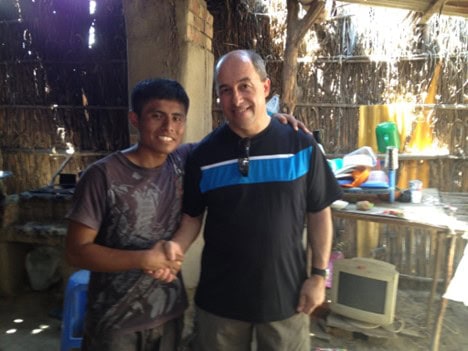
«Miro el mundo y pienso: “¿Podré abrazar el sufrimiento que veo con el mismo compromiso con el que me entrego a mi propia familia?”», comparte Michael
«Me viene a la mente el desafío de Jesús cuando pregunta: “¿Quiénes son mi madre y mis hermanos?”. El mensaje pasionista nos impulsa a reconocer nuestros vínculos. Formamos parte de un mundo universal. Existe una tensión que nos llama a mirar a las personas que tenemos a nuestro lado y verlas como seres humanos semejantes, a brindarles la calidez y la apertura propias de una familia. Me doy cuenta de lo difícil que resulta ampliar mi concepto de familia para incluir a personas que no conozco».
La familia es importante en la vida de Michael, y el carisma pasionista desafía a la cultura a considerar a la familia como algo más que simples parientes consanguíneos. Un ejemplo de ello es que el cuidado de los ancianos exige mucha destreza y discernimiento, ya sea dentro del círculo familiar más cercano o más allá de él.
La cultura del siglo XXI en Norteamérica se pregunta: “¿Dónde se puede obtener la mejor atención para la persona que está envejeciendo?”», comenta Michael.
«La espiritualidad pasionista de la presencia constituye un verdadero llamado a escuchar las historias de los demás y a acompañarlos en un trayecto difícil durante esta etapa de sus vidas.»
Michael Nasello
«Me conmueve el esmero con el que los pasionistas cuidan a sus miembros profesos, procurando preservar su dignidad. Esta es una problemática local habitual. Luego están las cuestiones globales, que parecen abrumadoras. Si consideramos que hay 123 millones de personas desplazadas en todo el mundo, la única esperanza para estas personas —que a menudo se encuentran en situaciones desesperadas— reside en que seamos capaces de verlas como a nuestros propios hermanos y hermanas. Debemos tener la suficiente sensibilidad como para prestarles atención».

A Michael también le alientan los jóvenes adultos que conoce, quienes están trascendiendo la norma del individualismo.
«La mayoría de los estudiantes se sienten cautivados por el llamado a marcar la diferencia. Se lanzan a la acción y organizan una colecta de alimentos, o realizan un viaje para distribuir ropa de invierno», comparte. «Es sumamente importante que les brindemos esa experiencia. Incluso en nuestras escuelas públicas, han comenzado a adoptar el servicio comunitario y a involucrarse con los demás. Es una buena señal. Los jóvenes profesionales también poseen un mayor sentido del deber de entregarse a los demás. El carisma pasionista llama a las personas a conmoverse, a solidarizarse y a actuar».
El carisma pasionista constituye un pilar fundamental en la vida de Michael y, sin duda, existen ámbitos en los que desafía las normas culturales.
«El carisma pasionista nos desafía a trascender esas visiones limitantes con las que nos percibimos mutuamente».
Michael Nasello
«Debemos mantener los ojos abiertos», explica. «La Cruz debería conmovernos. Al contemplar la Cruz, yo debería transformarme. El mensaje vivificante es: “Puedo hacerlo mejor. Podemos hacerlo mejor”».
This transcript has been prepared for clarity, accessibility, searchability and readability, though minor variations from the original video may occur.
Suffering and the Meaning of the Cross
In my cultural context, suffering is often seen as something inevitable, a part of life that people try to avoid whenever possible.
There is also a distinction between two kinds of suffering. The first is natural suffering, illness, aging and the ordinary hardships of life. The second is suffering caused by others, whether through injustice, abuse or oppression.
The Passionist focus on the cross speaks powerfully to both. For natural suffering, it offers comfort and hope, reminding us that suffering is not the end and that there is meaning beyond it.
For suffering caused by others, the cross becomes a call to action. It invites people not only to endure suffering, but to confront it, to stand with those who are oppressed and to resist injustice.
In this way, the cross is both consolation and courage, sustaining people in their pain and empowering them to act.
Family, Belonging and Expanding Relationships
Family plays a central role, especially within Italian cultural roots, where gathering, food and shared life are essential expressions of belonging.
However, the Gospel and the Passionist charism challenge this understanding by expanding the idea of family. The question becomes not only who belongs to my family, but whether I can extend the same care and commitment to those beyond it, especially those who suffer.
This can be difficult. It requires moving beyond comfort and familiarity, and being willing to encounter people who may be different, inconvenient or even challenging.
A powerful example of this is the experience of accompanying a homeless man. Through simple moments of presence, conversation and shared coffee, a relationship was formed. Yet the loss of that relationship became a lasting lesson in the importance of availability, presence and recognizing the dignity of the other.
Community, Individualism and Identity
Identity is shaped by both individual achievement and community belonging.
There is a strong cultural emphasis on personal success, stability and building a secure life. At the same time, faith communities continue to foster a sense of responsibility toward others, especially through service and outreach.
Young people, in particular, are often drawn to opportunities that allow them to make a difference. Service becomes a key way in which identity is formed and expressed.
The Passionist call to solidarity deepens this by asking whether we are truly moved by the suffering of others. It challenges people not to remain passive observers, but to recognize and accompany those who are living the “way of the cross” today.
Authority, Listening and Leadership
Authority in this cultural context has traditionally leaned toward structure, rules and obedience. However, there has been a shift toward a deeper understanding of authority as listening.
Obedience is not simply about following rules, but about listening deeply to others, especially to their experiences of suffering.
The Passionist charism reinforces this by calling leaders to walk with people, to understand their stories and to respond with compassion rather than judgment.
True leadership emerges not from enforcing rules, but from accompanying others on their journey toward healing and growth.
Aging, Care and Presence
In modern North American culture, care for the elderly is often professionalized. Families frequently rely on external systems rather than restructuring their lives to care for aging members directly.
This reflects both practical realities and cultural priorities, but it can also lead to a lack of personal presence.
The Passionist spirituality of presence offers a countercultural response. It calls for attentiveness, listening and accompaniment, even when it is difficult or repetitive.
Being present with the elderly, honoring their stories and recognizing their dignity becomes an essential expression of faith.
Love as Action and Formation
Love is expressed through both affection and commitment. It is seen in relationships, in patience and in the willingness to work through difficulties together.
In families, love involves forming others, especially children, helping them grow into mature and responsible individuals.
The Passionist perspective deepens this by emphasizing self-giving love. Love is not only about feeling, but about responsibility, sacrifice and openness to others.
It calls people to recognize that life is not centered on the self, but on serving a wider human community.
Faith in a Changing Culture
Religion, while still present, is becoming less central in everyday life for many people. Cultural and ethical questions, such as end-of-life decisions, reveal the growing gap between faith teachings and lived experience.
The challenge is not only to uphold beliefs, but to accompany people in complex situations. The Passionist charism emphasizes walking with others, even when they make difficult or different choices. It calls for presence, compassion and respect, rather than judgment.
Death, Hope and the Present Moment
Beliefs about life after death are increasingly uncertain. Many people express skepticism or ambiguity about what happens beyond this life.
Christian faith offers hope in eternal life with God, but the Passionist perspective adds another dimension. It emphasizes that the Kingdom of God is not only future, but already present.
The cross and resurrection call people to participate in building that reality now, through acts of love, justice and accompaniment.
Challenging Cultural Norms
One significant cultural challenge is the tendency to exclude or resist those who are different.
Despite progress, there remains a struggle to fully accept people across differences of culture, identity and experience.
The Passionist charism confronts this by calling people to deeper awareness and transformation. The cross becomes a moment of awakening, inviting individuals to examine their attitudes and grow in compassion.
This challenge is life giving because it opens the possibility for reconciliation, growth and a more inclusive community.
A Concrete Expression of the Charism
One concrete example of living the Passionist charism today is the growing collaboration between religious communities and lay people.
There is an increasing movement toward shared responsibility, where lay individuals actively participate in carrying forward the mission and spirituality.
This reflects a broader shift in the Church, moving from institutional structures toward more relational and mission-driven communities.
A Living and Evolving Charism
Perhaps the most surprising aspect of the Passionist charism is how differently it takes root across cultures.
In some places, it remains primarily devotional, while in others it expands into active engagement with social realities.
These differences reveal both the richness and the ongoing challenge of the charism. It continues to evolve, calling people to deeper faith, greater responsibility and more authentic solidarity with the suffering.


 English
 Español