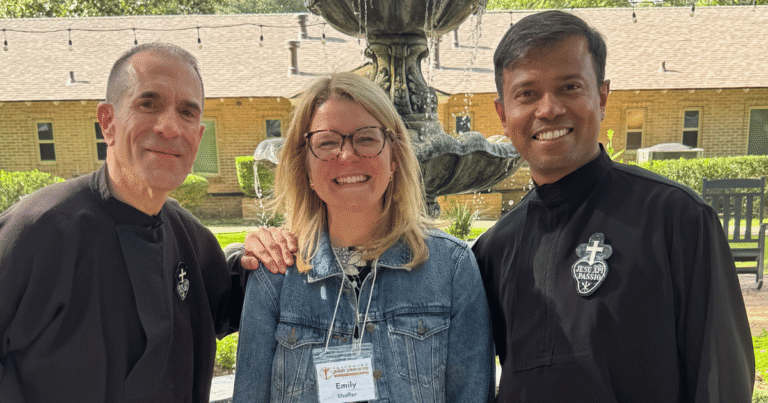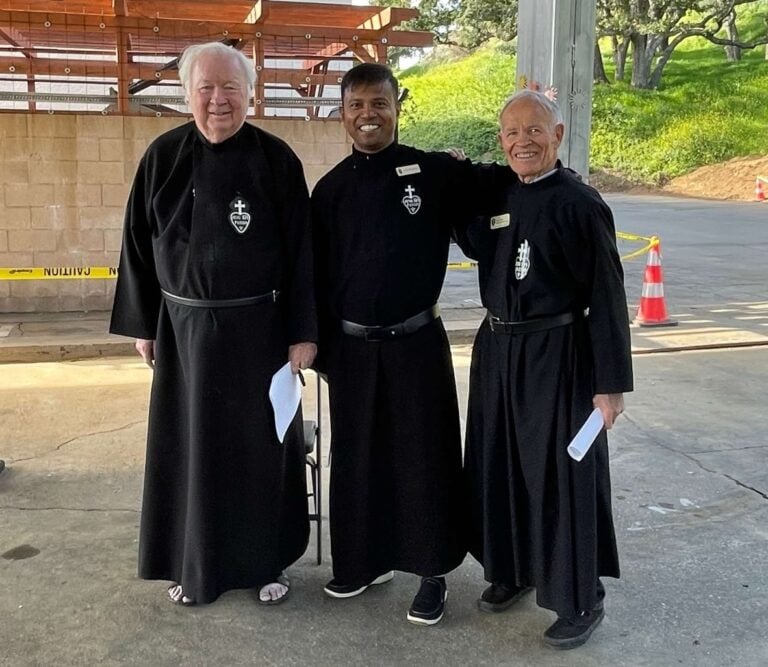
As the Director of the Passionist Solidarity Network (PSN), Michael Nasello, of Toronto, Ontario, Canada, brings together the work of the two provinces based in the United States – Holy Cross Province and St. Paul of the Cross Province. His service as co-chair of the Passionist Migration Commission has deepened his awareness of the needs of people from many different cultures, as well as his participation in Holy Cross Province’s Laudato Si’ and Cultural and Racial Diversity committees.
“I am a white, privileged male. I have a university education. I have come to understand how important it is to acknowledge this: that my cultural identity calls me to do something with what I have been given,” Michael explains.
As an example, in his own culture, the approach to suffering is commonly “avoidance,” but through eyes of faith, Michael believes this can be tempered with an understanding of the Cross.
“The crucifixion is about the intentional causes of suffering. For those experiencing the natural suffering that comes with life, focusing on the Cross can bring a kind of comfort. The Cross shows me there is a light at the end of the tunnel,” says Michael. “The unnatural or imposed suffering of crucifixion confronts us with injustice and makes us look it in the eye. It gives us the courage to step up.”
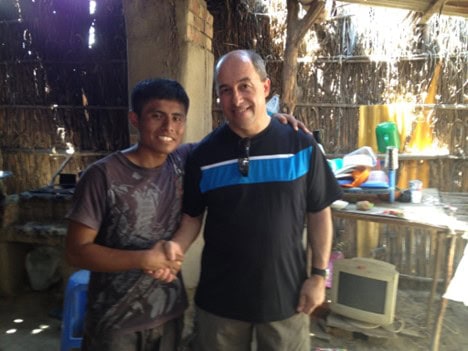
“I look at the world and think, ‘Can I embrace the suffering I see with the same commitment I bring to my own family?’” shares Michael.
“I am reminded of Jesus’ challenge when he asks, ‘Who are your mother and brothers and sisters?’ The Passionist message pushes us to see our connections. We are part of a universal world. There is a tension that calls us to look at the persons next to us and see them as fellow human beings, to accord them the warmth and openness of family. I realize how challenging it is to open my definition of family to include people I do not know.”
Family is an important part of Michael’s life, and the Passionist charism challenges the culture to consider family as more than just blood relatives. One example is that caring for the elderly requires a lot of navigation, whether it is within immediate family or beyond family.
“The culture of the 21st century in North America asks, ‘Where can you get the best care for the person who is aging?’” explains Michael.
“The Passionist spirituality of presence is a real call to listen to the stories of others and accompany them on a difficult journey at this stage in their lives.”
Michael Nasello
“I am moved by the Passionists’ care for the vowed members to maintain their dignity. This is a common local issue. Then there are the global issues that seem daunting. When you consider there are 123 million displaced persons around the world, the only hope for these people, who are often in desperate situations, is if we can see them as our own sisters and brothers. We have to care enough to pay attention.”

Michael is also encouraged by the young adults he meets who are moving beyond the norm of individualism.
“Most students are captivated by the call to make a difference. They will jump in and do a food drive, or they will make a trip to distribute winter clothing,” he shares. “It is so important that we give them that experience. Even in our public schools, they have also started to embrace community service and being engaged with others. That is a good sign. Young professionals also have more of a sense of duty to give to others. The Passionist charism calls people to be moved, to stand with and to act.”
The Passionist charism is a foundation in Michael’s life, and there are definitely places where it challenges cultural norms.
“The Passionist charism challenges us to move past those limiting ways of how we see each other.”
Michael Nasello
“We need to have our eyes open,” he explains. “The Cross should move us. I should look at the Cross and be changed. The life-giving message is, ‘I can do better. We can do better.’”
This transcript has been prepared for clarity, accessibility, searchability and readability, though minor variations from the original video may occur.
Suffering and the Meaning of the Cross
In my cultural context, suffering is often seen as something inevitable, a part of life that people try to avoid whenever possible.
There is also a distinction between two kinds of suffering. The first is natural suffering, illness, aging and the ordinary hardships of life. The second is suffering caused by others, whether through injustice, abuse or oppression.
The Passionist focus on the cross speaks powerfully to both. For natural suffering, it offers comfort and hope, reminding us that suffering is not the end and that there is meaning beyond it.
For suffering caused by others, the cross becomes a call to action. It invites people not only to endure suffering, but to confront it, to stand with those who are oppressed and to resist injustice.
In this way, the cross is both consolation and courage, sustaining people in their pain and empowering them to act.
Family, Belonging and Expanding Relationships
Family plays a central role, especially within Italian cultural roots, where gathering, food and shared life are essential expressions of belonging.
However, the Gospel and the Passionist charism challenge this understanding by expanding the idea of family. The question becomes not only who belongs to my family, but whether I can extend the same care and commitment to those beyond it, especially those who suffer.
This can be difficult. It requires moving beyond comfort and familiarity, and being willing to encounter people who may be different, inconvenient or even challenging.
A powerful example of this is the experience of accompanying a homeless man. Through simple moments of presence, conversation and shared coffee, a relationship was formed. Yet the loss of that relationship became a lasting lesson in the importance of availability, presence and recognizing the dignity of the other.
Community, Individualism and Identity
Identity is shaped by both individual achievement and community belonging.
There is a strong cultural emphasis on personal success, stability and building a secure life. At the same time, faith communities continue to foster a sense of responsibility toward others, especially through service and outreach.
Young people, in particular, are often drawn to opportunities that allow them to make a difference. Service becomes a key way in which identity is formed and expressed.
The Passionist call to solidarity deepens this by asking whether we are truly moved by the suffering of others. It challenges people not to remain passive observers, but to recognize and accompany those who are living the “way of the cross” today.
Authority, Listening and Leadership
Authority in this cultural context has traditionally leaned toward structure, rules and obedience. However, there has been a shift toward a deeper understanding of authority as listening.
Obedience is not simply about following rules, but about listening deeply to others, especially to their experiences of suffering.
The Passionist charism reinforces this by calling leaders to walk with people, to understand their stories and to respond with compassion rather than judgment.
True leadership emerges not from enforcing rules, but from accompanying others on their journey toward healing and growth.
Aging, Care and Presence
In modern North American culture, care for the elderly is often professionalized. Families frequently rely on external systems rather than restructuring their lives to care for aging members directly.
This reflects both practical realities and cultural priorities, but it can also lead to a lack of personal presence.
The Passionist spirituality of presence offers a countercultural response. It calls for attentiveness, listening and accompaniment, even when it is difficult or repetitive.
Being present with the elderly, honoring their stories and recognizing their dignity becomes an essential expression of faith.
Love as Action and Formation
Love is expressed through both affection and commitment. It is seen in relationships, in patience and in the willingness to work through difficulties together.
In families, love involves forming others, especially children, helping them grow into mature and responsible individuals.
The Passionist perspective deepens this by emphasizing self-giving love. Love is not only about feeling, but about responsibility, sacrifice and openness to others.
It calls people to recognize that life is not centered on the self, but on serving a wider human community.
Faith in a Changing Culture
Religion, while still present, is becoming less central in everyday life for many people. Cultural and ethical questions, such as end-of-life decisions, reveal the growing gap between faith teachings and lived experience.
The challenge is not only to uphold beliefs, but to accompany people in complex situations. The Passionist charism emphasizes walking with others, even when they make difficult or different choices. It calls for presence, compassion and respect, rather than judgment.
Death, Hope and the Present Moment
Beliefs about life after death are increasingly uncertain. Many people express skepticism or ambiguity about what happens beyond this life.
Christian faith offers hope in eternal life with God, but the Passionist perspective adds another dimension. It emphasizes that the Kingdom of God is not only future, but already present.
The cross and resurrection call people to participate in building that reality now, through acts of love, justice and accompaniment.
Challenging Cultural Norms
One significant cultural challenge is the tendency to exclude or resist those who are different.
Despite progress, there remains a struggle to fully accept people across differences of culture, identity and experience.
The Passionist charism confronts this by calling people to deeper awareness and transformation. The cross becomes a moment of awakening, inviting individuals to examine their attitudes and grow in compassion.
This challenge is life giving because it opens the possibility for reconciliation, growth and a more inclusive community.
A Concrete Expression of the Charism
One concrete example of living the Passionist charism today is the growing collaboration between religious communities and lay people.
There is an increasing movement toward shared responsibility, where lay individuals actively participate in carrying forward the mission and spirituality.
This reflects a broader shift in the Church, moving from institutional structures toward more relational and mission-driven communities.
A Living and Evolving Charism
Perhaps the most surprising aspect of the Passionist charism is how differently it takes root across cultures.
In some places, it remains primarily devotional, while in others it expands into active engagement with social realities.
These differences reveal both the richness and the ongoing challenge of the charism. It continues to evolve, calling people to deeper faith, greater responsibility and more authentic solidarity with the suffering.