
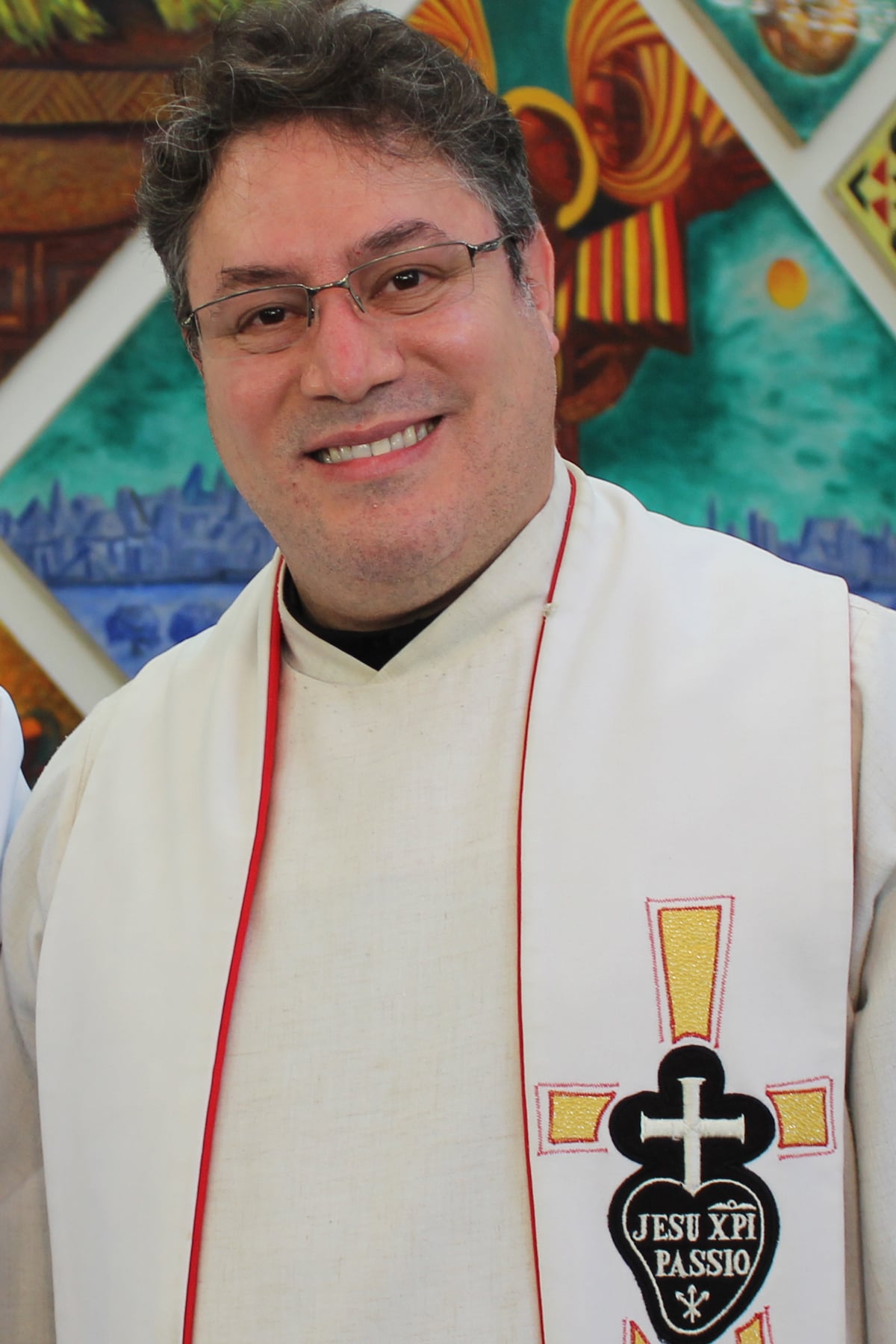
The Passionist charism of accompanying the crucified inspired Fr. Alfredo Ocampo, CP, to expand his priestly ministry to include working in couple and family therapy.
Fr. Alfredo chose to conduct his doctoral internship at the Precious Blood Ministry of Reconciliation (PBMR), in Chicago, Illinois, which provides help to families in crisis.
Fr. Alfredo also spends time with migrants and detainees in the Broadview Detention Center outside of Chicago and is convinced of the power of personal presence.
“‘Presence’ is part of the Passionist vow to keep alive the Passion of Christ in the hearts of the faithful. As a clinician, I am trained to be both a socially responsible and an ethical practitioner,” explains Fr. Alfredo.
“I responsibly create a safe space and offer it as a harbor for healing and wholeness. I empathically connect with the person who is across from me.”
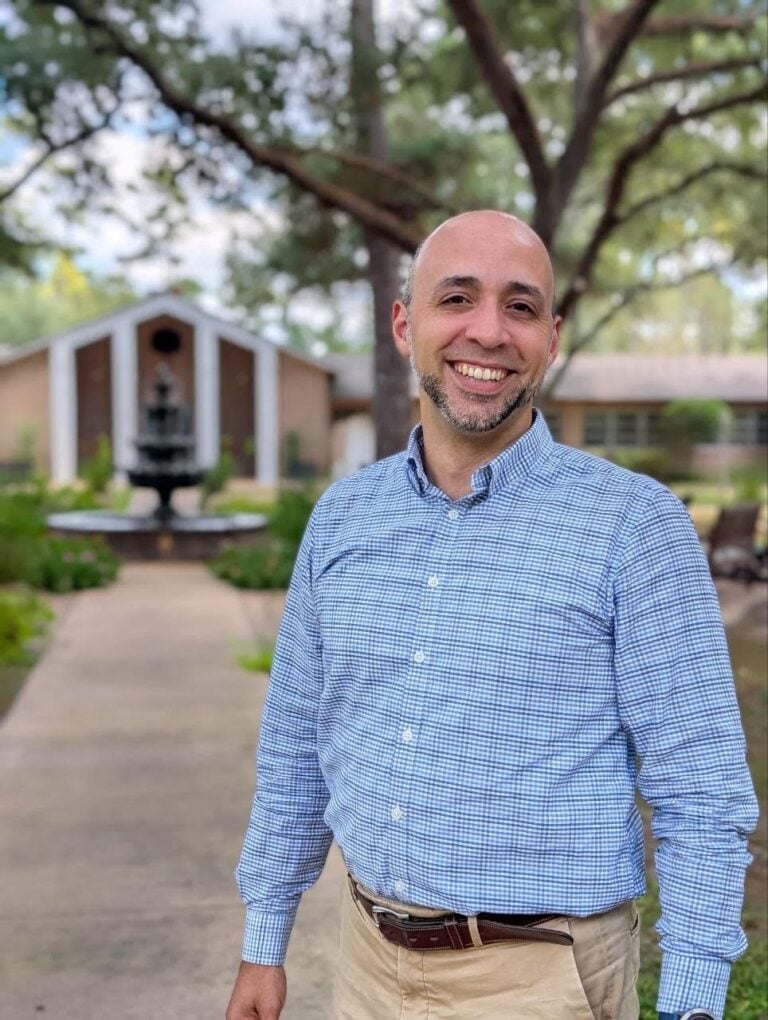
Fr. Alfredo Ocampo, CP
Fr. Alfredo knows that everyone whom he meets or with whom he works will have a story to tell.
“It begins with me. How much do I know of myself, how much am I in contact with my own stories?” Fr. Alfredo says. “I must be able to acknowledge my own wounds, to bring my whole self into that space so that I am able to hold it for others.”
Through the PBMR, Fr. Alfredo has worked to facilitate healing for families who have lost members to violence and incarceration, as well as immigrants who fear deportation.
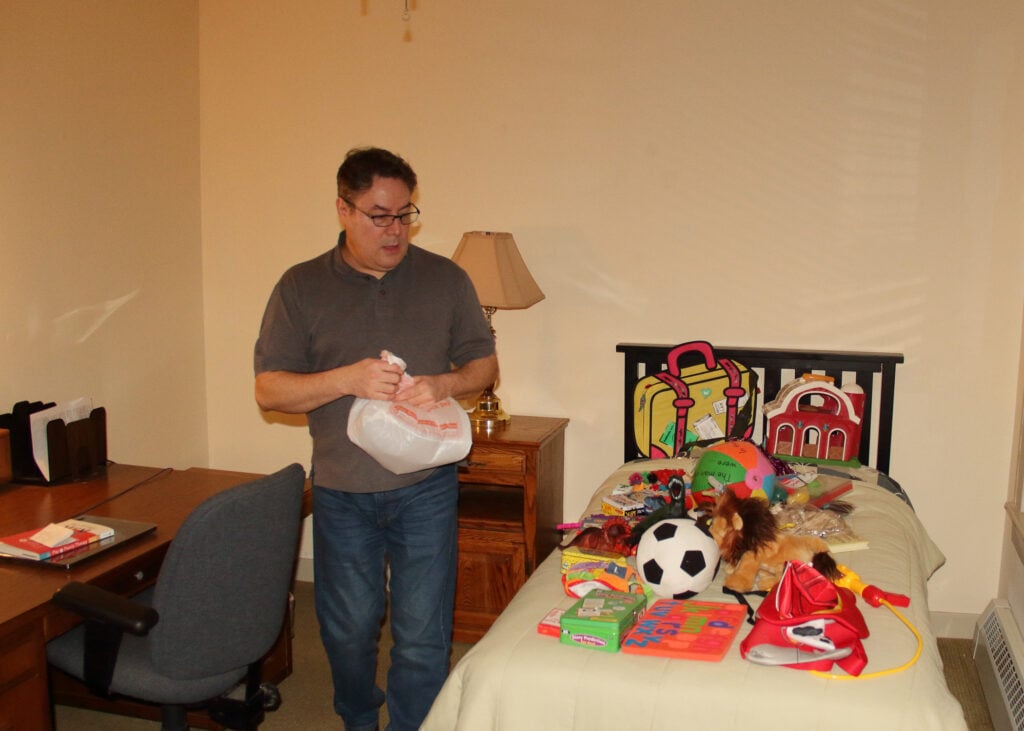
“The most impactful experience was conducting peace and healing circles. This practice comes from Native Americans, and it is where we create and hold a safe space,” Fr. Alfredo explains. “When ICE raids were harassing the immigrant community in Chicago, the community was in so much pain, and sometimes feeling their pain was painful. We held space for them to process their grief, their anger and their frustrations. That space strengthened the community to come together. It gave strength and love, by being willing to not just listen but to help.”
As difficult as the work is, there was beauty.
“Being with the crucified and suffering with the crucified can make me vulnerable, but it strengthened me,” says Fr. Alfredo. “We are here. We are a community. We are brothers and sisters.”
He compares working with the immigrants in the Broadview Detention Center to praying with Christ in the Garden of Gethsemane.
“Within a garden you have all kinds of vegetation. But not one tree or plant is the same as another one. What I encountered there was a garden of stories. Some with hope, some with despair and some with pain. Each story is unique. And I come with my own stories. Their stories transform their lives and my life, making me more human, more vulnerable, and out of that vulnerability I get the strength to keep going.”
Listening to and understanding stories is also part of Fr. Alfredo’s work as a couple and family therapist. He must guide members to understand all the stories within the family.
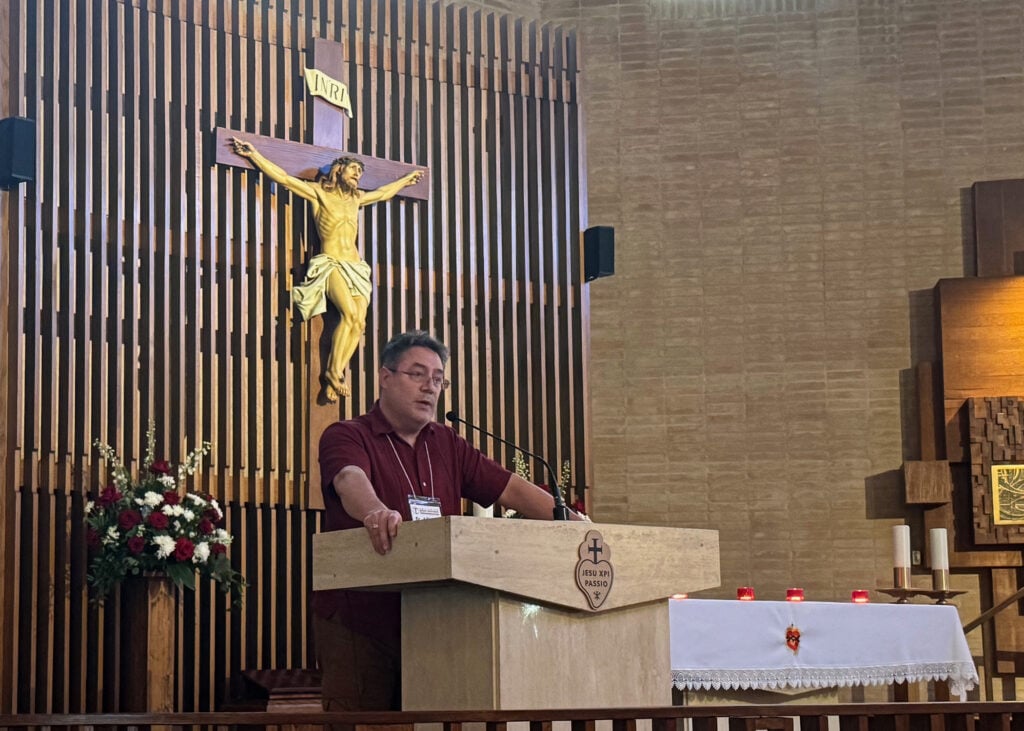
“Contextual family focuses on building trust and fostering fairness and equity. One of the interventions is called multi-directed partiality,” explains Fr. Alfredo. “I must be willing to connect with every member of the family in the room and even members who are not in the room. They all have their own stories. I must provide a space for everyone to tell their parts of the whole story. Some people may want to control the space, and you have to redirect and focus everyone on the whole story.”
At the heart of his life and work is being a Passionist. “Being with the crucified, that is where I experience the Cross. That is where I experience the Passion of the Cross,” Fr. Alfredo says.
“I belong to my community and my people. Their pain is my pain, and their joy is my joy.”
That is what it means to be a Passionist — being willing to connect with others as I mindfully and gently accompany them in their woundedness while remaining aware of my own.
“The Passionist Family is very welcoming and open. It welcomes diversity and inclusion. We are happy because we find joy and hope at the foot of the Cross.”
Extended Video Interview
This transcript has been prepared for clarity, accessibility, searchability and readability, though minor variations from the original video may occur.
What the Power of Presence Means
Question: When you hear the phrase “the power of presence,” what does it mean to you as both a Passionist and someone training in couple and family therapy?
Father Alfredo: As a Passionist, it reminds me immediately of the first, and I would say the most important, of the four vows that we profess: the vow to keep alive the memory of the Passion of Jesus Christ in my work, through my work with people. As a clinician, we are trained to be ethical practitioners, socially responsible practitioners.
Now, when I hear this phrase, “the power of presence,” to me, both as a Passionist and as a couple and family therapist, it is to have the ability to create a safe space and to hold that space like a harbor for healing. Even if I’m not capable of doing much to assist, it means just being present, genuinely and fully present in the moment, to be able to connect with the person who is right in front of me, across from me. And that has a lot to do with stories: their stories, my story.
It Begins with Myself
The power of presence, to me, means: how much do I know? It begins with myself. Before beginning with the person, it begins with myself. How much do I know of myself? How much am I in contact with my own experience, with my own story, my own vulnerability, my own pain, my own joys, hopes, everything, so that I can have the willingness to enter into somebody else’s sacred ground and be able to touch the presence of the other person?
Henri Nouwen: Touching Our Wounds
There is a powerful quote from Henri Nouwen, from his book Out of Solitude: Three Meditations on the Christian Life. This quote has been accompanying me for a while. He says, “When we honestly ask ourselves which persons in our lives mean the most to us, we often find that it is those who, instead of giving much advice, solutions, or cures, have chosen rather to share our pain and touch our wounds with a gentle and tender hand.”
But to be able to do that, I have to first be able and willing to touch my own wounds, to care about my own wounds, to know my own fears and vulnerabilities, joys and hopes, and accept everything, and to bring my whole being, my whole self, into that space so that I’m able to hold it for others genuinely as I attentively listen to them, as I do my best to connect with them by just listening and being present. That’s the power of presence to me: just being myself genuinely, the whole self, with all my senses interconnected, my own story interconnecting with the person’s stories, and finding that sacred ground.
Removing Our Sandals
There is also a biblical text that comes to me with this question every time I practice what we now call the ministry of presence. It is the text from Exodus, chapter 3, when Moses approaches the burning bush and God asks him to remove his sandals because it is sacred ground. So for me, the power of presence also implies removing my own sandals. Those sandals can be my own prejudices, my own judgments, my own predispositions. Not just getting rid of them, but removing them and keeping them there, so that I’m aware of what can prevent me from connecting with the other person or the people around me, across from me.
That’s the power of presence for me. It’s about knowing myself, being aware of who I am, so that I can get to know the other person, other people, through their own stories, without judging them or trying to make them fit my own cultural standards and values.
Peace and Healing Circles During the ICE Raids
Question: Through your doctoral internship at Precious Blood Ministry of Reconciliation, you have accompanied immigrant families, grieving parents, and communities impacted by violence, incarceration, and fear of deportation. Is there an encounter that stayed with you and deepened your understanding of what it means to accompany another person? I’m sure you have a lot you could choose from.
Father Alfredo: Sure. I would say the most impactful experience has been conducting peace and healing circles. They come from the Native American tradition, from the First Nations. They allow, again, creating a safe space and holding that space for everyone to share their stories, their values, their beliefs, always moving from left to right as we conduct those circles.
For me, it was right at the time when the ICE raids were harassing the immigrant community, and I was working with the Latino community, the immigrants in Back of the Yards in Chicago, and in Pilsen as well. The community was so afraid, disturbed, in so much pain, desperate in many ways. Sometimes I was feeling their pain. It was painful holding that space for them to process their grief, their anger, their frustrations. I heard stories of parents who were afraid to take their children to school for fear of not being able to return home, or who couldn’t go grocery shopping because they were afraid they were going to be caught.
“I Am With You”
However, the experience that stays with me out of all that is how that space was strengthening the community, empowering the community to come together and organize themselves, ourselves, to go and do the grocery shopping for those who were so afraid to leave their homes. It built that sense of empathy, that sense of connection, that sense of “I am with you. I am with you here and there. I am with you.” That gave the community so much hope, so much strength, and so much faith, out of the love that came from everyone else around, everybody in that circle being willing not just to listen, not just to give a word of encouragement, but to help with something. That was the most powerful and is still the most impactful experience for me in doing that internship at the Precious Blood Ministry of Reconciliation.
Vulnerability That Makes Us Stronger
It confirmed my Passionist spirituality: that being with the crucified, suffering with the crucified, implies making myself vulnerable. But that vulnerability actually made us stronger. Being willing to be vulnerable gave us the strength, the courage, and the hope to say, “No, this is not going to destroy us. This is not going to finish us. We are here. We are community. We are brothers and sisters, and we can do much for one another.” So that was the most impactful.
A Brick in the Garden of Peace
Another story that comes second is being present with an African-American family who had lost a brother, a young teenager, who was killed by members of a rival gang, I could say. We had a memorial service at the garden of peace we have there. In this memorial service, the family was handed a brick to place in the garden. That’s how the garden is being built: by giving people a brick with the name of their family member. Just being present, and the family being able and willing to share how much they appreciated it and how much healing and hope it brought them. Those two experiences have been the most powerful so far. And of course I have more to share regarding the Broadview Detention Center, because of all the ICE activity and everything that’s gone on.
Prayer in the Circle
Question: Do you think that’s actually made people more prayerful in one sense? A way to bring people together and for them to know the community that’s available to them, even when bad things aren’t happening?
Father Alfredo: Certainly. Certainly, because this is what people were asking for in these peace circles. Actually, I broke a little with the tradition of the peace circle. It’s very prayerful, but it is more in the Native American tradition, so I allowed people to bring their own experiences, their own faith, their own traditions into that space. They were asking for prayer: “Let’s pray. Let’s do this. Let’s do that. Let’s have prayer services besides the healing peace circles.” Sure, we did it. That’s what they were asking for, and that’s what was actually helping them release the anxiety, the fears, the pressures of all these unjust, hostile immigration activities and laws, of which most if not all immigrants, especially Latinos, have been victims because of how these laws are carried out. And not just Latinos; all immigrants, especially undocumented ones.
Question: You would think that since all of us came from somewhere else, except for the Native Americans, we would recognize, “This is what my family experienced when they came to the United States. I don’t want anyone else to experience that.” But that’s not what happens.
Father Alfredo: And if we are not willing to overcome that fear, to break the barriers of hostility, we just get stuck there. We stay there and stagnate.
Jesus and the Syrophoenician Woman
Even Jesus had his own issues with culture and religion. In Mark’s Gospel, chapter 7, when the Syrophoenician woman, the Canaanite woman, comes to him, what does he say to her? “It is not right to give the children’s food to the dogs.”
Question: Yeah, an insult.
Father Alfredo: But then he’s open and willing to learn from her, when she says, “Even the dogs can eat the scraps that fall from the master’s table.” He was willing to learn.
Care Versus Cure
Question: You have encountered people carrying circumstances that you cannot simply fix. What have those experiences taught you about the difference between trying to solve someone’s suffering and choosing to remain present with it?
Father Alfredo: I would go back to the same quote I gave you from Henri Nouwen’s book Out of Solitude: Three Meditations on the Christian Life, which came out in 1974. Immediately after that quote, he makes the distinction between genuine care and cure. What is the difference between caring for and curing someone?
Genuine care does not necessarily mean that I have to fix someone else’s problems, but that I have to be willing to remain with that person, with those people, just remain with them, entering their space, where their vulnerability and their struggles can also transform or touch my own. And even while I myself am facing, I would say, not hopelessness, but not being able to help, I can still become a beacon of hope for them just by being present. I can be a beacon of hope just by listening, by being present, by genuinely caring for that person without seeking to cure or fix their problems.
Obviously, that takes a lot of effort and energy, mental, physical, and emotional, because I have to be aware, again, of myself: my own personal history, my own personal and emotional struggles. Sometimes I’m not able to fix my own problems, and I have to surrender to them without any possible solution. It may come later, but not when I need it at that time. So being willing to remain with that person and care for that person means that sometimes I will not be able to fix the problem, because that is for them to do. It is just listening, sometimes accompanying that person, and eventually providing just an ear. And if there is a word of encouragement, that would be more than enough for me to do.
The Temptation to Fix
Question: Does that get easier the longer you do it, as you adapt yourself?
Father Alfredo: I think it gets easier the more you do it, the more you practice the attitude, the behavior, the presence of bringing my whole self into that moment and caring for that person. It becomes easier. But it’s not always easy-peasy. [laughter] There is always the temptation of wanting to fix the problem, especially when it has to do with our loved ones.
Question: Yeah.
Father Alfredo: With the ones close to us, it is the most difficult to really practice that. But sometimes I do it for the sake of keeping my mental sanity and energy, my intellectual self-regulation, my emotional regulation. Otherwise, I would lose it.
Cruelty and Kindness at the Broadview Detention Center
Question: Your experiences at PBMR also led you to be present with migrants and detainees at the Broadview Detention Center. What did you encounter there, and how did that experience affect your understanding of compassionate presence?
Father Alfredo: [sighs] I encountered a mix of cruelty, but also some kindness and humanity. I’m talking first about the ICE agents and officers. Some of them tend to be more hostile, more cold. They’re doing their job. They don’t care who you are or who the people you are coming to see are. They just care about what they’re doing. Out of that, they treat the detainees, and us, as if to say, “I have no relationship with you. This is my job. This is what I was asked to do, and this is what I’m doing.” Others show more kindness out of their humanness. They are more empathetic. They do their job, but they still treat detainees with respect, with dignity.
A Garden of Stories
And with the people I encounter there, what I encounter is the pain of their stories. There is a metaphorical image that came to mind when I was reflecting on this question: the Garden of Gethsemane, Jesus praying in the Garden of Gethsemane. As Passionists, obviously, we meditate on that. Within a garden, you have trees, flowers, grass, all kinds of vegetation, but no single tree is equal or the same as another tree, nor any plant the same as another. They may be of the same species, but with very different shapes and textures.
So what I encounter there is a garden of stories. A garden of stories: some with more hope, some with despair, some with so much pain, some with the hopefulness of looking forward to going back to their homelands and seeing their families. Some detainees go to the detention center and surrender themselves, asking to be sent back home, because they don’t want to be here anymore. They are tired of being away from their families, out of loneliness, and they just don’t want to live that way. They go to the detention center hoping they will be sent back soon.
A Young Father Still in His Work Clothes
Others, and I will never forget, for example, a young father who was still in his work clothes. He was a painter; he painted homes. On his way to the workplace, they arrested him, detained him, and sent him there. He was so distressed. As soon as he saw us with a clerical collar, he asked if he could talk to me. He started sharing: “I have two children, nine and ten. My wife and I are separated. Our marriage didn’t work.” She had been living life too easily, not taking much care of the children, and he was so distressed because he didn’t know what was going to happen with them. His brother was taking care of the children for the moment, and he was scared because the government could take them from his brother. He was so distressed, so desperate, wanting to find solutions, perhaps some certainty about what was going on.
What They Really Want
When I started visiting the detention center, I came with a bit of that predisposition of bringing the consecrated host, a prayer book, whatever, just in case they wanted it. I soon found, on the first day, that sometimes that’s the least they want. What they want is to talk out of their fear, the uncertainty: “What’s going on here? There were ICE officers at my door pointing their guns at me. I was beaten.” “I was arrested coming out of the gym,” [laughter] “coming out of the grocery store.” “I went to my immigration interview at the immigration court, and I was arrested. I was arrested, I was detained, and now I’m here.”
When I started hearing these different stories, some reflected more hope, some so much despair, so much pain, and some so much anger, because there are people at the detention center who don’t want to talk with you. They even look at you like, “Who are you? You are part of this group who are hurting me.” They remain isolated. They isolate themselves from the rest of the group, especially from those who come to visit and just listen.
Again, the metaphor I get is a garden of stories. Each story is different and unique, but equally powerful in its own way, because each carries the story of a person, of a family. And again, I come with my own story.
“Where Are They Taking You Today?”
There were several instances, but one in particular, when the clergy, the pastoral caregivers, were asked to leave the rooms where we meet with the detainees because they were going to get the people ready to be transferred to another center. The Broadview center is a kind of passing-through harbor. They just process their cases and then transfer them to Indiana, Kansas, or even Wisconsin.
They started bringing the detainees out and putting chains on them, lined up, each detainee right against the wall. They literally put handcuffs and chains on their hands and their feet, just like criminals. Like criminals.
As they were being led out of the center, one young man from Nicaragua looked at me and said, “Where are they taking you today? Where are you going from here?” He thought we were detainees too, just without chains. I felt so much pain at that moment. It was strange, because I didn’t know what to answer without deepening the pain and frustration he was experiencing. I said, “I’m going home, back to Chicago.” He just lowered his head, and tears came rolling down his cheeks.
To me, that experience stays as something so powerful. He was going to another detention center, for how long, we don’t know, maybe to yet another detention center before he goes back to his home country. And in the meantime, in a few minutes, I’m going back home, driving safely.
Stories That Transform
Those are the kinds of experiences I encounter, and again, they have to do with the power of stories and the power of presence. Their stories have their own meaning and their own power to transform their lives and my life. So far, entering the sacred ground of that garden of stories has transformed my life so much, in very positive ways. I would say, yes, it has made me more human, more vulnerable, but out of that vulnerability I get the strength to keep going.
“It’s So Much Fun Working Here”
Because sometimes you hear ICE agents talking among themselves. That was one of the experiences I had while waiting outside the rooms, because they were lining the detainees up against the wall to put the chains on them. I heard those guys saying, “Oh, it’s so much fun working here. I enjoy working here. I enjoy what I’m doing in this place,” while seeing these men lined up against the wall and treated like criminals. To me it was like, what fun can you experience out of this? What sense of humanness do you have? What level of humanity do you reflect with this? And I just stayed with that and kept it all together, because that’s another story, another kind of tree, but with a more sour-tasting fruit, because that person is not willing to do much of what they are capable of doing as humans. Anyway, that’s the metaphor I got from these experiences: the Garden of Gethsemane, with different stories symbolized by different trees and vegetation.
Staying Awake with Jesus in Gethsemane
Question: It’s a beautiful way to think of it, too.
Father Alfredo: And then you think of Jesus in the center of it, praying, and Jesus inviting the three disciples: “Stay with me and pray so that you don’t fall into temptation.” Sometimes there is temptation in that garden. I remember, when hearing these guys saying, “It’s so much fun working here. What I’m doing for ICE is so much fun,” acknowledging the anger, the frustration, even the desire to start screaming, “Stop it! Don’t you see what you’re doing?” But I just stayed there, looking at the men who were being chained, looking at these agents, and praying with Jesus. It’s like, I don’t want to fall asleep and slip away from this. I just want to be present. But it means being able to feel the pain, to experience the pain.
That’s why, for me, it’s so important to acknowledge my own brokenness, my own wounds, so that I can still hold all the broken pieces of my whole being. Then, when I’m there, I’m not spilling anger, hostility, or frustration, but rather hope, kindness, empathy, breathing out hope, trust, and love rather than anger, frustration, and division, the things that are really not helping our society, our human community, the world.
Visiting Broadview
Question: How often did you go, Father Alfredo? Are you still going?
Father Alfredo: Usually I go on Thursdays or Fridays, one day a week. I can’t afford to go more than one day because of the distance and the schedules they give us. One is 8 to 11 in the morning, but during that time the interaction is limited, because they don’t bring the detainees out into the rooms where we are waiting for them until around 10:30. That’s just half an hour. The other schedule is 1 to 4 p.m. I usually go in the afternoon.
Question: Okay.
Father Alfredo: But that also means traffic going west, and it’s heavy. So I just go once a week. Sometimes when I have to travel out of Chicago or out of the country, I tell them, “I’m not going to be coming for the next week or two.” So far I haven’t been able to go for the last two, maybe three weeks, because I was on the road traveling.
When One Member Suffers, the Whole Family Suffers
Question: Couple and family therapy looks not just at individuals but at relationships and family systems. What are you learning about how experiences such as grief, violence, incarceration, immigration uncertainty, and family separation affect an entire family? And where can compassionate accompaniment make a difference?
Father Alfredo: Well, family systems are built through relationships. There is a very famous text Paul gives us in First Corinthians: if I’m not the eye, that doesn’t mean I’m worth less; the eye may have more abilities than the ear, the tongue, the hand, or the feet. But he says that when one member of the body experiences pain, the rest of the body experiences the pain at different levels. And sometimes we treat the most vulnerable members with more care, even though it may seem we are disregarding them.
When a family member experiences grief, or a child is getting lost in drugs or alcohol, the whole family is going to experience that. The whole family is going to experience the chaos, because they are interconnected through that web of relationships, whether one is the mom, the father, the boy, the girl, or the grandma. In the Latino community, we always extend the core family a little more. Grandparents are always present, part of that core family, [laughter] and grandparents are always the wise ones.
The whole family comes to experience the pain or the joy. When there is a graduation, there is cause for celebration. When there is a long-awaited baby in the family, especially after so many attempts to get pregnant, and finally the baby comes, the whole family is happy. Or when you lose a child out of the blue, when that boy or girl went to school or to work and didn’t return, that pain is too strong. Or when you are accompanying a family member through a battle with cancer or something similar. Whatever the pain, the grief, or the violence they experience, the whole family is going to struggle in some way, unless some are disconnected. We do have cases where family members disconnect from the rest of the group and just don’t care.
Multidirected Partiality
So how does couple and family therapy help here? The approach I’m specializing in is narrative family therapy, but there is also contextual family therapy, which focuses on fairness, building trust, and accountability in relationships, being responsible. One of its interventions is called multidirected partiality.
Multidirected partiality means that, as a therapist, I have to be willing and able to connect with everyone in the room, with every member of the family who is present, and even with those who might not be in the room but are members of that family. Bringing back the metaphor of the garden of stories, every member of the family has their own story and their own version of the problem that brings them to the therapy room. They have their own story, their own version of what’s going on.
Multidirected partiality means creating and holding that space so that everyone is listened to equally. You might have some family members who want to dominate the conversation, and multidirected partiality means telling that person, “Okay, now it’s the turn of your daughter, your wife, your husband. He wants to say something; let’s listen to him.” That can help build a sense of fairness, trust, and accountability, so that they know the person trying to help is not biased, is not focusing on just one story, but on the whole story of what brings everyone together into this room.
For me, that has been working well in many ways when I’m able to connect with everyone. Sometimes it’s difficult to connect with some members of the family because they just don’t want to. But I have to do my best to break the ice and invite that person into the space. Even when a person wants to remain outside, I cannot force them to do what they don’t want to do, but there is always the friendly invitation, little by little. Again, the power of presence is being friendly, genuinely caring, and fair to everyone, using my ability to listen and connect with each of them through their stories, their own versions of the problem, whatever that is.
Putting the Puzzle Together
It’s like a jigsaw puzzle. Everybody brings a piece of the story, and everybody starts putting their pieces together until the whole picture makes sense for everyone. But it can take time: multiple sessions, multiple visits, a lot of work. The most important thing is to build trust in the therapeutic relationship, the rapport with each one of them.
“Why Not You?” A Call Heard in the Confessional
Question: How do your doctoral training and your Passionist spirituality inform one another? Has your clinical training changed the way you understand the Passionist call to stand with the crucified today, or has the Passionist charism changed the way you approach your work as a therapist?
Father Alfredo: Both. Both. First of all, what brought me to this doctoral program was precisely my experience as a Passionist out in the missions, or helping pastors at their parishes with confessions. The confessional was always, or at least most of the time, the setting where I kept hearing myself ask, “Why not you?” Because I got to the point of saying, “I cannot go that way, because this is more of a psychological, traumatic situation than a spiritual one. It’s not a sin. This comes from personal, family, intergenerational, or cultural trauma, and I don’t have the skills.” I always tended to say, “Have you considered this or that?” and refer them to professionals. But in the end, I would stay with the question: “Why not you? Why don’t you do something? Why don’t you become part of the group you wanted to refer them to?”
I got tired of those voices in my head, [laughter] and I said, “Finally, I will go and do something.” So it was a Passionist experience, trying to be with the crucified, because that’s precisely where I experienced the cross. That’s where I experience the cross: when I am with a broken family, a dysfunctional family, a couple experiencing their own troubles and difficulties but who still want to do something. Being with them, remaining at the foot of the cross with them. That’s where I experienced the Passionist charism, and that is what brought me to pursue this doctoral degree in couple and family therapy.
The Person of the Therapist
Now, being trained as a PhD clinician in couple and family therapy, we are trained in a concept we learned right at the beginning of the program. It comes from Harry Aponte, who developed, in a more formal way, the person of the therapist, or the self of the therapist. That’s why I speak of knowing myself, of being willing to embrace my own vulnerabilities, my own story, my own struggles, everything, so that I’m able to connect out of that vulnerability and those struggles with the other person’s or the other family’s struggles and vulnerabilities, and in that way become an ethical practitioner, a socially responsible practitioner. Always taking care not to do harm to others, and always carrying that principle of ethics: always do whatever brings more benefit, or whatever causes less pain and hurt. Always: do not hurt, do not harm.
How the Two Interact
That’s how the two interact, by making me more compassionate when I’m in the session. Of course, I’m not acting as a Passionist in the session, but my Passionist spirituality, my Passionist formation and charism, is with me. Being compassionate means being socially responsible in my practice, not causing harm and pain, being ethical in my practice, and being human in my practice.
And vice versa, when I bring my training in couple and family therapy into my Passionist ministry. I’ve had this experience recently, not just at the Broadview Detention Center. I’m working a lot with the couples of the Christian Family Movement among the Latinos in Houston, Texas. They ask me to help with retreats. They do all the work, but I serve as their spiritual director and advisor, a mentor, whatever they need. Recently I’ve experienced couples who were so distressed because of their traumas, whether personal, family, or relational, asking to speak with me at moments when they were in so much pain. Even when a lot of good things are happening throughout the retreat, they are still trying to cope with their own struggles. And I see transformation just by being present to them, listening to them, and offering a word of encouragement. Then they come to me and say, “Thanks for listening. Thanks for telling us this. Thanks for doing this for us.”
A Couple Transformed on Retreat
It’s a transformation. I had that experience recently, back in May, with a couple who were so distressed. She was having a panic attack in the moment because of the trauma she had experienced coming here to the States. She wanted to disclose this to her husband and didn’t know what to do. After we talked, the one who needed the most help was the husband, because she was now free of it. So I asked her, “Would you let me stay with him for a little while?” and she left.
To make a long story short: during the first two days of the retreat, there was a gloom on their faces. They always looked depressed. Even when we had a lot of good times and moments throughout the retreat, it was clear something was going on with this couple. On the last day, Sunday, when we were about to finish the retreat, they came in the morning, and there was such a glow on their faces, especially on hers. They came to me expressing their gratitude. For me, it was like, “Wow, this is helping my ministry now.” I’m finding many ways in which this training in couple and family therapy is benefiting my pastoral work as a Passionist with couples and families.
Being Transformed by the Other
Question: Where have you witnessed compassion become transformative, not only for those being accompanied, but also for the person who chooses to accompany them? You’ve talked about that a little already.
Father Alfredo: Yes. Going back to the principle of the person of the therapist, it means that by knowing and embracing my own struggles, my own emotional pain, my own stories, my own history and cultural background, I am also willing to be transformed by the story, the vulnerability, the pain of the person across from me or in front of me. That’s what it means to me.
A Family in the Peace Circle
Going back to the second question, about conducting the peace and healing circles: in that group there was a couple who came with their son, the younger of their two children, who was maybe 18, 19, or 20 years old. He used to come with them to the circles.
Question: Okay.
Father Alfredo: This goes back about a year, to late September. Around late October, the husband stopped coming, and we rarely had the wife and the son in the circles. What happened? The husband had been detained by ICE and was at the Broadview Detention Center, and she was in so much pain and stress. She had her own business making Mexican food and selling it on the street corners in Back of the Yards.
The beauty of all this is that the whole community came together to support the family, providing support, encouragement, whatever she needed financially. Before I went to Mexico for my Christmas vacation in December, he had been released, maybe in early December, and he came to our Christmas party. The whole family was so happy, but he was still very quiet, kind of isolated. He expressed his gratitude and appreciation for all the support he and his family received from the group, the community, but he still remained quiet and isolated.
From Isolation to Healing
The months went by, and I kept checking in with his wife because he didn’t come to Mass or to the group anymore. She kept reporting that he was experiencing PTSD, post-traumatic stress disorder. Even though he was released, he still had an ankle monitor.
Question: Oh, okay.
Father Alfredo: The ankle monitor was a source of distress for him as well. The experience of transformation in all this, for me, was how it was also working on me. I’m not sure how to put it. I was trying not to attach too much of myself to that story, and yet all of a sudden I was checking with the wife, checking with the family: “How is he doing? How is he doing? How is he doing?” At the same time, something in me was being transformed by this experience.
I came to confirm this when the husband started to come more often. He’s now back in the church full-time, helping as an usher, assisting in all kinds of ways at the Masses when I help there. He still comes up and says, “Thank you, Father. Thanks for being with us. Thanks for this.”
As for that experience, I’m not sure I was acting with much compassion. I guess I was just trying to be with them in their experience, in their pain, embracing their pain, staying with them even when I wasn’t able to help. But afterward, seeing the husband’s transformation, from a man who was afraid and anxious about leaving home to someone so much freer, helping at the church, and coming to people, coming to me, with less apprehension and more openness to share, it was like this: showing compassion always breaks the barriers of fear, anxiety, hostility, and division, and brings us together.
Their Pain Is My Pain
So the power of presence, and compassion as the possible solution for all this, tells me that I was able to help not only the family, but the family was helping me as well. The same at the Broadview Detention Center. It always brings me back to my own experience as an immigrant, being born into a Mexican immigrant family. Even though I haven’t experienced much racism myself, whether because of my color or I don’t know what, I still belong to my community. I belong to my people. Their pain is my pain; their joy is my joy. And not just them, but people across the world who experience racism, the hostility of division, or separation from family members. Somehow my ears are attuned to their stories, because that’s part of my experience. That’s part of my story. Whenever I hear these kinds of stories, it’s like my little antennas are attuned to them, because it’s my story too. Not the same, but it has similar elements and features of the same kind of experience.
What It Means to Be a Passionist
The power of presence, and compassion as a source of healing, is what it means for me to be a Passionist. It is being willing to connect with others. Pope Francis used to say that just as flowers spread their aromas, their essence, not for themselves but for others, so it is with nature: it is for others, not just for itself. The same goes for us. He encouraged us to practice a culture of welcome rather than indifference, a culture of fraternity, always welcoming others.
That is what makes me think more and more about why I like being a Passionist and belonging to the Passionist family. The Passionist family is precisely this: very welcoming, open to embracing diversity, cultural and religious, all kinds of experiences. That’s why I like being a Passionist: because we are compassionate, we are happy, we always find joy and fun in things, and we always stand in solidarity with those who struggle. We can adapt to different environments and different experiences. We are very much like that.