

Living The Passionist Way fills each of us with a love that overflows in action.
The Passionist Way recognizes the Spirit-led journey that has brought us together as one Passionist Family. Whether priest, brother, sister or lay person, we are united by a shared call to compassion, presence and transformation through the memory of Christ’s Passion.
The Passionist Way is a small book with a meaningful purpose: to guide and inspire those who share deeply in the Passionist charism—to “keep alive the memory of the Passion of Christ.”
This is not a textbook or manual to be read once and shelved. It is a way of life—an invitation to live more deeply, to be attentive to the sufferings of others and of Earth, and to walk with Christ crucified by standing with those who suffer in our world today.
Designed for reflection and daily living, The Passionist Way helps us encounter God in the ordinary and the profound—in prayer, in community, in service and in solidarity. It reminds us that the Passion of Jesus is the overwhelming work of God’s love, and it calls us to make that love visible in the world.
Download the full book
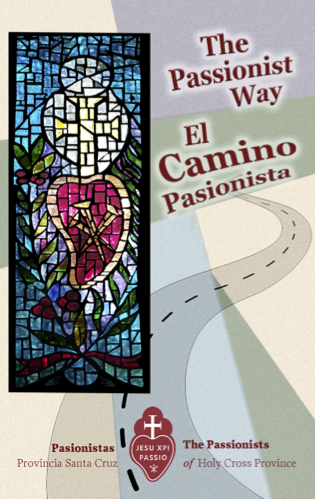
The Passionist Way
English [12.1 MB PDF]
El Camino Pasionista
Español [13.1 MB PDF]
In late Summer of 2023, while millions of young Americans were beginning a new school year, I packed up my backpack and headed off to Spain to hike the Camino de Santiago, or “Way of St. James.” For centuries, pilgrims carrying life’s deepest questions have walked this historic path in search of spiritual enlightenment. Walking over 400 miles in 30 days, I found daily rhythms pulsing in my mind, body, and spirit:
- The rhythm of footsteps;
- The rhythm of each day’s regular routines;
- The rhythm of nature all around;
- The rhythm of being together;
- The rhythm of meals;
- The rhythms of fellow pilgrims snoring through the night.
Every day was filled with these same rhythms, yet each day was unique and different from previous days. Each day, the journey unfolded in a unique and distinct way. And the pulses were always there, beating their own time signatures.
Walking this “Way of St. James” helped us to realize how all of us live in rhythms of life. Traditionally, our Passionist life was structured around prescribed rhythms. Our horariums, liturgical seasons, and corporate ministries all had a particular rhythm assisting the flow of life. Similarly, families and households have their daily and weekend schedules, as do workplaces and offices. The beat of these is evident to all of us; Mondays just feel different than Fridays.
As the door began to open for greater lay involvement in Holy Cross Province, a desire arose for a brief and clear articulation of the core elements of Passionist living that are applicable to all Passionists, both vowed and lay. Clearly, lay people were sharing in the charism of our heritage. A small group came together, made up of both men and women, vowed and lay. Initial conversations asked about this “way” that is experienced by Passionists. Through a rhythm of regular meetings, a discovery of deeper rhythms of truth were articulated and reflected upon.
Indeed, Passionist life has a pulsing rhythm. Going back to our founder, St. Paul of the Cross, we are instructed to keep alive the memory of the Passion of Christ. For us today, both vowed and lay, some of the daily steps along the way include:
- Being agents of compassion and hospitality;
- Understanding the rhythm of the Eucharistic Table and how Eucharist nourishes one’s daily rhythms;
- Finding a place of deeper meaning through prayer, silence, and solitude;
- Discovering the paschal mystery in both family and community;
- Ongoing reading and study to continually form and educate ourselves;
- Trusting that God’s grace moves through the power of the Holy Spirit.
The Passionist Way is not something to be hurriedly read but a text to pray over and ponder. It is not something that changes you instantaneously as much as something that begins pulsing and beating with its life-giving rhythm in your heart. May you, shaped by the beating of this Passionist heart, be drawn, with all Passionists, into its rhythm in your daily life.
V. Rev. David Colhour, C.P.
Provincial Superior
March 2025
The Passionist Way is a little book with a surprising and fascinating story. At the conclusion of the 2019 Chapter of Holy Cross Province, a resolution was approved to create a “rule” or “guidebook” for the growing number of lay women and men who were working and ministering in Passionist retreat centers, parishes, and communities throughout the Province. These individuals were not only working and ministering in these spaces but were also increasingly seeing themselves as Passionists, feeling a strong affinity with the Passionist charism to “keep alive the memory of the Passion of Christ.” As a result, a committee was formed to accomplish what initially seemed like a pretty easy assignment.
But as soon as we began meeting, we discovered our task was not so straightforward after all. In fact, it was a journey with lots of twists and turns, multiple false starts, plenty of unexpected detours, a few dead ends, and times when we not only were not sure where we were going but were confoundingly certain we were lost. Instead of being a task we could swiftly dispatch, it took more than a year and a half of virtual meetings to come up with what is now known as The Passionist Way. Yes, we floundered before we found our way, we stumbled before we got our bearings, but that was okay (perhaps even providential) because all our fumbling culminated in one memorable meeting where something sparked.
The spark was fueled by an uneasiness that was spreading among the members of the committee. To design a guidebook or rule specifically for lay men and women seemed out of sync with what had been evolving in Holy Cross Province at least since the 2015 Chapter.
Such a plan suggested there were two very distinct, and somewhat awkwardly related, groups in the Province. In one space, there were Passionist priests and brothers who had professed religious vows and who were guided by the Rule and Constitutions of The Congregation of the Passion of Jesus Christ. In another, and quite different space, there were lay men and women for whom would be developed a handbook that would essentially be an abridged and very diluted version of the Constitutions. Instead of connecting these two groups whose lives were joined together through the Passionist charism, the proposed “little rule” for laity seemed to permanently separate them.
And that was at odds with where the Spirit had been leading Holy Cross Province for at least the last ten to fifteen years. For example, rather than speaking of two distinct groups whose relationship to each other was unclear, and perhaps a little uneasy, the term “Passionist Family of Holy Cross Province” became increasingly commonplace. That is because, whether religious priest or brother, sister or nun, or lay man or woman, at some point the call to “keep alive the memory of the Passion of Christ” spoke to all of us, moved us, and rang so wholly true for us that those words captured our hearts, permeating and transforming them. As the opening paragraph of The Passionist Way proclaims, “We are the Passionist Family of Holy Cross Province. We each have our own story as to how the seeds of Memoria Passionis came to be planted in our hearts…”.
A “little rule” for lay Passionists may have worked years ago, but it would fizzle today because the Holy Spirit is at work creating something new among us. Once the committee realized this, we wanted to honor it, and that explains why The Passionist Way you hold in your hands is very different from what we first envisioned. Most of all, it is why The Passionist Way is intended for every Passionist, whether brother or priest, sister or nun, lay woman or man. Our hope is that The Passionist Way will guide, animate, inspire, and further unify the growing Passionist Family, every member of which lives by the truth that the “Passion of Jesus” is “the greatest and most overwhelming work of God’s love” (Constitutions, 1).
The Passionist Way was formally approved at the June 2022 Holy Cross Province assembly. Based on the Rule and Constitutions of The Congregation of the Passion of Jesus Christ, better known as the Passionists, the religious community founded by the Italian Paul Daneo in 1720, The Passionist Way focuses on the essential elements of the spirituality of Paul Daneo (today known as St. Paul of the Cross) and the way of life he envisioned for his followers. And so, you will find in The Passionist Way sections on compassion, hospitality, the Eucharist, prayer and silence, and solitude, as well as sections on poverty, family, community, formation and education, and grace and the movement of the Spirit.
But undoubtedly the core element of The Passionist Way is the special vow that distinguishes Passionists from other religious congregations and best explains their life and ministries: the vow to “keep alive the memory of the Passion of Christ.” Often referred to by the Latin Memoria Passionis, all Passionists make remembering the Passion integral not only to their spiritual lives, but to their understanding of themselves. Taking that vow to heart and living it faithfully every day gradually transforms every aspect of one’s life: thoughts and perceptions, affections and desires, values and priorities, and certainly actions. It makes one a true follower of St. Paul of the Cross, a member of his family, and allows one to continue his story.
This is why The Passionist Way is not a little book to be read once, put on the shelf, and quickly forgotten. It is designed to be prayerfully read, reflected on, and applied to daily life. As the title suggests, The Passionist Way is not a textbook or academic study, but a way of being in the world, a way of life by which we inhabit the world differently because, aligning ourselves with Christ crucified, we choose to stand in solidarity with all the crucified members of the human community, comforting and supporting them in their sufferings and afflictions, their sorrows and tribulations, and doing what we can to help them, knowing that we stand among them, sharing in the suffering of Christ. While we may not all suffer in the same way, suffering is a part of the human condition that surely affects us all. And because the Passion of Christ extends to the whole of God’s creation, those who follow The Passionist Way are also keenly attuned to the suffering of Earth and every creature and species.
The Passionist Way is an invitation to grow closer to God through a more intimate relationship with Jesus crucified. It is a dynamic, inspirational text by which the foundational grace of St. Paul of the Cross’ life becomes our own. That can happen during times of prolonged suffering, in moments of confusion and anxiety, or when hope seems hardly in reach. But it can also happen through prayer and meditation, while on retreat, while taking a walk, while gardening, reading to a child, or being called out of oneself by another’s suffering. And it can happen at the Eucharist, in a prayer group, in a community discussion, over dinner with a friend, or when consoling a stranger.
Whenever it happens, we discover God’s love in a newly liberating and lifegiving way and feel compelled to share it with others. That’s a beautiful, wonderful thing, and it is the heart of The Passionist Way.
The Passionist Way Committee
January 2025
The Passionist Way
We are the Passionist Family of Holy Cross Province. We each have our own story as to how the seeds of Memoria Passionis came to be planted in our hearts, yet the guiding light for each of us in the Passionist Family is that the Passion of our Lord Jesus Christ is “the greatest and most overwhelming work of God’s love” (Constitutions, 1).
We in the Passionist Family of Holy Cross Province are deeply aware that the Passion of Christ continues in this world. We seek to nurture the seeds that have been planted in our hearts within community and by a way of life that helps us live more deeply into what “keeping alive the memory of the Passion” means for each of us and for all of us together as the Passionist Family. We choose to walk the path that Paul of the Cross did, with companions, prayerfully reflecting on how the Rule that Paul wrote in 1721, and the Constitutions appended in 1984, can guide and shape our lives as we come to understand more deeply what it means to be a Passionist today.
First and foremost, members of the Passionist Family commit to keeping alive the memory of the Passion of Christ. This vow is personal, communal, and apostolic.
The Passion of our Lord Jesus Christ is “the greatest and most overwhelming work of God’s love.” -Constitutions, 1
We commit to sharing in the joys and sorrows of our contemporaries. We understand that Christ’s Passion and death are “no mere historical events. They are ever-present realities to people in the world of today, ‘crucified’ as they are by injustice, by the lack of a deep respect for human life, and by a hungry yearning for peace, truth, and the fullness of human existence” (Constitutions, 65). We take part in this apostolate, each of us, according to our gifts, resources, and ministries. What follows is what we have found to be essential elements for walking as companions of St. Paul of the Cross and as members of our Holy Cross Province Passionist Family.
Mission Statement
The Passionists of Holy Cross Province
We Passionists proclaim God’s love for the world revealed through the Passion of Jesus Christ.
The Passionists, a global family of priests and brothers, nuns and sisters, and lay men and women, reach out with compassion to the crucified of today. We keep alive the memory of Christ’s Passion through our commitment to community, prayer, ministries of the Word, and service to those who suffer. We welcome all who seek renewed life through the power of the Cross and the hope of the Resurrection.
Essential Elements of The Passionist Way
Compassion
A deepening awareness of the spirituality of Paul of the Cross leads us to a greater sense of compassion. This compassion begins with solidarity with a suffering world. Passionists aim to respond to those who suffer and bring the love of Jesus Crucified to them. Passionists develop this capacity through Eucharist, prayer, meditation on the Passion of Christ, and through ministry.
This compassion begins with solidarity with a suffering world.
We, who live The Passionist Way, also realize that we must take up the Cross as it exists in our own lives. Paul of the Cross spent much time in prayerful reflection on the crucial place of suffering in our own lives. He shared the fruit of this prayerful reflection in guiding and directing others, often through the countless letters he wrote over the years. Compassion includes our own personal journey with the Cross and invites us to reflect prayerfully on our own suffering, opening us to receive the compassion needed to turn from our own sin and grow in grace.
Questions for Reflection
- To what degree am I able to show empathy, compassion, and concern for others on a daily basis?
- How effective am I at being compassionate toward myself?
Hospitality
Passionist hospitality is rooted in, and strives to faithfully imitate, the entire life and ministry of Jesus, particularly his Passion. The Passionist charism provides a focus for members of the Passionist Family to understand that Jesus “tore down the walls of separation” (Ephesians 2:14). Jesus was reputed to eat with tax collectors, sinners, and those outside the law (Luke 7:34). Our retreat houses are based on a profound sense of hospitality, and that sense of welcome that willingly “shares in the joys and sorrows of our contemporaries” (Constitutions, 3), whoever they might be, is foundational for all Passionist ministries.
Questions for Reflection
- How welcoming am I toward others and how do I enable them to feel at home and as part of family?
- Jesus’ life, suffering, and death were for all, which includes everyone. To what degree do I realize that all people, through His suffering and death, are part of one human family?
The Eucharist
When we celebrate the Eucharist, the Father gathers us around His Son. Sending His Spirit into our hearts, Christ unites our personal sacrifice and that of all people with His own supreme Sacrifice of Redemption.
Coming to the table of the Lord, we listen to the Word of God with attentive minds and responsive hearts.
Renewing the Sacrifice of Christ and sharing His Body and Blood, we announce His death, and proclaim His resurrection; He forgives our sins, renews our strength, and pledges us a share in His risen life.
~Constitutions, 42
For Passionists, the Eucharist is the “summit and supreme expression of our worship,” and “central to the life of each community.” As such, we strive “to prepare for the celebration of this mystery in prayerful recollection and purity of heart.”
For every community, and for each member of the Passionist Family, “the Eucharist is a divine reality that transforms their lives. In celebrating it with joy, we respond whole-heartedly to the proclamation of the death of the Lord until He comes”
Constitutions, 43
Eucharist touches, colors, and transforms every aspect of our lives as Passionists, compelling and sustaining “a free, conscious offering of self to God and to the service of others” (Constitutions, 77).
This practice creates an ever-increasing world of grace, with the Cosmic Christ delivering and re-delivering it through all of us who are the Body of Christ. We are called to participate. In this way, “The Passion of Jesus Christ remains always in our hearts” (Constitutions, 178).
Questions for Reflection
- How is the Eucharist transforming my life and my ability to love others?
- To what degree does the Eucharist enable me to listen to the Word of God with an attentive mind and a responsive heart?
Prayer and Silence
Prayer is accessible to us in every moment of every day. It is our immediate connection with a God who is both transcendent and immanent. Prayer can be verbal, meditative, or contemplative. We can pray with our whole body through movement, ritual actions, or by serving others.
I wish you to abandon yourself more and more in that immense sea of love. I want you to live of the life and in the divine life of Jesus Christ.
St. Paul of the Cross to Sister Maria Cherubina Bresciani, May 31, 1740
Passionists focus their daily prayer on the Passion of Jesus as a constant reminder of God’s love. We also recognize that we are in union with Passionists around the world through this practice.
Paul of the Cross “wished his followers to pray without ceasing” and “desired his communities to become schools of prayer” leading to a deep experience of God. This prayer leads to an“inward and outward silence that gives depth to our lives.
This silence fosters the inner peace and calm necessary for the spirit of prayer to grow; it frees us from harassing cares and hushes the clamor of demands made daily upon us,” helping us keep our lives centered on God (Constitutions, 37).
“Our life of prayer, communal and individual, draws us to live in communion with the Most Holy Trinity. In prayer, we surrender and respond to the loving initiative of the Father. Led by the Holy Spirit, we unite ourselves with the Person of Christ, especially in the Paschal Mystery of His suffering, death, and resurrection. In this way, our whole lives are united in prayer with Christ as together we journey towards our Father” (Constitutions, 39).
“A life of prayer demands that we compare our manner of living with what is required by the Gospel. We should continually ask ourselves whether our prayer life effectively influences our personal life, our community life, and our apostolic service.”
Constitutions, 40
Silence invites us to explore and deepen our relationship with God, with others, and with all creation. All Passionist Family members are encouraged to spend at least twenty minutes in sacred silence every day.
Questions for Reflection
- How often do I set aside time for daily prayer?
- How many minutes a day do I practice silence and experience God’s presence?
Solitude
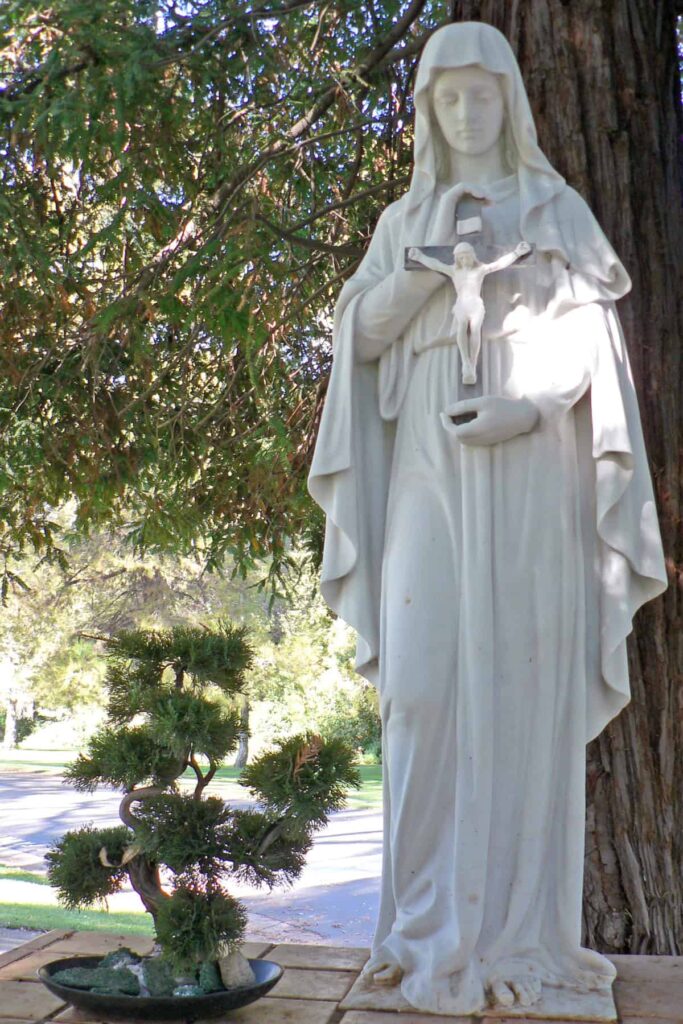
“Christ often chose solitude for Himself, and counselled his disciples to do likewise.”
Constitutions, 54
Solitude is an important element of Passionist life. It provides the space in which to reflect and pray.
Aspiring to be men and women of prayer, we must exert ourselves to develop a practice of solitude in our lives. Withdrawing to some degree from the world, we can draw closer to God, understand God’s saving plan and what it might ask of us, and appraise more objectively secular trends and standards (cf. Constitutions, 54).
Questions for Reflection
- As aspiring men and women of prayer, how frequently do we work on developing a practice of solitude?
- Do we use opportunities of being alone and in solitude to understand and prayerfully meditate on the Passion of Jesus remaining “always in our hearts”?
Poverty
“As far as possible we intend to share our life with others, and to use our possessions for the relief of suffering and for the increase of justice and peace in the world.”
Constitutions, 13
We strive, both as individuals and as families and communities, to characterize our lifestyle by an attitude of genuine detachment from, and just stewardship of, temporal goods (Constitutions, 10). We seek to place “ourselves, our talents, our work, and our achievements” in divine service (Constitutions, 11). This may lead to insecurity and at times lack of necessities, yet we strive to place our full confidence in God and God’s supporting grace. “In a world where the unjust distribution of goods is a major source of division, hatred, and suffering, we want our poverty to witness to the true value and purpose of these goods. As far as possible we intend to share our life with others, and to use our possessions for the relief of suffering and for the increase of justice and peace in the world” (Constitutions, 13).
Questions for Reflection
- To follow The Passionist Way is to commit to a lifestyle characterized “by an attitude of genuine detachment from, and just stewardship of, temporal goods.” How could such a life be a genuinely more fulfilling life? Why do we fear making that commitment?
- So many people think they have an inviolable right to use their wealth and possessions anyway they like. But The Passionist Way says we should “use our possessions for the relief of suffering and for the increase of justice and peace in the world.” Why, despite our fear and resistance, might trying to do so be both joyous and liberating?
Family
Family is an integral part of human life. All of us who live The Passionist Way include and embrace our family members, both vowed and lay, with love, intimacy, and affection. These family members include relatives, friends, children, spouses, partners, brothers, sisters, those living in vowed Passionist communities, those who live alone, and those who do not have the benefit of living in a community grounded in The Passionist Way. Some people live in unique situations, such as those who are incarcerated, homeless, ill or in transition due to violence, war, injustice, and poverty. We include, love, and embrace all our family members.
Family is an integral part of human life.
We share The Passionist Way with all of our family members by engaging in caring, intentional dialogue about our personal commitment to The Passionist Way while asking for support and prayers. We also realize that some will reject our personal commitment. Whatever their response, our intimate support for our family members is of primary importance as we live The Passionist Way.
All of our family members are invited to share our commitment on any level of involvement. Communication with all members of our family, both distant and close, is an essential part of our family obligation to love and include all. We especially acknowledge our familial obligations of love for those with whom we live every day at home.
Questions for Reflection
- How does The Passionist Way call us to broaden our definition of family? Why should we?
- According to The Passionist Way, we are obliged to communicate with all members of our family. Is there a family member who especially needs to hear from you? One with whom you have fallen out of communication?
Community
“The Christian community is founded on the love of Christ, who by His Cross, ‘tore down the wall of separation’ and made all one people.”
Constitutions, 26
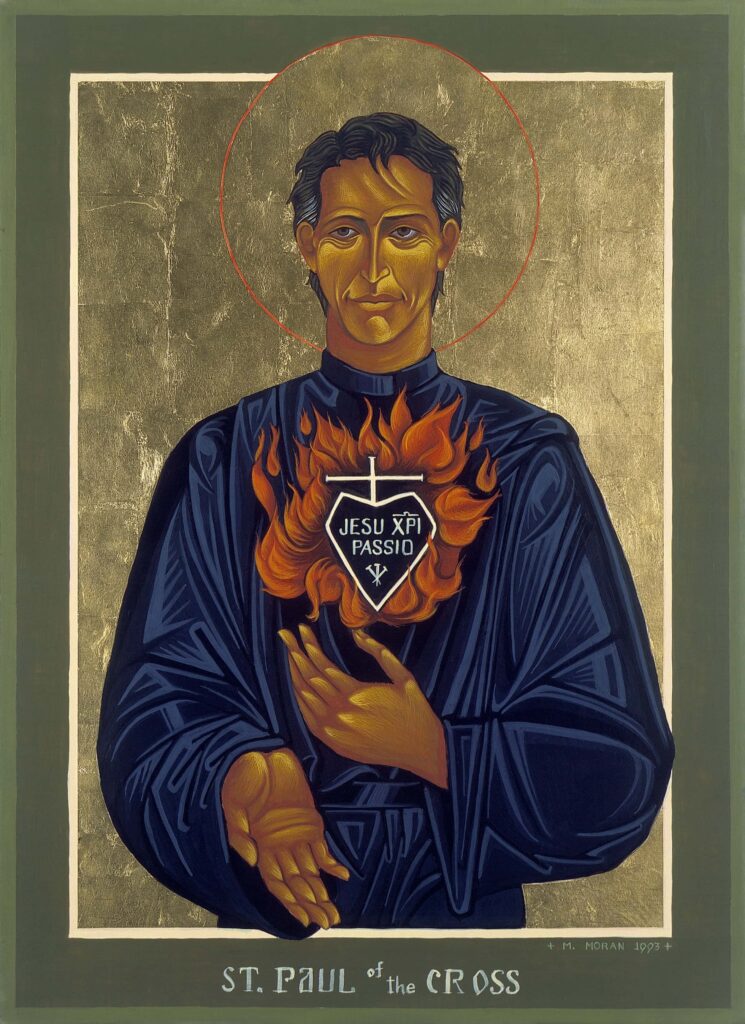
by Brother Michael Moran, CP
Since we are united in Christ, each one of us in the Passionist Family of Holy Cross Province “…acknowledges with respect the dignity and equality of every other member, whom we accept as a unique individual” (Constitutions, 26). We make a conscious commitment to help each member of the Passionist Family, whether vowed or lay, develop his or her individual personality and talents.
As members of the Passionist Family, we commit to the ongoing co-creation of community, coming together on a regular basis “to help, encourage, and forgive each other” so that relationships can be fostered and flourish. We strive to co-create community that is “characterized by joy and peace” and “mutual esteem” (Constitutions, 28).
Some methods to immerse ourselves in this spirit of a loving community include:
- Cultivation of goodwill toward one another and actively seeking one another’s good;
- Readiness to spend ourselves in apostolic labors, in service to those who are suffering and marginalized as well as to the Congregation;
- Generous sharing in tasks and responsibilities inherent in common life;
- Patience with ourselves and others;
- Commitment to sharing of our resources and gifts in our community and beyond;
- A willingness to dialogue and reconcile with individuals in our lives with whom we disagree.
Those of us who are lay members of the Passionist Family recognize that we are not trying to create a replica of vowed community life in our own homes by living The Passionist Way. Life continues with all its ongoing demands and obligations. Many of us are integral members of other social organizations, faith communities, businesses, and civic institutions. Living The Passionist Way nurtures and sustains us as we are sent forth to share and build the Kingdom of God among those with whom we interact in our daily lives. We embrace this “Apostolic Spirituality” in our lives along with the new ways of living every day which inform and fuel it.
Guided by the Spirit and in response to the signs of our times, we who are in the Passionist Family acknowledge and welcome new forms and models of how The Passionist Way can be lived in community among both vowed and lay. The response to the Spirit may call us to transcend boundaries we have become accustomed to over time. Visioning and co-creating new forms of living The Passionist Way together as the Passionist Family are welcomed with good stewardship, dialogue, and commitment to our shared Passionist Charism.
Questions for Reflection
- We are created for community and cannot have a truly good human life without healthy, vibrant communities. What would this mean for you? Have you ever experienced it? Why does there seem to be a glaring absence of such communities today?
- The Passionist Way reminds us that on the Cross, Christ overcame all the forces that divide and separate—all the forces that undermine community and weaken our lives together. What forces of division and conflict seem most prevalent today? Considering The Passionist Way, how might you respond to them?
- The Passionist Way suggests that healthy communities do not just happen but must be intentionally and continually cultivated. What would be some practices for nurturing and sustaining truly life-giving communities, whether in our families, our relationships, our churches, or the larger society?
Since we are united in Christ, each one of us… “acknowledges with respect the dignity and equality of every other member, who we accept as a unique individual.”
Formation and Education
As the Passionist Family of Holy Cross Province, we understand ourselves to be companions of St. Paul of the Cross, walking together the path that he blazed. As such, we believe mentoring and walking together with other members of the Passionist Family to be essential to each of us as we grow in our understanding and depth of experience of our charism, and live into the fullness of who we are called to be as Passionists.
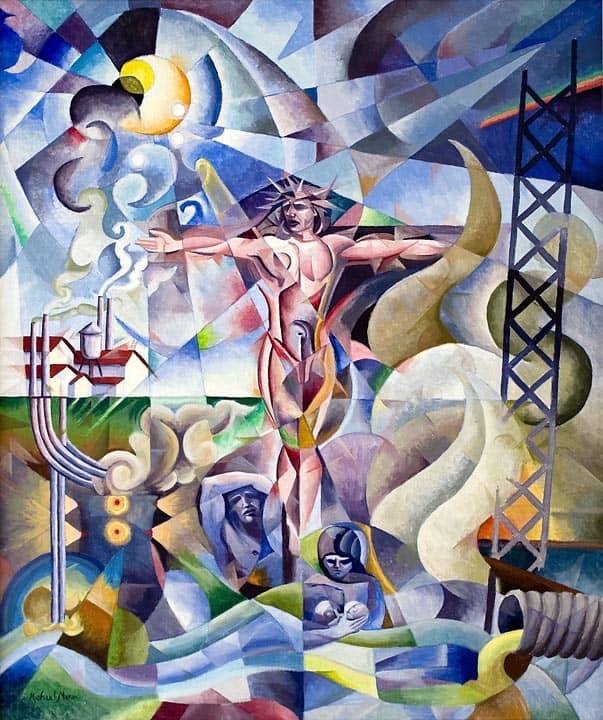
by Brother Michael Moran, CP
We therefore recommend that each member of the Passionist Family engage in regular spiritual direction. We also recommend that new companions of Paul of the Cross be paired with a mentor member of the Passionist Family who will accompany them on their journey. We believe that relationship is primary on the Passionist journey, the relationship of persons whose hearts are imprinted with the Memoria Passionis, coming to know each other deeply as together they grow in love of God and neighbor.
In addition to these foundational relational ways of deepening our understanding of who we are as Passionists, individually and collectively, formation opportunities are offered through the Office of Mission Effectiveness (OME) and through the Holy Cross Province website, passionist.org, as well as through academic institutions like Catholic Theological Union.
A commitment to ongoing formation is essential for members of the Passionist Family.
Questions for Reflection
- The Passionist Way affirms that none of us can learn, much less grow in, what it means to be a Passionist on our own. We need companions, fellow members of the Passionist Family, walking that journey with us. Who have been “companions of St. Paul of the Cross” who have helped you learn what it means to be a Passionist? What made them good mentors?
- Why is formation and education as Passionists always unfinished and incomplete?
Grace and Movement of the Spirit
To be a member of the Passionist Family is to engage in ongoing discernment of the signs of the times and the movement of the Spirit. In the spirit of faith, hope, and love, “we seek to discern the signs of the times, following the example of St. Paul of the Cross, who saw ‘the name of Jesus written on the foreheads of the poor’” (Constitutions, 72).
In the spirit of faith, hope and love, “we seek to discern the signs of the times, following the example of St. Paul of the Cross, who saw ‘the name of Jesus written on the foreheads of the poor.’”
-Constitutions, 72
Guided by the teachings of the Church and our own commitment to keeping alive the memory of the Passion of Christ, “we strive to make our lives and apostolate an authentic and credible witness on behalf of justice and human dignity. Accordingly, our lifestyle must stand out as a prophetic condemnation of the injustices among which we live” (Constitutions, 72).
Questions for Reflection
- Every follower of The Passionist Way is called “to keep alive the memory of the Passion of Christ.” How might the Holy Spirit be calling you to do this today?
- What would change if we, like St. Paul of the Cross, “saw ‘the name of Jesus written on the foreheads of the poor’”? How, following The Passionist Way, can we cultivate that moral and spiritual vision? Why is doing so especially urgent today?
Living The Passionist Way
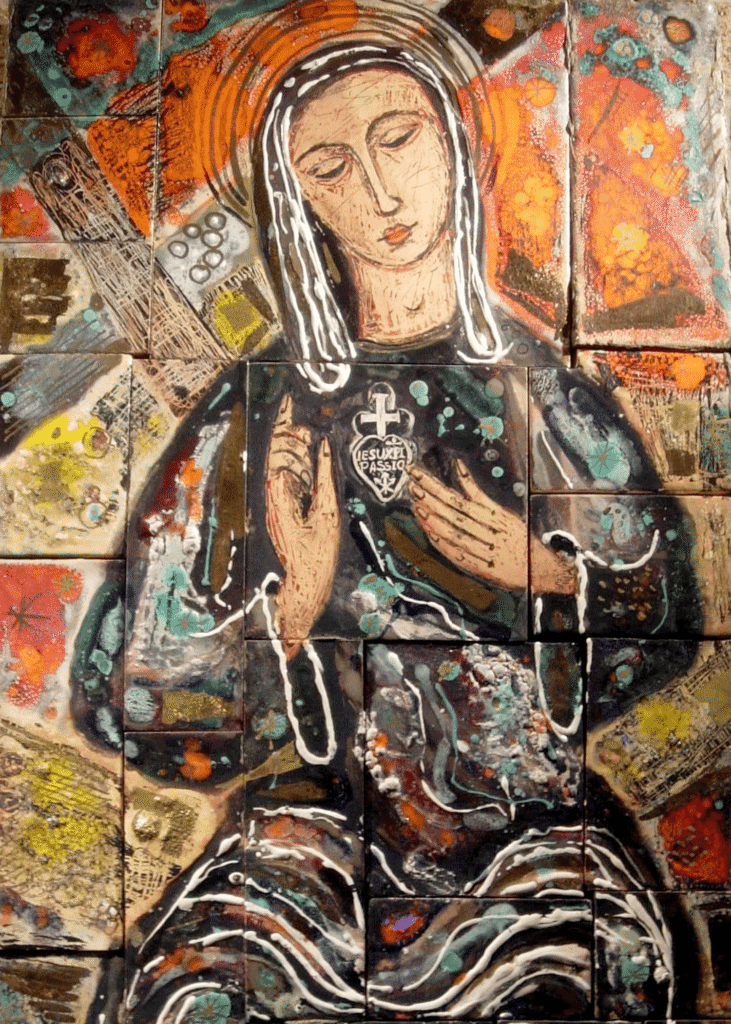
hangs in the chapel at St. Paul of the Cross Passionist Retreat & Conference Center in Detroit, MI
Steeping our hearts in the Passion of Christ daily by living The Passionist Way fills each of us with a love that overflows in action. We find a way to express this love in our varied ministries and service to all and to creation.
The intersection of our hearts and the Cross as symbolized in our Passionist Sign is a dynamic and intimate event which compels us to preach God’s love for us all. We do this by providing hospitable schools of prayer in our retreat house ministries, itinerant preaching in parishes and media, service to the poor, the ministry of prayer, various other ministries, and work in our daily lives as people full of love flowing from the Passion of Christ.
The intersection of our hearts and the Cross as symbolized in our Passionist Sign is a dynamic and intimate event which compels us to preach God’s love for us all.
Living The Passionist Way is not easy. The nails on our Passionist Sign proclaim this reality. Yet, we embrace this reality, accept this invitation to live The Passionist Way, and boldly stand together in our world.
Questions for Reflection
- The Passionist Way is not a collection of pious ideas, but a way of life to be taken to heart and practiced every day. What do you find most attractive, promising and hopeful about The Passionist Way, but also most challenging and difficult?
- The Passionist Way “fills each of us with a love that overflows in action.” How are you called to express this love today? How are you compelled “to preach God’s love for us all”?
We Passionists, followers of St. Paul of the Cross, are men and women, vowed and laity, who:
Keep Alive the memory of the Passion and Death of Jesus in our hearts through prayer and contemplation;
Share this inclusive message of God’s love for all, in response to the signs of our times, through our ministry of prayer, word, and action; and
Embrace each other in community at the foot of the Cross, along with all those who are suffering, and all of creation.
The Passionist Way calls us to a life of gratitude and thanksgiving. It is blissfully easy to fulfill that commission when we remember all those who contributed to bringing The Passionist Way to life. First, we are deeply grateful for the enthusiastic support and encouragement of Fr. Joe Moons, C.P., who was Provincial of Holy Cross Province in 2019 when the idea of something like The Passionist Way was first proposed; his Provincial Leadership Team of Fr. Jim Strommer, C.P., Fr. David Colhour, C.P., Fr. Phil Paxton, C.P., Fr. Alfredo Ocampo, C.P., Faith Offman, Joe Castro, and Keith Zekind added their encouragement. That support and encouragement continued when Fr. David Colhour, C.P. was elected Provincial in June 2023, along with his Provincial Leadership Team of Fr. Jim Strommer, C.P., Fr. Febin Barose, C.P., Fr. Bruno D’Souza, C.P., Fr. John Schork, C.P., Faith Offman, Joe Castro, and Keith Zekind. Without the strong and ongoing support of the leadership of Holy Cross Province, The Passionist Way would have remained little more than a promising possibility.
Families flourish when every member pitches in and that’s certainly no different with the Passionist Family of Holy Cross Province. From beginning to end, The Passionist Way was a wholly communal endeavor, the collective work of what became known as “The Passionist Way Committee.” Thanks to the wise and enthusiastic leadership of Tim O’Brien, the first chair of the committee, we gradually came to a much sharper sense of what kind of text would be most suitable for the Passionist Family of today. During his time as director of Mater Dolorosa Passionist Retreat Center in Sierra Madre, California, Michael Cunningham also served on the committee and made invaluable contributions to our work. Those who continued on the committee and composed what eventually became The Passionist Way are Terry McDevitt, Lissa Romell, Carl Middleton, Faith Offman, Fr. John Schork, C.P., and Paul Wadell. Their efforts were wonderfully (and patiently!) enhanced by Claire Smith and Ryan Gold whose technological skills and creativity shepherded the text to formal publication. Our gratitude to Claire and Ryan is joyous, lasting, and deep. And we surely cannot overlook those who translated The Passionist Way into Spanish. Thanks to their hard work, The Passionist Way is available to more members of the Passionist Family.
From the outset, we wanted The Passionist Way to be an attractive and inspirational text that would invite personal reflection and prayer, and that would help every Passionist Family member “keep alive the memory of the Passion” in their hearts. That goal could hardly be fulfilled without the beautiful artwork of Fr. David Colhour, C.P., who designed the frontispiece of The Passionist Way, and the paintings of Br. Michael Moran, C.P. and Laura James that are interspersed throughout The Passionist Way and invite us to prayerful contemplation and ongoing conversion. We are equally grateful for the captivating, and often stunning, photos of Cathy Adamkiewicz, Fr. Febin Barose, C.P., Nancy Nickel, and Claire Smith. Thanks to them, we are reminded that The Passionist Way is not only meant to be taken to heart and brought to life by each of us. It is also a summons to join our lives to the crucified Christ so that we might stand in compassionate solidarity with all the crucified of today.
Finally, we are grateful to the “Passionist Companions.” Under the leadership of Carl Middleton, Mark Brockman, and Phil Jackson, this little group began meeting monthly in the fall of 2022 to discern the relevance of the Passionist charism for their lives as well as how they might be called to contribute to the Passionist Family of Holy Cross Province. The Passionist Companions were the first in the Passionist Family to probe the meaning of The Passionist Way and to regularly dialogue together about how best to live and witness it. We are grateful to them and to everyone else who has contributed in any way to the gift that we call The Passionist Way.
We invite all who hold this book in their hands to journey with us on The Passionist Way together!