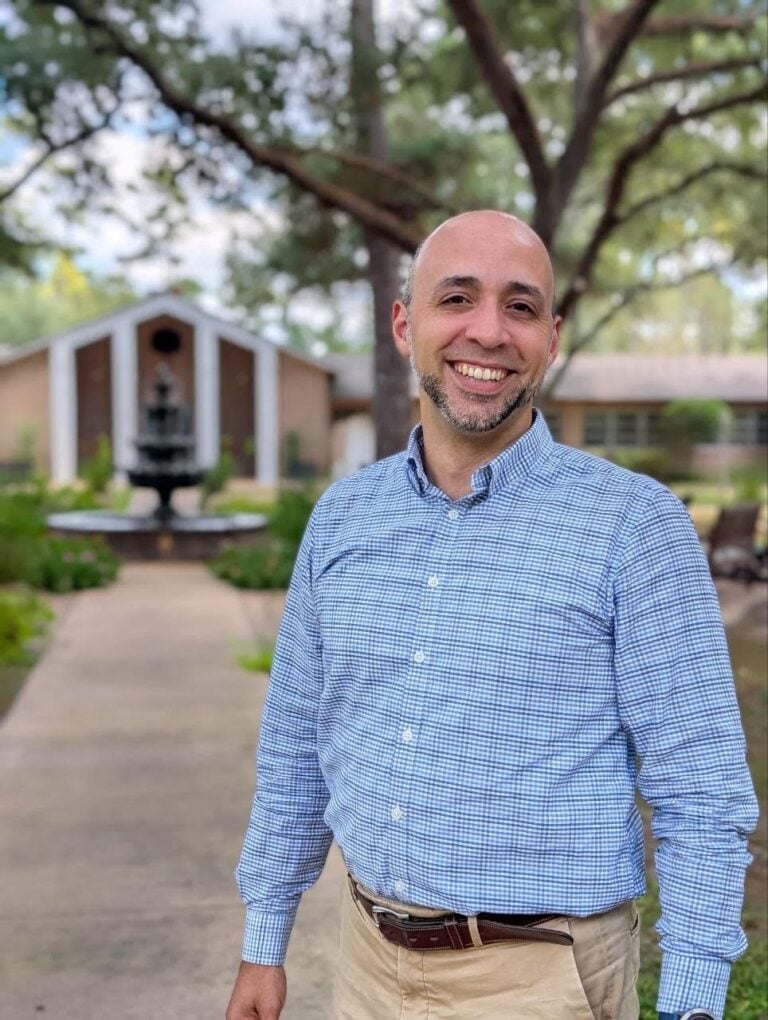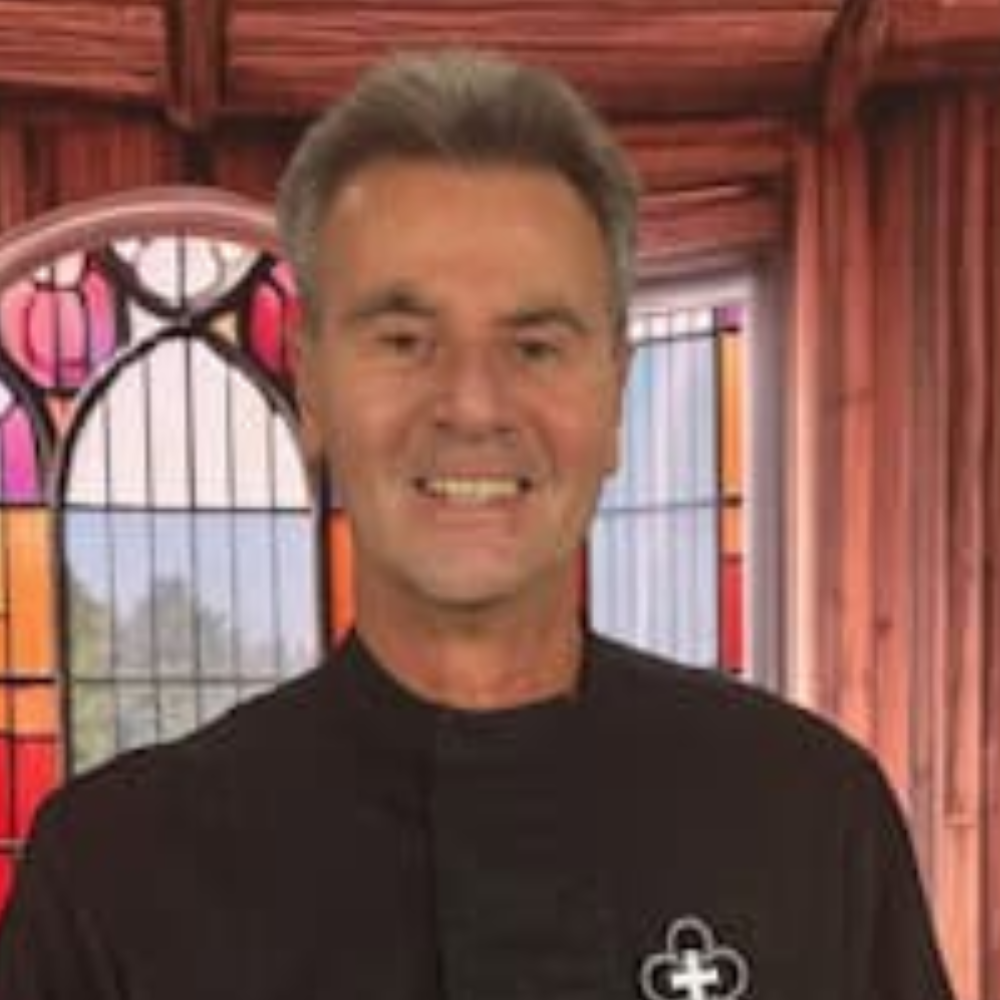
Father Cedric Pisegna, CP, of Houston, Texas, found his calling to media ministry through earnest prayer. While he was on retreat, God spoke to him about believing in prayer. God acted through Father Cedric’s prayer and opened the doors for a wider outreach. Today, he frequently preaches and broadcasts about prayer.
Beginning in 1991 and continuing to the present, Father Cedric has used a variety of platforms to influence people of all denominations, including print, social media, a website and broadcast media.
“I always say we must have a Church with and especially without walls.”
Fr. Cedric Pisegna, CP
Preparing for a Broader Mission
Immediately after his ordination in 1991, he was inspired to pursue television ministry. However, dreams take time to develop. Father Cedric first spent years preaching missions. In 1999, he began writing books.
“I was being prepared for the broadcast ministry,” he says of the process.
Finally, in 2006, the door opened for television.
“I started on purely Catholic diocesan television stations, such as those in Boston and Long Island. Finally, God opened the door for me to air on Christian networks—Trinity Broadcasting Network, Daystar Television Network and the Catholic EWTN,” Father Cedric explains. “I produce episodes for TV and for radio.”
Reaching People Beyond Church Walls
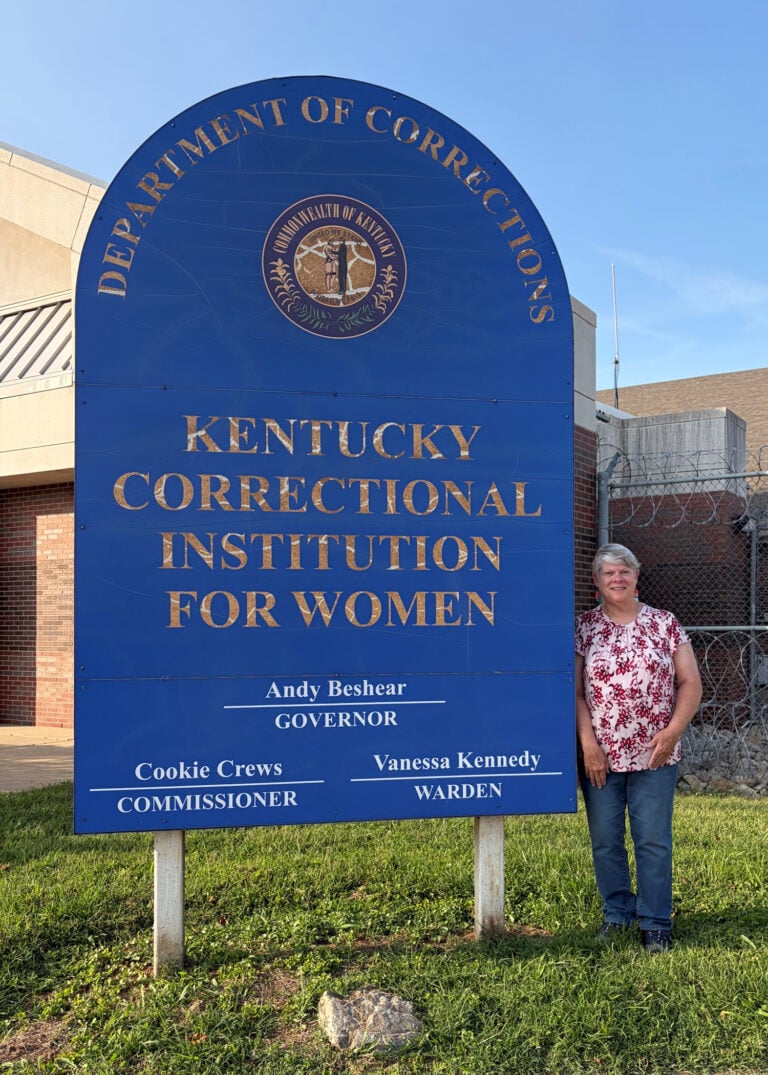
Father Cedric’s programs reach beyond the walls of the Church and into the walls of prisons. Through these networks, he ministers to people who are incarcerated.
“I try to reach out to people of all faiths, and especially to those who have not yet come to faith. I want to be there to inspire them to find God in their lives.”
Fr. Cedric Pisegna, CP
Inspired by his pre-Passionist career as a social worker and by the experiences of people he has met through his priestly ministry, Father Cedric understands the needs people have. The Passionist way of focusing on Christ’s suffering on the cross is relevant and engaging to those who are struggling and suffering.
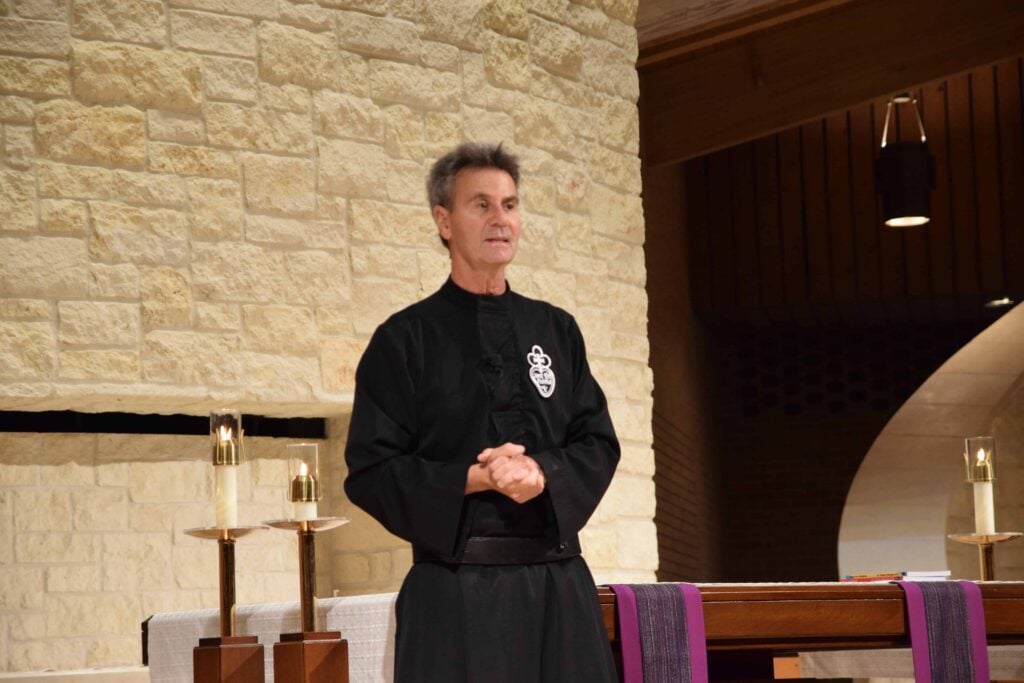
Sharing the Gospel Through Storytelling
“I am very orthodox—biblical, Catholic—and I share my own experiences. I preach in a way that tries to capture people’s interest,” says Father Cedric.
“Storytelling really helps. Stories were Jesus’ genius. People have heard all the theology jargon, and it puts them to sleep. My hook has to do with real life, real issues and real solutions. I talk about things like anger, mental illness, grieving and bitterness in relationships. But my heart is trying to save their souls.”
Continuing the Passionist Mission
Father Cedric sees his media ministry as directly continuing the work of St. Paul of the Cross, who was nicknamed “the hunter of souls.”
“Broadcast media is an extension of itinerant preaching. St. Paul of the Cross was an itinerant preacher. I have preached in parishes in almost every state,” Father Cedric explains. “Now God has augmented my outreach through broadcast, printed and social media.”
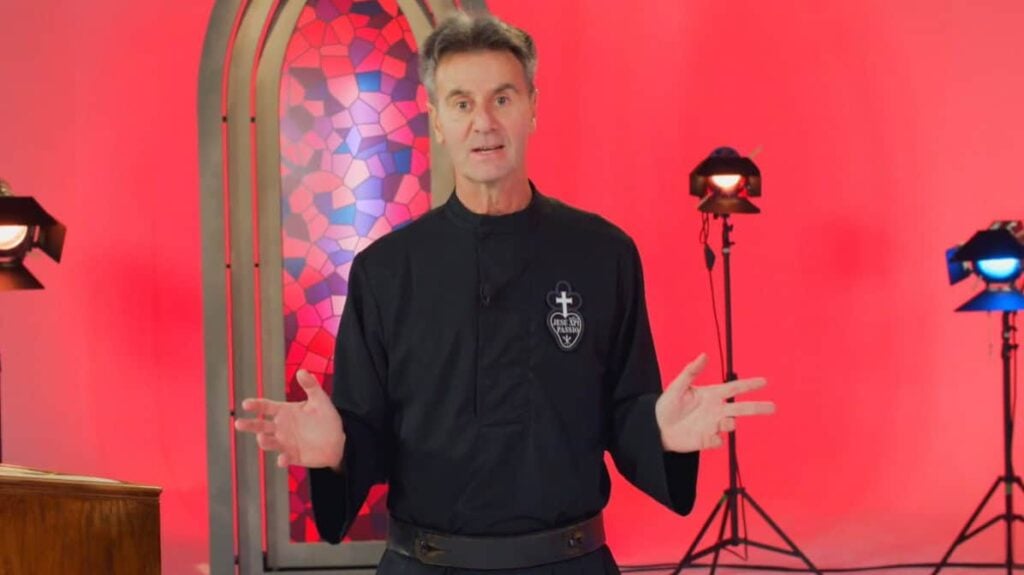
His recently renewed website proclaims the mission: Touching Lives/Saving Souls. His slogan is “Live with Passion!”
“Passion is a catchword in today’s society,” Father Cedric shares. “I want people to be their best, to achieve and realize their potential.”
“Deepening your relationship with God and being your best self is purpose, and passion flows from purpose.”
Fr. Cedric Pisegna, CP
Whether through his latest book or video series, Father Cedric is determined to be a voice of truth in this generation.
Read more about Fr. Cedric Ministries
Extended Video Interview
0:00 Opening music
[Music]
0:08 A church without walls
Mary Kay: In what ways does your media ministry reach out to people?
Fr. Cedric: In many different ways, Mary Kay. I have various platforms. Media means communication, and we’re all familiar with something called printed media. That’s books and booklets and prayer cards, and I have all that. I have 25 books and many booklets.
Then there’s something called social media. That’s Facebook and YouTube and websites and that type of thing, and I have a platform on that. I have a very new, updated website. My website has been about 15 years old, but I just got it updated about a month ago—and more than updated, a whole new website.
Then, of course, there is broadcast media, which has to do with television and radio, and that goes beyond the walls of the church. I always say that we have to have a Church Without Walls. We have a church with walls. We need that. But we need a Church Without Walls too.
It’s really the broadcast media that is my outreach. What that does is, once people see me, they come toward the printed media. They come toward the social media. That drives them there. But it’s the broadcast media that covers the most people and then drives them to the other media where I can touch them, hopefully.
My mission statement is: Father Cedric Ministries is committed to reaching out to as many people as possible in as deep a way as possible. I try to reach out to as many people, and what I mean by “a deep way” is through my printed media, through my website, trying to inspire them—not just with the radio programs and the television programs. I want them reading my books, and if they’re doing that, I know I’m getting them in a deep way.
2:04 Developing the ministry and entering television
Mary Kay: How long have you been doing your ministry, Father Cedric?
Fr. Cedric: Well, I was ordained a priest in 1991, so that’s 33 years now. I wanted to get into television when I was ordained, but things don’t happen that quickly. You have to be obedient. You have to get your feet wet. You have to develop material, and that’s what I was doing all those years.
I started writing books in 1999, so that was eight years after I was ordained. That was 25 years ago now, and I’ve written 25 books. I still had that dream for television, but it really wasn’t happening. I came to realize in retrospect that I was being prepared for it, but I needed time to develop. Part of what I needed was that printed media. I needed some books.
I finally started getting into television in 2006, so that’s seven years after I started writing books. I don’t know if you know about diocesan television stations. Some dioceses—not many—have television stations. One is Boston CatholicTV. Another is NET TV in New York. Catholic Faith Network is Long Island, New York. There’s Scranton, there’s Louisville, there’s San Antonio, there’s Baton Rouge, so there’s a number of them. Unfortunately, some of the larger dioceses, like Houston or Los Angeles or even Chicago, do not have Catholic TV stations. New York does.
I started on those stations. I started on purely Catholic stations. That was 18 years ago now. Then finally God opened the door for me to get on networks. A network is a conglomeration of stations in just about every city in the United States.
My breakthrough was the Trinity Broadcasting Network. That’s a Protestant network based in Southern California, and I’m the only Catholic on there. I’m on Sundays at 7 a.m. Eastern time. Then I got on another Protestant network called Daystar Network, based in the Dallas–Fort Worth area. I’m on at one o’clock on Sundays, Eastern time.
Some years later, through an act of God, a miracle of God, I got on the Catholic network, Eternal Word Television Network—EWTN, as it’s commonly referred to. They’ve given me a prime time right after the Mass on Sunday mornings, 9:30 Eastern time. I also have a late-night time on Friday mornings at 5 a.m. Eastern, so they give me a couple of airings.
It’s those networks that really blanket the whole country, and it goes internationally at various times, and Canada. Basically, it’s the networks that do a lot of coverage, but those diocesan stations do quite a bit. Also radio stations: I’m on Radio Maria and some other selected stations, but I don’t have the radio coverage like I do in television. Television has been my main forte with broadcast media.
5:18 Evangelization and ministry with people in prison
Mary Kay: How do you find that media ministry makes a difference for you and for the Passionists in sharing the faith? What does it allow you to do? What do you feel that it allows you to do?
Fr. Cedric: Well, we have to go back to the new evangelization. St. John Paul II called for something called the new evangelization. He wanted new expressions. He wanted new methods. He wanted new ardor—that means enthusiasm—in the ways to evangelize and the way that we do it.
I try to do it through storytelling, through humor, through good old Gospel preaching, through my own experiences. This new evangelization is what this media ministry is all about. It is Catholic, but it’s Christian. I try to reach out to people of all faiths. It’s very ecumenical.
I especially try to reach out to people who aren’t going to church. It reaches into prisons. We have a Church Without Walls that goes into the walls of prison because EWTN and TBN, possibly Daystar, broadcast into prisons. I get many letters. I even have donors who are people in prison. I don’t like to call them prisoners, but they are people in prison. It’s amazing. I get supported even by them.
Through television media, I started getting letters. There was mail and money and benefactors, but I also started getting letters from people in prison. I realized that my programs were going into the prisons and the incarcerated were watching. Not only a few, but some were donating. Can you imagine getting money from people in prison because they wanted to support my program? I was so touched by that because how much money do they have?
More and more letters started coming in, and I finally developed what I call a pen pal ministry. First of all, we send them Bibles that have pictures in them instead of just words—pictures that they can understand. They’re illustrated Bibles. I send them my books free of charge as they request them.
I developed a pen pal ministry where I’ve got hundreds, with an S, of laypeople writing people in prison and being a pen pal, and they’re writing them back. It’s very anonymous. I have a coordinator who does that, who gets the letters and sends out the letters. It’s a wonderful way for people to relate to those who are in prison and to help those people.
To me, the poor and the crucified—people in prison are a part of that, as well as people who aren’t going to church, people who are lost. That’s what media ministry does. It’s very passionate. We reach out to the poorest of the poor that way.
In a nutshell, that’s my pen pal ministry and my ministry to the incarcerated, and it’s a joy. I never planned on doing that when I got into media ministry, but it’s an offshoot of it. I’m so happy to be able to reach out to those folks.
8:42 Proclaiming the Passion and addressing real life
Fr. Cedric: Basically, my message is very Catholic and Christian. It’s beyond Catholicism. My faith is big enough for everybody. I try to talk about the Passion whenever I can. I explain my habit. I always wear my habit when I preach. I talk about our sign, the Passion of Jesus Christ in the three languages: Hebrew, Latin and Greek.
That is our first vow as Passionists, and this gives me an opportunity to proclaim the Passion in a unique way through writing and also through broadcast media. It’s very Passionist, and it has to do with the new evangelization. It’s evangelical in that I’m proclaiming the Gospel.
I try to center on the core Gospel message, which is Jesus, and I break that open in many different ways with a lot of different stories. Also the kerygma—that’s a Greek word. The kerygma of the early Church had to do with the message of the early Church: the forgiveness of our sins, receiving the Holy Spirit, salvation through the Cross. That’s my main message.
But you can’t just proclaim that and stay on television. That’s the core message, but you have to appeal to a wide audience, and I do that. I’m a fisher of men and women. Fishermen use bait, and what I do—my worm, my hook—has to do with real life, real issues, real solutions. In fact, that’s the title of my latest book, Real Life, Real Issues, Real Solutions.
Therefore, I talk about things like anger, mental illness, grieving, bitterness that people go through in relationships—the real-life issues that people are going through. They want solutions. They want somebody who understands grieving and loneliness and despair. I’ve gone through some of that in my own life, so it’s real easy.
I spend a lot of time on addictions, the 12-step program. Our retreat center in Houston, Texas, is a mecca for the 12-step program: Alcoholics Anonymous, Overeaters Anonymous, Sex Anonymous, Gamblers Anonymous. In fact, we have retreats here at the retreat center, Holy Name Retreat Center in Houston, and I learned a lot through my ministry with them.
I’m not in the program myself, and I even wrote a book on it called There Is a Solution. That comes right from the 12-step Bible. The 12-step Bible has to do with addictions and recovery from addictions, and it’s called There Is a Solution. It was written by Bill W.
I talk a lot about addictions, and that attracts a whole other segment of people, especially as I talk about recovery. These programs that I create are aired on all those networks. In fact, EWTN was very amenable to me talking about addictions. Their COO, Doug Keck, has an interview program called Bookmark, and he has interviewed me on five of my books so far. We’re talking about my sixth one pretty soon. One of the books that we did an interview with was There Is a Solution, and that’s my book about addictions and recovery. I’ll stop there.
12:21 Creating new programs and continuing to grow
Mary Kay: It sounds like it’s a very dynamic process for you. It sounds like it’s easier maybe to write first and then to talk about it through your broadcast avenues.
Fr. Cedric: I think in the beginning, Mary Kay, you’re exactly right. In the beginning, that’s how it happened. But then I kind of went beyond my books, and now I have to develop programs all the time. Instead of asking me, “How are you doing?” you should say, “What are you developing now?”
I’m working on a new series now that we just filmed. I’m editing with my producer, and I’m also writing for a new series at this very moment. I have to keep producing because people don’t like reruns, and that has expanded my horizons. It’s stretched me as a Christian and as a priest. I had to develop new material.
For example, I produced a whole series on the Gospels. I talked in one episode about just the Gospel of Mark, just the Gospel of Matthew, just the Gospel of Luke, just the Gospel of John, Acts of the Apostles, Passion narratives. I’ve never done anything like that before, and I did it. I think it’s one of my finest series to date.
I’ve produced over 300 episodes that are being aired. It’s a wonderful opportunity for me to grow personally, to expand my influence, to expand my teaching.
13:50 Itinerant preaching in the Passionist tradition
Fr. Cedric: But I also have to let you know that this all came out of what’s called itinerant preaching. St. Paul of the Cross, the founder of the religious community, the Passionists, Congregation of the Passion—that’s why we have CP after our names, Congregation of the Passion. It just happens to be my initials, Cedric Pisegna.
He was an itinerant preacher. The word “itinerant” means a wandering preacher. For some 30 years now, 35 years, I have traveled. I’ve preached in parishes in just about every state in the United States.
A parish mission is something like a retreat. I go into a parish on the weekend, Saturday vigil, Sunday Masses, and I preach and call them back to come Monday, Tuesday, Wednesday, morning and evening, for talks. That’s how I began my ministry, doing that.
I thought, “These are great people, and they’re the best, and I love them, and I want to encourage them, but I want to reach out beyond the walls of the church.” That’s how my dream for television was birthed. Primarily, and I still do this, I’m an itinerant missionary. I do it now beyond the walls of the church, so I do it within and without.
15:13 Passion and purpose
Mary Kay: It has to be kind of exciting to feel like you can reach out to more people, to get the message out.
Fr. Cedric: Well, you used the word “exciting,” and you’re just right. I talk a lot about—and this is one of my mottos—“Live with passion.” At the end of my program I say, “Don’t just live. Live with passion.”
Of course, we’re Passionists. Passion is a catchword in today’s society. Passion means suffering, but it also means enthusiasm and exuberance. You can’t really have passion, in my mind, unless you have purpose.
What this has done, the media ministry, the broadcast ministry, has given me new purpose, additional purpose. I have purpose as an itinerant preacher, and that gives me a lot of passion. That’s what people were saying to me in the beginning. They were saying, “Wow, you have a lot of energy, a lot of enthusiasm,” especially when I was younger. I’ve been in this now for 35 years.
I developed that through media. It’s the passion to create, the passion to develop, to produce excellent episodes, the passion to reach out to even more.
I don’t know if you’ve ever heard the Prayer of Jabez. That’s a prayer from the Bible, and it was popularized by Bruce Wilkinson’s book The Prayer of Jabez. It’s a prayer right from the Bible that says, “Lord, that you would bless me, keep me from evil and expand my influence.” Those aren’t the exact words, but that’s my prayer. That’s my dream.
That dream was in my heart for years and years, and I never knew if it would ever come to pass. I believed. I prayed. I worked hard. But for these things to happen, it can’t just be my efforts. It has to be in cooperation with grace.
God was working behind the scenes the whole time, giving me the dream, birthing the dream in me, watching me. You have to be prepared for a promotion—I call it promotion. Then when the time was right, finally it started happening, and I am in harvest now, extremely happy about it, thanking God that the dream that I had in my heart didn’t just die.
Dreams do come true for some people, but you have to cooperate. You have to be obedient. You have to be praying. You have to be believing, and you have to be working. A lot of people think, “Oh, God will just do it if God wants to do it.” Well, you’ve got to work with God.
I had to do a lot of things, like flying to EWTN, talking to the executives, getting them to trust me, flying to other places, learning about what I had to do to produce these programs. How do you do it? Getting producers, raising money—there are a lot of ingredients that go into this. I’m a type A personality. I guess I’ve got the right stuff to do it.
Mary Kay: Well, I think it definitely is a lot of hard work. I think people tend to think, when they watch something online or on TV, that it’s just this effortless thing. There are so many components to it behind the scenes that we don’t see. Kudos to you for selling what you needed to sell and to have the Holy Spirit guide you to the right people and all of that. That’s amazing.
Fr. Cedric: It is an amazing journey. Again, I’ve been in this 35 years and 18 years in television, and probably about five years preparing for those 18 years. It’s been a journey. I would do it again. It’s been hard. I had to be at the right place at the right time, and it’s amazing how all that happened.
19:17 Passionist identity and reaching young people
Fr. Cedric: But I also want to say that it’s a Passionist ministry. This is what the Passionists are all about. We are about evangelization. While this is called Father Cedric Ministries—people on television go by that, like Joel Osteen Ministries or Joyce Meyer Ministries—that’s why I use my name. I don’t just say “the Passionists” because people just wouldn’t know what that is, especially since I’m in ecumenical networks.
This is a Passionist ministry of evangelization, and I do talk about the Passionists, and I’m hoping for vocations. We’ve had some nibbles. It’s hard to get young men and young women interested. I know that they are watching, and I do get nibbles, I’ll put it that way. But so far, no people who have joined and become ordained. I’m still believing.
Mary Kay: Well, it takes time. You have to fight against the culture, so at least you’re in the right place to get the message to people because you’re dealing with that part of the culture. It’s being seen, hopefully. It’s hard to get young people to connect with the Church as a whole. I think we’re all sort of struggling with that.
Fr. Cedric: That’s one of the prime reasons I wanted to get into broadcast media, because I began, before I joined the Passionists, as a youth minister. I love young people. They’re talented. They’re beautiful.
Cardinal O’Connor put it this way—he was the founder of the Sisters of Life—he said, “The dazzling value of one soul.” One soul has a dazzling value. Each of us is created in the image of God, and young people have a lot going against them with the culture, as you said.
I wanted to reach out to young people, so I knew that most of them were flipping around on television, surfing. They’re looking on social media, and I wanted to be an option for them. When people hear me preach, most people say, “Father, we found you as we were just channel surfing.” I wanted to be part of the menu, if you will, to have a voice out there to reach out to young people.
But I have to also say the majority of people who watch me, 98 percent of the people, are my age and older, and I realize that. Some people find me who are younger, and I’ve gotten letters from them, and helping them really warms my heart.
That is the original reason why I wanted to get on, because I wanted to reach out to young people. You can’t do it just by being in a church. You can’t do it by sitting in a monastery. You have to go outside the walls of the church.
22:03 Engaging people through preaching
Mary Kay: What have you found in your ministry that tends to work best in engaging—I have the question “to engage the faithful,” but it sounds like a lot of what you’re doing goes beyond that. What do you notice works best to draw people in?
Fr. Cedric: Good preaching. I think the critique of Catholic preaching—pardon me, I’m not pointing a finger at myself, but I do have a gift. I’m not the best, but I keep working at it. I study preachers and I watch them. I’ve worked hard at being clear, distinct. I’ve worked hard at getting stories, at my own personal experience, about having humor.
The great critique of Catholic preaching is it’s not engaging and it’s not relevant. I have tried to be relevant and engaging, and I think I do a pretty good job at that. I’m not just patting myself on the shoulder or on the back. I really have worked at it, and I’m way down the road with Catholic preaching. That’s the way you engage people, by good preaching. That’s what they’re looking for.
My program is not the Mass. Some Catholic media presenters are the Mass, and that’s good. But people want preaching, especially Protestants. That’s what they’re looking for: a word that will inspire them, encourage them and save them. That’s one of the reasons why I’m on these Protestant networks, because I have the guts to proclaim salvation. That’s eternal life through faith in Christ.
St. Paul of the Cross was called—his nickname was—a hunter of souls. I think as his priests and sisters and laity, we too have to be a hunter of souls. One of the ways you go hunting, it’s like a fisherman: you go fishing for people, you hunt for people, you’re a shepherd who looks for the sheep. Media was extremely hard to get into, but now it’s totally worth it.
24:16 Storytelling and inviting people into faith
Mary Kay: What works best to engage those who are disconnected or unconnected from the faith? With your work with people who aren’t Catholic and maybe are not churchgoers, what in the preaching really grabs their attention? Is there one thing? What have you found?
Fr. Cedric: I think storytelling really helps. That’s Jesus’ genius, of course. I try to tell a bunch of stories whenever I create any episode. What are my stories? And trying to stitch them together.
People have heard all the theological jargon. They’ve heard it all. It puts them to sleep. Things like “you are called,” or “by our baptism,” or “you must do this,” or “you ought to do that,” or “you should do this.” My preaching is not moralistic. I talk about virtue and I talk about morals to some degree, but there’s too much of this, too much wagging of the finger, too much what you should be doing.
I don’t usually use the word “repent” that much, although Jesus used it, John the Baptist used it. It’s simply because I understand that it turns people off. The word “sin”—I’m not saying that I don’t, but I don’t a lot, because you’re asking me about how to be engaging. How do you attract people? You attract more flies with honey than you do vinegar. You’ve all heard that before, and that’s true.
I’ve got a good voice. I try to be a sweet preacher, and that attracts people. Otherwise, they’ll click it and turn to the next channel.
26:02 Being down to earth
Fr. Cedric: I have many thoughts going on in my mind right now, but people call us Passionists down to earth, and that means that we’re relating to them. Part of my stories come from the confessional—not that I’m telling stories about what people are saying, but what they say triggers stories in me because I hear what they’re going through.
I wanted to tell you that you said your dad was a social worker. That was my degree. I started in business in college, but the Lord touched me when I was in college, and that’s when I changed my major to social work. Social work taught me about people and being with people and what they’re going through. But it also gave me the tools to be an advocate for myself when it came to media.
Social workers knock on doors. They’re advocates for people. They get it done. I became a social worker, and I knew how to do it for myself too. I didn’t take no for an answer. I knocked on doors. I looked up places for outlets and things like that. That was part of my background. Business is a part of my background. Social work is a part of my background. When I say I’ve got the right stuff, it’s a lot of ingredients in there to make it that way. I have marketing as a background, so it all comes together.
But that’s not to stray from your statement about people and being real. As I say, I think one of the best compliments we get is that you’re down to earth. Passionist preaching in general is that way, I feel, as long as we’re not just saying “the Bible says” or having all this high-in-the-sky type theology.
I want to backtrack and just say I am very orthodox, which means biblical, Catholic, straight-laced. I do talk about these things, but I do it in a way that people can swallow, that it’s not so boring or puts you to sleep, or “I don’t want to hear that,” or “yeah, yeah, yeah.” I think that’s the way we’ve got to be as preachers. Otherwise, people are just going to turn you off, and what good is that?
28:24 Speaking truth with love
Mary Kay: I think so many people feel that they’re being judged by everything they do. If you can make the connection and guide people where they feel connected, where they don’t feel judged, that’s an awesome thing to do. When you read the Bible, Christ didn’t feel judgmental even when he was talking about people who were doing things that they shouldn’t have been doing. He was so gentle and loving that it made them want to stop what they were doing instead of making them feel bad about themselves.
Fr. Cedric: I would say it’s a both-and, Mary Kay. He was very gentle. A smoldering wick he would not quench, as it says. But he was also pretty controversial. He came up with some big things that got the religious leaders mad at him. He told [unclear in supplied transcript], “Go and sin no more.” He would say things like that, but he did it in a very loving way.
Let me just give you a quick example. I was reading a book by a woman named Mandy Harvey. Mandy was deaf, and she was on America’s Got Talent. She sang a song, got the golden buzzer. She said that she wasn’t deaf until college, and she grew deaf and lost her dream of being a music teacher, but she got it back with God’s help.
She says religious people can be some of the most judgmental people that you can meet. For example, they would say, “Well, if you had faith enough, you’d be healed.” It’s like, what kind of a statement is that? You’re saying that because I’m deaf, I don’t have enough faith? That is so judgmental. Religious people can be that way, and we have to be careful about the way we come across.
I’m not saying that there isn’t healing. There is healing. God sometimes heals, but you can’t be judging people like that. That’s just simply wrong. Your statement is true, but I would like to say it’s a both-and. We have to be gentle, but we also have to be Gospel true.
I’m a missionary, and I’m a pastor of souls. I don’t let people get away with things, especially in the confessional. What I mean by that is I tell them the truth in a gentle way because I only have a little time with them, and I’m going to be responsible for what I say. I have to tell them what’s right and what’s wrong.
Mary Kay: I think that’s important. That’s what we look for in a guide. That’s what we look for in a good parent. If you’ve been a parent, you know you don’t say, “Everything your kid does is okay. You can do that. You’re great.” Instead, we have to be honest at times, but not in a cruel way. I think it’s important to do.
Fr. Cedric: A little tough love as well as being permissive.
Mary Kay: You have to kind of read the situation and what’s going on.
Fr. Cedric: Right, to guide, and what people can handle. I don’t come out the first night of the mission hitting them about their sins and “you’ve got to go to the confessional.”
Mary Kay: Exactly. The alternative is a beautiful place to be rather than a place of sadness and feeling alone, so that’s great.
31:50 Prayer at the heart of ministry
Mary Kay: This issue, we’re talking a lot about prayer. One of the questions I had was, how do you incorporate prayer into your media ministry? Do you have particular prayers that you use with people, or do you point them in the direction of different prayers?
Fr. Cedric: Prayer is our lifeblood, of course. It was through prayer that I even got into media ministry, praying for God’s will and harmonizing with God’s will and asking that God’s will would be done. As I said, I’ve worked hard, but it’s a movement of God that opens the doors and gives you the desire and the dreams. Dreams are birthed in prayer, I believe, so prayer is the genesis of it all.
Yes, prayer is one of my major topics on the missions that I preach, itinerant preaching. When we talk about engaging people, everybody who’s Christian prays, but most people feel inadequate or inept, and they want to know how to do it.
St. Paul of the Cross founded what he called retreats for people to come. He didn’t call them monasteries. He called them retreats. He wanted us to be leaders of schools of prayer, as he called it. He wanted people to be able to come to us to learn how to pray. That’s one of the things that I do in media ministry. I try to help people to pray well, whether it be liturgically or intercessions.
But I also talk a lot about what I call a personal relationship with God. That’s kind of a Protestant-sounding term, but it’s very Catholic also. I talk about your relationship with God the Father, Jesus your Savior and the Holy Spirit, the one who lives in you. It’s very personal.
Besides each person of the Trinity, also having a relationship with the Trinity itself, or himself, the Godhead—that’s a theological term. I’ve discovered that most recently in the last year, that besides being Father, Son and Holy Spirit, God is also Trinity, and Trinity is an entity in itself that you can have a relationship with. You can harmonize with the Trinity and have unity with the Trinity.
I also wrote a book about prayer called The Sacred Quest because people are on a quest. They’re on a journey of desire, wanting to know. It’s probably my bestseller because people really want to know about prayer.
I also have a booklet about prayer and how prayer changes us. It can change circumstances, but it also changes us. I give those out free of charge. You go to my website, fathercedric.org. I have a bookstore there. I have free material that you can download, and you can purchase. I’m big on prayer and have many episodes on television and radio about prayer. Printed media, broadcast media, social media—very much about prayer.
34:54 Praying from the heart
Mary Kay: What would you say that most people connect with quickly when it comes to prayer? From the books that you’ve written, what’s been your feedback about “this really made a difference for me”? Or do you see people connecting with different aspects and different types of prayers?
Fr. Cedric: I think one of the hardships that people are going through when it comes to prayer—when you say what connects with people—I would say, as the Catechism states, that prayer is a battle. Just about everybody says, “I should pray more.” That’s because prayer can be difficult. They don’t know if God’s hearing them. They don’t know if they’re doing it the right way. They don’t feel like it. They’re tempted away from it. It’s easier just to watch TV.
Just by telling people that it is a battle, that we’re all in the same boat, that you’re not alone with this, I think that helps them. I’m an advocate of praying from your heart. Go to your room, shut the door, talk to God. Not so much in theological language or rote prayer over and over again, although there’s room for that in Catholicism with the Our Father, the Hail Mary, the Rosary.
When push comes to shove, it’s a personal, deeply personal thing where you just simply go one-on-one with God, and you share, as I like to say, the elephant in the room. What are you dealing with? What are you going through? Talk to God about it. State it.
But when I talk about prayer, the number one thing has to do with thanksgiving and praise and worship. I found in my own life that a lot of times when I pray, I go right into asking for things. “Lord, I need this. Lord, I need that.” Jesus said, “When you pray, your Father knows what you need.” That’s when he introduced the Our Father. He said, “Hallowed be thy name.” That means praise be to your name. Your name is holy. I worship you. I love you.
Spend more time in thanksgiving and praise and worship and watch what happens. That’s what God wants, really. That’s what he’s worthy of. We are a Eucharistic people. Eucharist means thanksgiving.
This, by the way, is the Year of Prayer as a prelude to the Year of Hope next year, the Jubilee year. We just finished the Eucharistic Revival, and part of Eucharist is praise and thanksgiving. It’s a prayer. Eucharist is a prayer, a prayer of thanksgiving. Of course, there are also intercessions. That’s a part of prayer, liturgical prayer. There are so many forms of prayer.
I try to cover that in my book. I talk about how Jesus prayed. I talk about intercessions, about praise and thanksgiving, about “don’t forget to tell God that you love him,” and praying to each person of the Trinity. I’ll stop there.
Mary Kay: I think the relationship part makes it a lot easier, and I don’t think people understand that enough, the talking part. It’s great that you’re able to introduce people to that idea. You don’t have to say it the right way. You just have to talk to God.
38:30 The Trinity and the Holy Spirit
Fr. Cedric: I would say that when you address your prayer, pray, “O Most Holy Trinity.” Address your prayer to the Trinity itself because the Trinity is a living reality, and we can have a personal relationship with the Trinity.
This is something I’m coming to, like I said, in the last year. I know about Trinity and I write about it, but a relationship with the Trinity I really haven’t had, versus a personal relationship with each person of the Trinity.
Let me just jump on the Holy Spirit because you’ve hit a nerve there. My second book was Glorious Holy Spirit, a very popular book, because the Holy Spirit is what gave me a rebirth and a conversion, called me to be a priest. People don’t understand that they have a treasure, a treasure living within, the pearl of great price. That is the Holy Spirit.
To miss the Holy Spirit, to be religious and miss the Holy Spirit—oh, that’s such a tragedy. The Holy Spirit is everything to me. When we talk about prayer, we’ve got to talk about the Holy Spirit.
In fact, Jesus said when you pray, “Seek, ask, knock. If you know how to give good things to your children, how much more will your heavenly Father give the Holy Spirit to those who ask him?” That was right from the Gospel of Luke.
As I told you, I produced an episode about Luke. Luke is the Gospel of the Holy Spirit, which bleeds over into Acts of the Apostles. One scholar called the Acts of the Apostles the Acts of the Holy Spirit because the Spirit is mentioned so many times. In Catholicism and in Christianity, it’s the Holy Spirit that we need and have a relationship with. Go ahead.
Mary Kay: That’s exactly what I think. It was kind of exciting, sort of like you discovered somebody that you didn’t know was there. “Oh, that’s who’s been helping me.” It’s nice to be able to say thank you.
Fr. Cedric: Let me just say, the love—we haven’t talked much about the love of God. It’s the love of God poured into our hearts through the Holy Spirit. The Holy Spirit is so in love with us, passionately, intimately caring. The concern that the Holy Spirit has for our life, trying to bring us to eternal life, trying to help us, the Helper, the affection that the Holy Spirit has—and people don’t even know.
As Walter Kasper, a theologian in the Catholic Church, said, the Holy Spirit is the unknown God. That’s part of my ministry. A major part of my ministry is making the unknown God known.
Mary Kay: I’ll bet it excites people when they finally hear that, when you talk about it, because that is exactly how I felt. “Oh, this is really cool.”
Fr. Cedric: At every conclusion of my parish missions, I have a Mass of the Holy Spirit and the prayers of the Holy Spirit, dressed in red, but especially my preaching about who the Holy Spirit is.
41:39 Helping people pray
Mary Kay: What have you found are types of prayer that work best? Anything that we could discuss about that?
Fr. Cedric: In media, it’s all ahead of time. I do some live preaching, but usually when I’m preaching, you can’t be praying over—people want the preached word. Although sometimes it does lead into prayer, and that’s a way to minister to people.
Especially on the mission band, when you’re at a parish, you can lead into people coming forward and giving their life, or coming to Communion, or going to Confession. You pray for people that God will move. That’s one way to minister.
But I would say I cover all the forms of prayer, especially in person. Singing is a form of prayer. I think it was St. Augustine who said that when you sing, you pray twice. We try to select good music. I always try to have the choir sing good songs.
Prayers of intercession are important, trying to help people pray well that way. Prayers of praise and thanksgiving, just having people connect with God any way that they can do it. Eucharist is a prayer. We pray to the Father through the Son in the Holy Spirit, so that’s a very important prayer. Prayer is vital. It’s our lifeblood as Christians.
I try to instruct them, and I also try to model how to pray when I pray up in front of people. I’d rather be in my own room praying alone because that’s when I take the mask off and I don’t have to try to pray in a way that people like. I’m not putting on a show. I’m not saying I do put on a show, but I’m very aware that I’m in front of hundreds of people and that I’m trying to please them.
The bottom line is I try to model gentleness. I try to model something personal. I try not to talk about theological things when I’m praying, try to be very relational. I do pray to the Father and to Jesus and to the Holy Spirit.
Now I’ve been introducing publicly a lot of prayers to the Most Blessed Trinity, or to the Holy Trinity, I’ll say. I feel that’s intriguing. Usually, I’ll start that way and then break it into Father, Son and Spirit. I think that’s a great way to pray, and I hope that people will pick up on that, pray that way themselves.
44:08 Daily surrender and community prayer
Mary Kay: How is prayer a part of your day, Father Cedric? Do you have a specific prayer routine that you follow?
Fr. Cedric: Absolutely. I’m big on what’s called the prayer of surrender. We just celebrated the feast day of St. Ignatius of Loyola, July 31. He introduced this Suscipe prayer. That means “receive.” That prayer: “Take, Lord, receive all my liberty, my memory, my understanding, my entire will. You have given all to me, and I return it. Give me only your love and your grace. That’s enough for me.”
That was St. Ignatius of Loyola’s prayer, and that’s a prayer of surrender. I begin my day with surrender. I surrender before we talk. I surrender when I go to bed. I surrender when I’m producing programs. When I’m writing, I’m surrendering to God.
I think that ought to be the hallmark of a Christian, surrendering to God, surrendering in prayer. That’s exactly what prayer is. I do this in many different ways.
I surrender when I begin my day, but then I’m part of a community. What happens is we have liturgical prayer early in the morning. We come together and pray the Office. That’s the Liturgy of the Hours. We pray that in community, and then we pray a community Mass. We pray the Liturgy of the Hours in the evening as a community.
There’s individual prayer. There’s communal prayer when you go to Mass, Liturgy of the Hours, Stations of the Cross, the Rosary in community. That’s important too. When you pray community prayer, you shouldn’t be too loud, or you shouldn’t be too fast or too slow, because you’re praying with other people. You want to harmonize with other people.
Basically, that’s the structure of my day. I pray on my own, and I pray with others. A major part of prayer is reading. When I read good spiritual books or the Bible, the Catechism, I’m praying, and God is touching me through what I read. That’s one of the ways I can create episodes, through reading.
Somebody said one time, “When you live life, you’re living one life, but when you read, you live a thousand lives.” That’s so true. I quoted Mandy Harvey, for example. I’m reading her book, In the Rhythm, I think it’s called, because she actually feels the piano for vibrations. Because she’s deaf, she feels the rhythm. I’m living her life by reading it and all that she’s gone through.
People who read my books or see me in person say, “Father Cedric, I feel like I know you because I’ve read your books, and you reveal so much in your books.” Anyway, there you go.
47:19 Distractions and focus in prayer
Mary Kay: I think one of the things that all of us struggle with is how to stay focused in prayer. Do you have any tips for people on how to keep yourself focused, or to not worry about being focused?
Fr. Cedric: That’s a good question because that’s one of the battles of prayer: distractions, temptations, feelings. I’ve cut myself some slack. I realize that I’m human. Everybody is ADD in some way. They’re distracted, and I allow myself to be distracted at times and not beat myself up.
God looks at the motivation of your heart, that you’re trying, and that’s what’s really important. I find myself more focused at times than other times, and that’s just being human. You have to realize that you can’t give up when you’re not focused, but you treasure the times that you are focused.
I find that the mornings are the best times for me because I haven’t gotten involved in the day yet, and my mind isn’t thinking about all those other things. I can concentrate better.
For example, one of my prayer forms is contemplative prayer or centering prayer. I can do that a lot easier when I just wake up, or in the middle of the night when I wake up and I go and sit in my chair and just simply close my eyes and try to empty my thoughts. It’s much easier to focus then.
Contemplative prayer and centering prayer is a very difficult prayer form because it’s like a river that’s constantly flowing, our thoughts and our imaginations. I heard said one time, you have to just stand in the river and let the river keep going and don’t pay attention to it. That can be very difficult, though.
When I talk about prayer, I do talk about distractions and temptations because that’s how you engage people, because they’re all going through it too. You’ve got to cut yourself some slack, realize that you’re human and everybody’s in the same boat that way. But let me also say that the more you practice concentrating and focusing, the better it’s going to get.
Mary Kay: That makes sense. Practice makes perfect.
Fr. Cedric: Good practice makes perfect. I’m a golfer. Bad practice doesn’t make perfect, I can tell you. When you practice the right way, it does make perfect—not perfect, but you get better.
Mary Kay: Right.
49:47 How to begin praying
Mary Kay: When you talk to somebody, or when people reach out to you and ask, “I don’t know how to pray. I’ve never prayed,” what do you tend to recommend for them? Is there a particular prayer or a particular order of things to follow that you have?
Fr. Cedric: I haven’t mentioned the word “faith.” You have to believe—believing prayer. You have to believe, one, that God is there; two, that he hears you. That’s really important. You just simply believe.
I remember when I was a teenager coming back to God, praying in my closet. That word “faith”—I didn’t want to believe that it felt like the words were just bouncing off the wall. I said, “No, God is there. I believe.”
Then you just simply talk from your heart, and faith opens up a channel. It’s a door to God and God’s grace to us. You just simply talk about what you’re going through, what your needs are, and you thank God. You praise God.
I tell people all the time, people from eight to 80 can do it. You don’t have to have batteries. You don’t have to be plugged in. Everywhere is a hot spot. God is there. God is omnipresent. Just simply believe and talk.
You don’t have to go a long time. You don’t have to multiply your words, as Jesus said. Your Father knows what you need before you ask him. Just simply pray from your heart, and everybody can do it. We have an inner instinct, an inner homing device.
51:30 Finding God in everyday life
Mary Kay: When you have that relationship, you feel that you’re cared for even when you’re not asking for something, I think, because part of it is that we know that he’s taking care of us.
Fr. Cedric: You’re putting your finger on the pulse there, that sometimes we’ll have tragedies or very intense experiences, and we’re almost in shock. That’s why we’ve got to stay prayed up. God looks at the context of our life, as you were saying.
I notice that there is a division between the sacred and the secular. For example, I’ll be playing golf. I even wrote a book called Golf and God, trying to invite God into your leisure time and trying to relate to people who are golfers or into sports. That is the context. You were asking me how you engage people: talk about things that they’re going through.
For young people—you talked about the youth—I wrote a book for young people called God’s Not Boring. But my point is that sometimes I’m out on the golf course, and I’m not even praying or thinking about God. It’s like I’m on the tenth hole, and I go, “I haven’t even thought about God the whole time I’ve been here.” It’s like, “Come on, wake up.”
That’s part of what we have to do, include God, make the secular the sacred. I remember it was St. Benedict, founder of Western monasticism, who said that when we handle forks and knives, we should treat them like the vessels of the altar. In other words, the secular is sacred.
Mary Kay: That’s how Christ came, in the secular world to people, when he came the first time. You can just tell from the New Testament that he enjoyed the people and he enjoyed all the life part of being there with friends and family. Well, it’s been a joy to talk to you. Thank you.
Fr. Cedric: Thank you. Thank you for having me on.
53:35 Closing music