The Dangers of Wealth
To All,
Last we reflected on the parable of the dishonest steward, which led to thinking about the proper use of wealth. This Sunday, we hear the parable of Lazarus and the rich man (Luke 16:19-31). This parable tells us the dangers of what wealth can do to us.
What do you mean, Fr. Phil? Wealth can’t do anything bad to us! It allows us to have the good things of life! It allows us the freedom to do what we want! It gives us safety and security! It gives us influence!
Well, unlike those ads for prescription drugs we see on TV, we are not usually made aware of the possible “side effects” of having wealth. So, Jesus, and prophets such as Amos, who we hear in our first reading (Amos 6:1a, 4-7), give us the warning.
In our first reading, Amos describes the life of the “complacent.” He tells how they enjoy many luxuries, and yet, “they are not made ill by the collapse of Joseph!” In other words, they are blind to what is going on around them, and how other people are being affected. And so God promises consequences: “Therefore, now they shall be the first to go into exile, and their wanton revelry shall be done away with.”
In a similar vein, Jesus tells a parable about a poor man named Lazarus, and a rich man. Over the past several years, I think it’s important to note that the rich man is not given a name. I think that was done on purpose. When we look at our society today, we know the names of the rich and famous. Thousands of people follow them on social media, wanting to know the latest thing they have said or done, with many of them weighing in on the issues of the day, from all points on the political spectrum. But the poor are usually nameless. But Jesus turns that around: the poor one is the one who is named, not the rich one.
In the parable, the rich man sees Lazarus every day at his door but chooses to do nothing for him. The rich man is comfortable, and he is blind to the situation of Lazarus. As Jesus tells the parable, they both die. Lazarus is taken to heaven “to the bosom of Abraham.” The rich man is sent to the underworld and suffers torment. But the rich man sees Lazarus with Abraham and asks Abraham to send Lazarus to him (he does know who he is!) “to dip the tip of his finger in water and cool my tongue.” But Abraham cannot do it, even if he wanted to. Then the rich man pleads with Abraham to send Lazarus to his brothers, so that they may repent. But Abraham replies, “They have Moses and the prophets. Let them listen to them.” But the rich man persists, saying that his brothers would certainly listen to “someone from the dead.” But Abraham again replies, “If they will not listen to Moses and the prophets, neither will they be persuaded if someone should rise from the dead.”
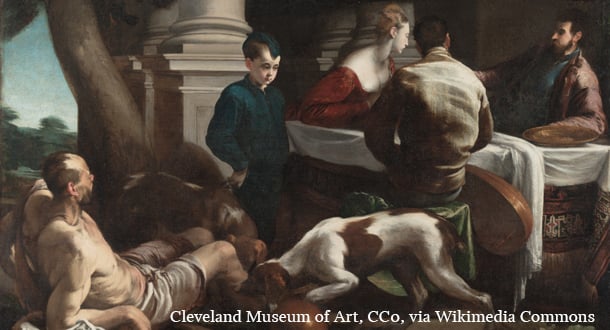
The rich man’s sin was not in being rich, but in being blind to the needs of Lazarus. When wealth makes us complacent, we too can be blind to the needs of others.
We, too, can be deaf to what Jesus tells us, often trying to make Jesus’ words and actions fit what we want.
Sometimes our rationalizations can lead us to be even blind to the humanity of the other, so we won’t feel uncomfortable about what happens to them.
This parable calls us to discomfort. As Christians, we cannot be satisfied with what is, for the status quo is not the kingdom of God. We cannot let ourselves be numb to the Lazaruses of the world. Rather, we are called to reach out to those in need, and work for a world in which everyone has the necessities of life and the opportunity to thrive.
May we not be deaf to Jesus’ words or be blind to the suffering of others.
I welcome any comments or questions. Thanks for your time.
In Christ,
Phil, CP