As Christmas approaches, many people feel overwhelmed by travel, shopping and preparations for the holiday. In this interview with Wyatt Goolsby of Guadalupe Radio Network, Father Robert Carbonneau, CP, a Passionist priest, historian and professor at Boston College, invites us to refocus on Advent as a sacred season of spiritual preparation and deeper encounter with Christ.
Fr. Rob explains the heart of Passionist spirituality, founded by St. Paul of the Cross, which centers on preaching Christ crucified with compassion for human suffering and hope rooted in the Resurrection. Drawing from his recent retreat at Holy Name Passionist Retreat Center in Houston, he shares how retreats help people cultivate awareness of God’s presence, not as an escape from life but as renewal for living faith more fully.
The conversation also explores Catholic life beyond Advent, including the mission of the Passionists, the importance of spiritual direction and the vitality of the Catholic Church in China. Fr. Rob offers insight into praying with the global Church and living Advent with joy, honesty and compassionate solidarity.
GOOLSBY: Christmas is fast approaching and typically during this time many of us are scrambling to prepare for the Christmas day festivities whether it’s traveling or buying all the presents. However, we as people of faith don’t want to lose sight of Christ and our preparation to celebrate Christmas in this season which is Advent. So, we wanted to talk with somebody who can talk about Catholic spirituality and provide some advice for those of us who have that desire to draw closer to the Lord during this season.
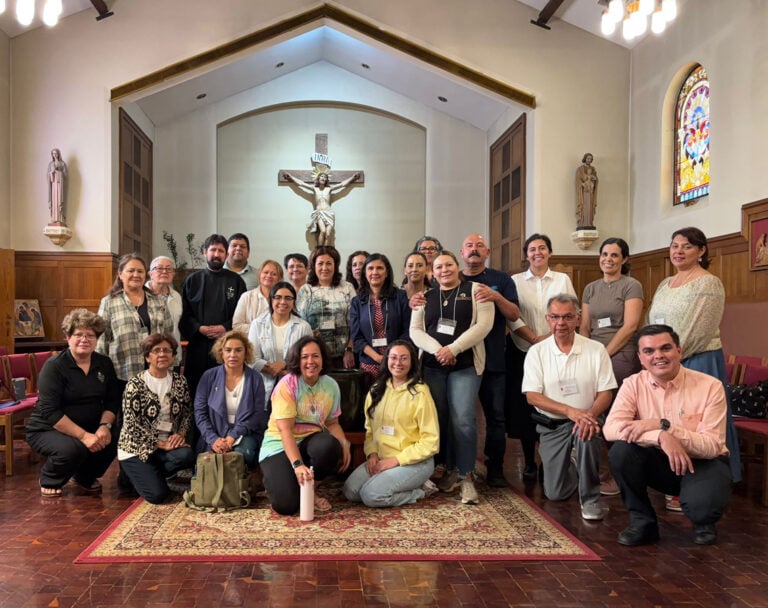
Joining us on the program is Father Robert Carbonneau. Father Rob is a Passionist priest, historian. He’s also a PhD and professor at Boston College. He’s been at Houston this past weekend helping lead a retreat for spiritual directors, deacons, and deacons’ wives at Holy Name Passionist Retreat Center.
Father Rob, thanks so much for coming in here and being here in the KHD studio. We’re glad you’re here.
CARBONNEAU: Well, I’m very happy to be here at the Guadalupe Network. it’s an honor to be back in Houston at Holy Name Retreat House to lead the retreat. It was on Passionists saints and spirituality and how that is understood in the Passionist tradition and the Catholic tradition.
GOOLSBY: I know that’s so important right now. So many people want to go on retreats or thinking about going on retreats because it’s Advent. It’s time where we’re focused on the Christmas season upcoming and preparing for the celebration of the birth of Christ. Tell me about first off you are a Passionist priest and I want to ask you about that spirituality but give us an overview father Rob. What is a Passionist priest?
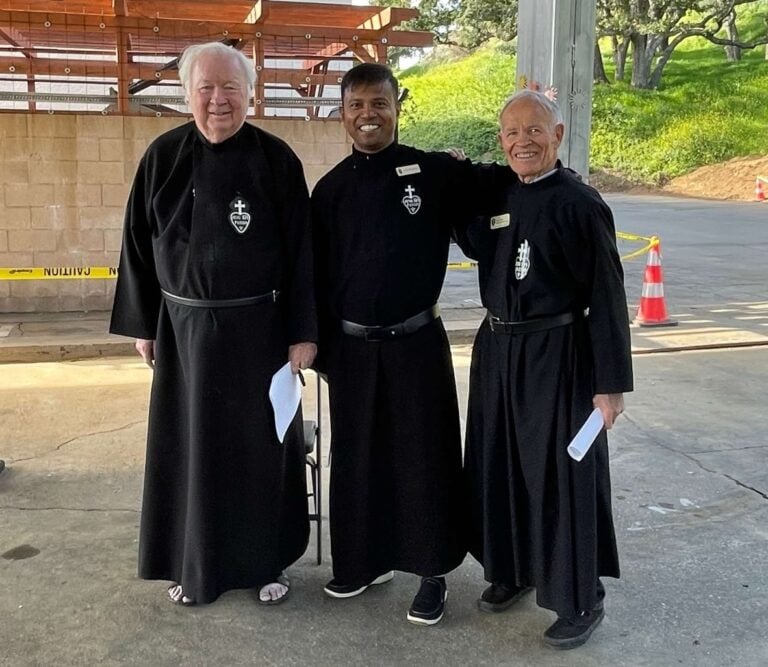
CARBONNEAU: The Passionist congregation was founded in 1720 by St. Paul the Cross, an Italian, and the purpose of the mission was he had a very strong vision to preach Christ crucified and that meant that when he would preach in Italy he wanted to always name the sufferings of people the local people and in his preaching once you name the sufferings you can start on the road towards healings and so everybody suffers it’s part of the human condition. However what sometimes people don’t realize is that the gift of the suffering, death and resurrection of Jesus Christ is also a meditation into healing and physical grace and physical healings and the grace of after one’s deceased they enter into the um presence of God as a resurrected in heaven. So the Passionists’ real spirituality is to comfort people who are in their suffering and to see the healings and to have compassion for other people.
So we preach Christ crucified really is the message and it’s a hopeful message because everybody suffers and everybody can share in the compassion through the sacraments through the eucharist and in prayer, common prayer together and really it’s a message for the Catholics but it’s also interfaith. The last thing I would say is we are in 60 countries throughout the world. We came to the United States in 1852 and the Passionists came to Houston in 1947.
GOOLSBY: You guys have a wonderful retreat center here in Houston. It’s called Holy Name Passionist Retreat Center. You were there leading a winter silent retreat for spiritual directors, deacons, and deacons’ wives this past weekend. First off, just tell me how much of a gem it is, Father Rob, just to come here to Houston and have a nice retreat center like that.
CARBONNEAU: Well, the Passionists of Holy Cross Province really pride ourselves in our retreat centers. That’s been a place that we believe that people can come and understand God’s presence. The Retreat Center in the Bunker Hill area of Houston has excellent grounds, excellent facilities, the food is good, the space is good, the chapel is very meditative and the diversity of the programs is consistent. So we did have a silent retreat but on the same weekend there was also a Spanish speaking retreat.
One of the areas that is most historically known is we have a strong ministry to those who are in AA programs or self-help programs. This is an important aspect and it fits right in with the Passionist charism and mission.
So we invite anyone to come and look at that retreat house because people have said as soon as they enter the property they feel now that God’s presence is much more revealed. We live with God’s presence all around us but we need to be strengthened with God’s presence and that’s the purpose of a retreat house. It’s not an escape. It’s an awareness to open our eyes to be renewed in our faith so we can live our faith. It’s and that’s really the purpose of a Passionist retreat house. To have compassion for one’s own sufferings and the public suffering.
GOOLSBY: I feel like that is so important right now, Father Rob, in our secular society because so often we’re tempted to run away from suffering or avoid suffering, do everything we can not to suffer. But that’s not the passionist perspective. It’s not necessarily the Catholic perspective. You know, Christ didn’t run away from the cross or try to avoid it. um he went through the death and then resurrection.
Tell me why it’s so important and how that kind of ties into healing, being able to address suffering or problems that we’ve had in our life as opposed to running away or trying to avoid it.
CARBONNEAU: Yeah. I believe if you look at this last Sunday, the third Sunday of Advent, Gaudete Sunday, one of the things that really is striking is we light a pink candle in the Advent wreath. And we always link Advent more so than Lent with a season of joy and anticipation. And yet when you read the gospel with John the Baptist in prison trying to figure out who’s the way of the Lord, what am I supposed to do?
One of the things that strikes us or the Passionists, I believe, and it’s up to the community to really look at this is this is a time of joy but also in those readings is a time of lamentation and suffering. The closer we draw to Christmas and the message of Jesus being present again at Christmas, the more we go into celebrations, the more we go into family dynamics and opportunities and meetings and we appreciate the sensitivity of our own family joys and our own family sufferings. It’s really what makes us a Catholic and Christian and human all at the same time. So the message of the passion is an active way to actually accentuate joy because we have greater compassion for those that were joyful with and we have greater sensitivity to those with whom we miss or pray for all over the world.
GOOLSBY: Very good. You had mentioned all the different retreats that go on at Holy Name Passionist Retreat Center. We had mentioned the winter silent retreat this past weekend that you helped lead where spiritual directors, deacons, deacons wives. This is probably an aspect of retreats that we don’t think about, but you know, spiritual directors, deacons, they need to kind of get on the same page as well and take a moment to go on a retreat too for their own spiritual nourishment.
CARBONNEAU: Yes, a lot of retreats are theme focused and the theme can change. Now the Passionists at holy name for four years have had a spiritual direction program where you can go through a series and get a certificate in spiritual direction that’s in English and people can apply to that into February of this coming year of 2026. But for 12 years there’s also been a Spanish component and so people can apply for that.
The purpose of the retreat really is to give people the skills to understand Catholic tradition of ministry, Catholic tradition of spiritual direction from all the respective traditions for example like Carmelite, Jesuit, Dominican, Benedictine, all these different religious traditions that have had a a longevity, an arc of longevity. of spirituality with the Passionists.
We as Passionists see that one of our key aspects is the respect for suffering and the understanding of that. And Paul the Cross really said be able to communicate that through letters, through face-to-face discussion, through good listening, and through leading people to understand how healings take place.
So people in the Passionist tradition who are spiritual directors accentuate and learn how to listen to sufferings so that they can lead people to hope. The specific theme was actually on Passionist saints. So that was very exciting because we have international saints from 1720 on. So it was a very enjoyable retreat to lead and to get feedback on.
GOOLSBY: Very good. Well, like I said, I know it’s needed for a lot of those who are spiritual directors themselves to be able to renew, take that time to to think about that because usually they’re so focused on helping other people that I know being able to go and and have a nice winter silent retreat is so important.
So, in addition to that, Father Rob, in addition to you leading this Passionist retreat, helping lead some of these other retreats here in Houston, I mentioned the fact that you yourself are a PhD historian. You studied the history of the Catholic Church in China in particular, right? And there’s going to be an upcoming event that I want to mention in 2026 at the University of St. Thomas and it’s going to be all about was it Chinese Western Culture? Tell me about that.
CARBONNEAU: The event is going to be an international conference that’s held by the United States China Catholic Association.
So that event is from July 31st to August 2nd. And if you go to the website of the US Catholic China Association, you can see the information there to register. We’re going to be opening up registration in um in March and people who just want to learn about the Catholic Church in China can attend this.
It’s going to be offering seminars. It’s going to be offering international speakers. And St. Thomas is working with them. They have been most gracious. We look forward to working with them and they’re going to be hosting this event. It’s it’s a three-day conference.
The public will be welcome to do this. We’ve been in existence, this US China Catholic Association, since 1989. And our mission really is to educate the American public on the Catholic Church in China. That this Catholic Church in China is vibrant. It’s been around since certainly in an active way since, certainly since the 1580s, and the organization was started because many religious congregations, 33 actually, and men and women from the US went to China in the 20th century and the church became substantial through their efforts as missionaries.
And then in the 80s all these Chinese Catholics reached back out when the church opened up in a much more positive era under Dong Xiaoing and they began to connect with the respective religious orders.
So this organization was founded and it’s exciting because we reach out, especially with Ascension Parish here in Houston, and other parishes and other scholars and other lay people who have diverse interests and skills, in this bridge building of friendship and dialogue. We are definitely in that model of friendship and dialogue to see how the Chinese Catholic Church is part of the world church in union with the Catholic Church and tradition. So it’s a very exciting area that I’ve been working on for the last 35 years.
GOOLSBY: I want to ask you about you know it’s important for us to pray for all of our fellow people of faith all around the world, the church in China as well. I just want to ask you about what specifically you would advise us to pray for because I know a lot of people are learning more about China. They’re learning more about the Catholic Church in China. There are restrictions, of course, to Catholics being able to practice their faith, evangelize because China is a communist country. What would you advise people to pray for, think about and learn about? Because we hear a lot about China. We hear about issues of human rights in China. What should we be thinking about meditating?
CARBONNEAU: I’ve often advised people when they ask about China and the Catholic Church in China to realize that this is a Chinese Catholic church that really has its own faith longevity. It’s a legacy of faith that has endured suffering but also has tremendous hope. And a lot of times there’s an immediacy to look at the Catholic Church in China as a church that’s simply in a political discourse. And really what it is, it’s in a spiritual dynamic that it teaches us how to understand hope when suffering is taking place.
People at times will say, well, the church is being persecuted. And I would say be a little bit more sensitive to this. It’s a suffering church just like many other churches throughout the world. We don’t equate persecution with everywhere. But given the civil society that every church in the world lives with, suffering is more systemic and hope is more systemic and there are instances of persecution worldwide.
But we when people pray about the Catholic Church in China, they should pray to learn how the church in China, the Catholics in China can teach us about what’s Chinese Catholicism because the legacy is really in the Chinese Catholics who are here in Houston and the Chinese Catholic community in Boston and the Chinese Catholic community in Washington DC, across the United States as US citizens and an immigrant community.
And that’s where it links with the Passionists because the Passionists were missionaries to China 1921 to 1955. And what’s unique is the people in China, they will say when you go back, because I’ve been to China. I was there a year and a half ago at Easter and the church, you know, went to Mass there and was able to visit with Chinese priests and Catholics. They said, “When you go back, make sure you thank Catholics for sending missionaries and know that we Chinese Catholics pray with you. It’s not for you. We don’t pray for the church in China. We pray with the church in China because we’re a compassionate idea.”
And that for me, that’s really where it fits into the Passionist charism.
So people who went as missionaries, as Passionists came back and visited the Houston Retreat House, the archives that we have at Boston College. That’s why I’m at Boston College at the Ricci Institute for Chinese Western Cultural History. It brings the awareness of the 20th century, Catholic Church, awareness for scholars, for students, for people who want to do research. So, this is a vibrant church. It’s not a church that’s alienated. It’s a church in dialogue and that’s something that’s very enriching and so I’ve always found it absolutely fascinating.
GOOLSBY: That’s wonderful. And I love that idea about being able to pray with them, not necessarily for them, but we are one body in Christ and being able to to unite in that way. That’s a wonderful message.
Well, I just want to again reiterate the fact that we are just so blessed here in this country to have amazing resources.
The Passionist Retreat Holy Name Passionist Retreat Center is a little bit of a gem here in Houston. There are wonderful priests here like Father Cedric Pisegna, Father Nicholas Divine, and Father Rob, we’re so happy that you took the time to be here before you head back to Boston College.
So again, a lot of things to think about. One thing to reiterate again, the upcoming International China Conference at US again will be July 31st to August 2nd and we’ll be putting out more information about that as well as it approaches again at the University of St. Thomas. So, we will keep our listeners informed on that.
CARBONNEAU: Yes. And I would just like to say, I was talking to Father Nicholas. He’s going to actually be putting on a play here this coming week. And if you want to look at information on what his play is, go contact the Passionist Holy Name Retreat House. And I should say I am from our Eastern province, our Eastern region. So I would encourage people to look at Passionist historical archives and also look at Passionist Holy Name Retreat House and learn about the Passionists and our United States experience because it is a rich experience and we want to learn from people who want to support us, but we also want an interfaith dimension of people who appreciate the meaning of the cross and Passion. And again, may the Passion of Jesus Christ be always in your heart. And we proclaim Jesus Christ crucified, the suffering, death and resurrection through our founder, St. Paul the Cross. And we want to have empathy and hope for people who live the passion and see healing in that.
GOOLSBY: Amen. Powerful message. Father Robert Carbonneau, Passionist Priest, historian, Boston College. Thank you so much for being with us today.
CARBONNEAU: Thank you. I appreciate it.