Memorial of Saints Basil the Great and Gregory Nazianzen, Bishops, and Doctors of the Church
Reflection
During this Christmas season, why do we celebrate the memorial of two fourth-century bishops from what is present-day Turkey?
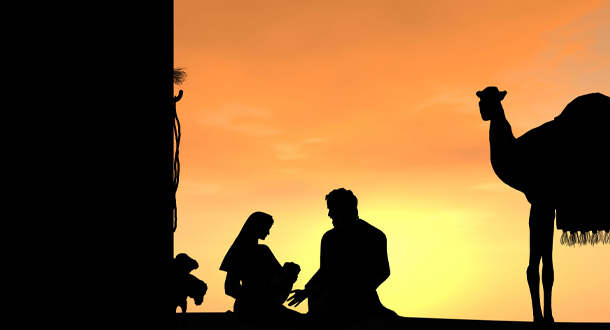
St. Basil the Great and St. Gregory Nazianzen taught the mystery of Christ’s birth, which we celebrate at Christmas. They declared that the birth of the Christ Child tells us that God chooses to be close to us, becomes one of us in His humanity, and accompanies us on our journey.
The saints’ powerful teachings helped heal the Church of a heresy called Arianism, which questioned the divinity of Christ and severely divided not only the Church, but the political world as well. They persisted against great odds in defining Jesus Christ as fully God and fully man, a truth central to the Nativity. In today’s first reading, the apostle John could be speaking to the Arians when he said:
“Anyone who denies the Son, does not have the Father, but whoever confesses the Son has the Father as well.”
St. Basil and St. Gregory are Doctors of the Church because of their profound theological teachings that helped people understand the faith; they contributed to the Nicene Creed developed to address the Arian heresy at the Council of Nicaea in 325 AD. They also led holy lives. As young men, Basil and Gregory were friends who shared a monastic life. They left the relative safety of the monastery for an active life in the Church. They were ordained priests and eventually became bishops. St. Basil became Archbishop of Caesarea and St. Gregory became Bishop of Constantinople.
As bishops, both Basil and Gregory endured persecution for defending the Church from Arianism. As pastors, they never gave up on their deeply divided flocks. Despite St. Gregory’s dislike of conflict, he continued to dialog with people who were confused, and he is known for his sermons on the Trinity. St. Basil is also known for his preaching, as well as his love for the poor. He was a pioneer in establishing systemic responses to poverty: hospitals, soup kitchens, and guest houses.
In November of last year, Pope Leo published an apostolic letter entitled “In the Unity of Faith”, marking the 1,700th anniversary of the Council of Nicaea and the Nicene Creed. In it he wrote: “The Nicene Creed does not depict a distant, inaccessible and immovable God who rests in himself, but a God who is close to us and accompanies us on our journey in the world, even in the darkest places on Earth.” This is what we celebrate every Christmas!