The Invitation that will Change Your Life
To All,
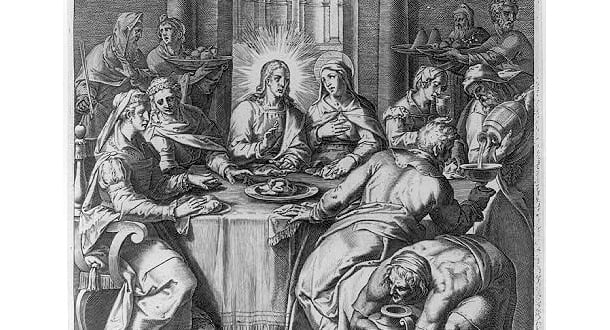
In our Gospel reading for Sunday (Matthew 22:1-14), Jesus tells another parable to the chief priests and scribes about the kingdom of heaven. Scripture scholars point out that this parable is similar to the one before it which we heard last week. Instead of a landowner with a vineyard, there is a king. Instead of servants being sent to obtain the produce from the tenant farmers, servants are being sent to invite people to the wedding feast of the king’s son. In both parables, the servants are mistreated and killed. In this parable, the king does what the landowner was expected to do when he came to his vineyard. The king destroys those who killed his servants.
Then the king sends out more servants and tells them to bring anyone they could find. And so the servants bring in all sorts of people, “bad and good alike,” so that the banquet hall is filled. But when the king enters the hall, he notices that one guest is not dressed in a wedding garment. When the guest has no answer to this, the king has him bound and thrown out. And Jesus says,
“Many are invited, but few are chosen.”
This parable seems harsh. And as I was thinking about that, it occurred to me that the parables we have heard over the past few weeks have been mostly aimed at the religious leaders of the people, with Jesus driving home the point with increasing urgency that the people the chief priests and the scribes were condemning as sinners were entering the kingdom before them, because the sinners were able to recognize Jesus as the Messiah.
But about that man in the parable without a wedding garment. What the king does still seems very harsh. I thought I read somewhere that guests invited to a banquet like this were offered wedding garments if they didn’t have one. I could not find the reference again, so I can’t verify the statement. What Scripture scholars do say is that the wedding garment represents the repentance and good deeds one does in response to the invitation to the wedding feast, to the kingdom. In other words, the invitation is to lead to a change in one’s life, away from sin and towards the love of God in Jesus Christ.
It could be that the man in the parable represents someone who believes in Jesus, but sees no need to change before it’s too late. Earlier in the parable, there were people who declined the invitation outright, focusing on worldly things.
And I thought, “Are we not realizing how gracious and generous and loving this invitation is?” Out of love, the Father sent the Son, born of the Spirit, to become one of us to save us! The Son, Jesus Christ died on the Cross for the forgiveness of our sins and rose from the dead to give us all the promise, the invitation, to everlasting life!
All of us, saints and sinners, have been invited. It doesn’t matter where we come from, or how much money or influence we have. The invitation is open to everyone.
If we had just a little understanding about God’s love for us, would we not be willing to have our lives changed? Would we not be willing to share God’s love in Jesus Christ with others? And what if we saw the Eucharist as a glimpse of the heavenly banquet to which we are invited? What if we saw the Eucharist as a celebration and a participation in God’s great love for us? Could that, would that, not change our lives?
May God’s invitation orient our hearts, minds and souls toward God. May our lives be changed, and may we share God’s love in Jesus Christ, and help move the world to justice and peace.
I welcome any comments or questions. Thanks for your time.
In Christ,
Phil, CP