What Do I Owe to God and Country?
In less than three weeks, it will be Election Day. All over the country, especially in what are often referred to as “swing” states, people are bombarded with political ads. And it seems that the political divisions in the U.S. are even more pronounced. Polls are taken over and over again, and the country seems to be bracing itself for some contentious elections in various states.
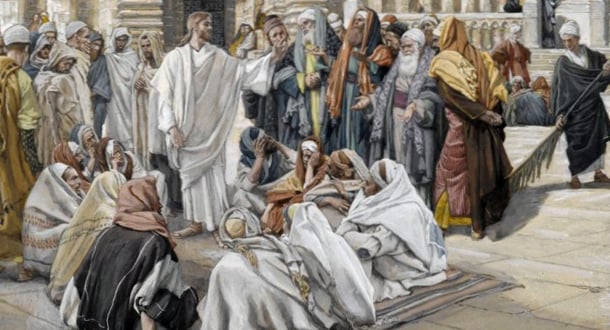
In the midst of this, we have our Gospel reading for this Sunday (Matthew 22:15-21). In our reading, the Pharisees once again try to entrap Jesus with a question they are sure will pose problems for Him. They approach Him with false sincerity, saying,
“Teacher, we know that you are a truthful man and that you teach the way of God in accordance with the truth. And you are not concerned with anyone’s opinion, for you do not regard a person’s status.”
Ironically, they are speaking the truth about Jesus, but this truth has not convinced them to believe in Him. And then they set the trap. They say, “Tell us, then, what is your opinion: Is it lawful to pay the census tax to Caesar or not?” They figure that whatever Jesus says, He is going to get in trouble, either with the Roman authorities, or with the people who very much resent the Roman occupation and the imposition of this tax.
Jesus knows this is a trap, and He says so: “Why are you testing me, you hypocrites?” So, then, Jesus asks them to show Him the coin that they use to pay the tax. It is a Roman coin. He then asks whose image is on the coin. When they reply that it is Caesar’s image, He says to them, “Then repay to Caesar what belongs to Caesar and to God what belongs to God.”
By not giving an answer in the way the Pharisees were looking for, Jesus evades the trap. Scripture scholars point out that the evasion of the trap is the main point of Jesus’ response. But in a country where there is separation of church and state, mainly for the purpose of guaranteeing religious freedom, but also some people making declarations about the U.S. being a Christian nation, and also debates about how or even if, a person’s faith should influence their political decisions, there is a desire to discern the meaning of Jesus’ words.
If we replace the word “Caesar” with the word “Country,” the question, in light of what Jesus says, seems to be, “What do I owe to God, and what do I owe to my country?”
To what do we owe God? For us believers, is it not everything? We believe that God gives us life and bestows upon us grace after grace. We believe in God’s love for us and for all of God’s creation.
As Christians, we believe that God loves us so much that the Son of God became human in order to save us, dying on the Cross for the forgiveness of our sins and rising from the dead to give us all the promise of everlasting life.
In response to God’s love, we are called to love God and love our neighbor. In fact, the love of neighbor is the most evident sign of our love for God.
What do we owe our country? As citizens, we are expected to be law-abiding.
We are asked to be well-informed and be involved in what is going on.
We are exhorted to exercise our right to vote. In times of war, citizens of a certain age may be drafted for military service. We usually honor and respect those who serve in our armed forces.
All this is well and good. But what if some of the laws and practices of the country go against the values that have been informed by our faith and our belief in what is right and just? Am I seeking to impose my religious beliefs on others, or am I working for justice for all? This is the challenge many of us face.
A question that comes up for me, then, is: “Am I called to help my country increase in wealth and power, or am I called to help make my country a better place, and therefore help build up the kingdom of God, where I am?” For me, the answer is the latter.
I welcome any comments or questions. Thanks for your time.
In Christ,
Phil, CP