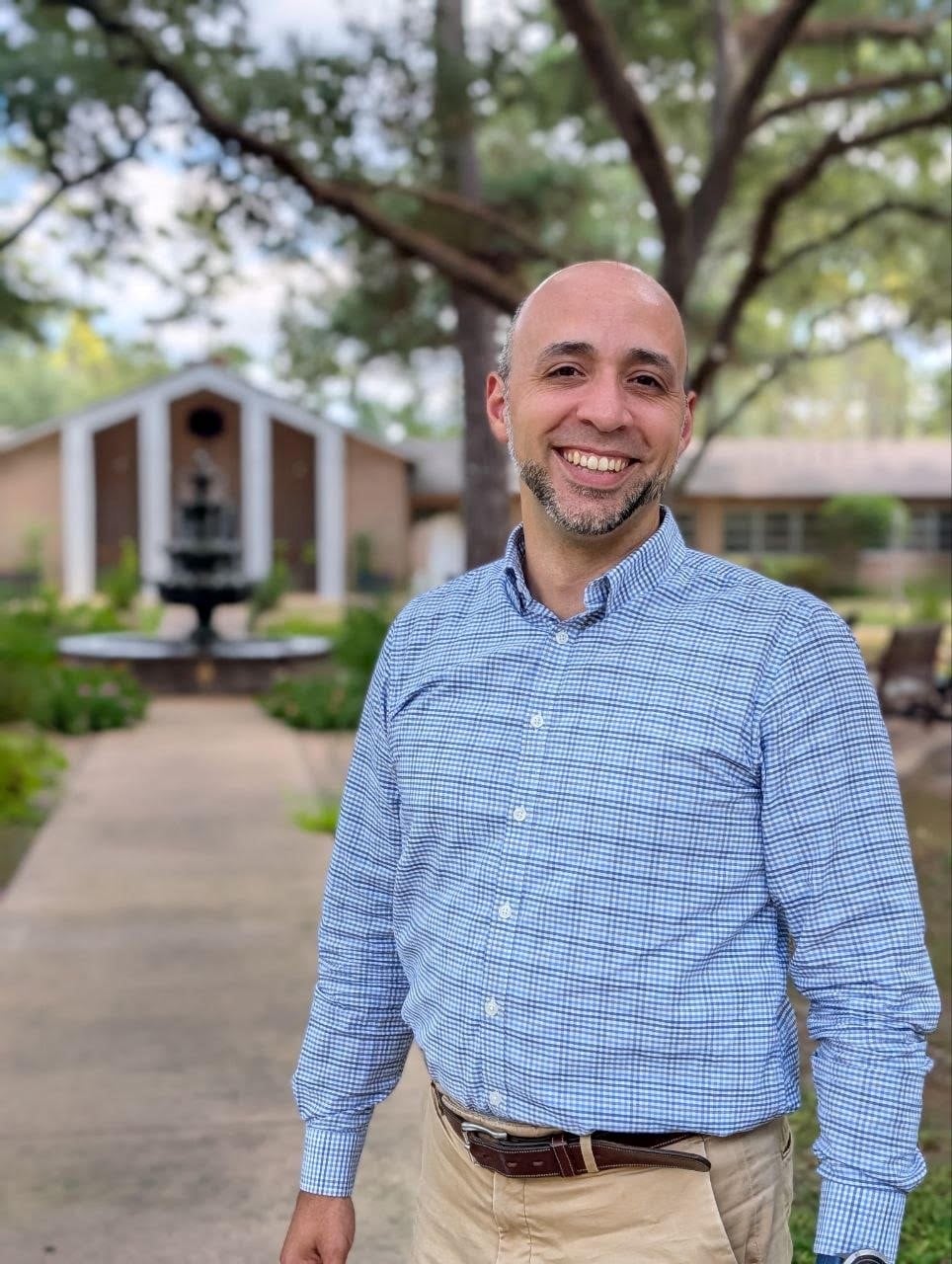
After years of working as a volunteer at Holy Name Passionist Retreat Center in Houston, Texas, Paul Valdez recently took over as Director of Operations.
He remembers how quickly he felt at home the first time he came to volunteer at Holy Name. That sense of belonging came from the warm welcome of the Passionist team.
“When you drive here, you realize that the retreat center is nestled in the middle of an upscale neighborhood. If you are not looking carefully, you can miss the entrance,” remembers Paul. “Almost immediately, once you are on the grounds, there is a sense of calm. It is just all the little things here. When you feel accepted and wanted and cared for, it breaks down any apprehensions you might have.”
When people ask Paul what he does, he shares all the opportunities available for retreats and encourages people to just come and see. “Come on the grounds and get a little taste of Jesus,” Paul says.
“Walk the grounds for 15-20 minutes and just be. We move so fast in this day and age, and the need to unplug is so important.”
Paul Valdez
The power of presence has been at the heart of Paul’s experience at Holy Name since he started as a retreat volunteer in 2010. The focus of his ministry is very simple: listening.
“How am I listening?” explains Paul. “We say that we are listening, but are we? So often we want to listen in order to answer, but sometimes we should just be listening to listen.”
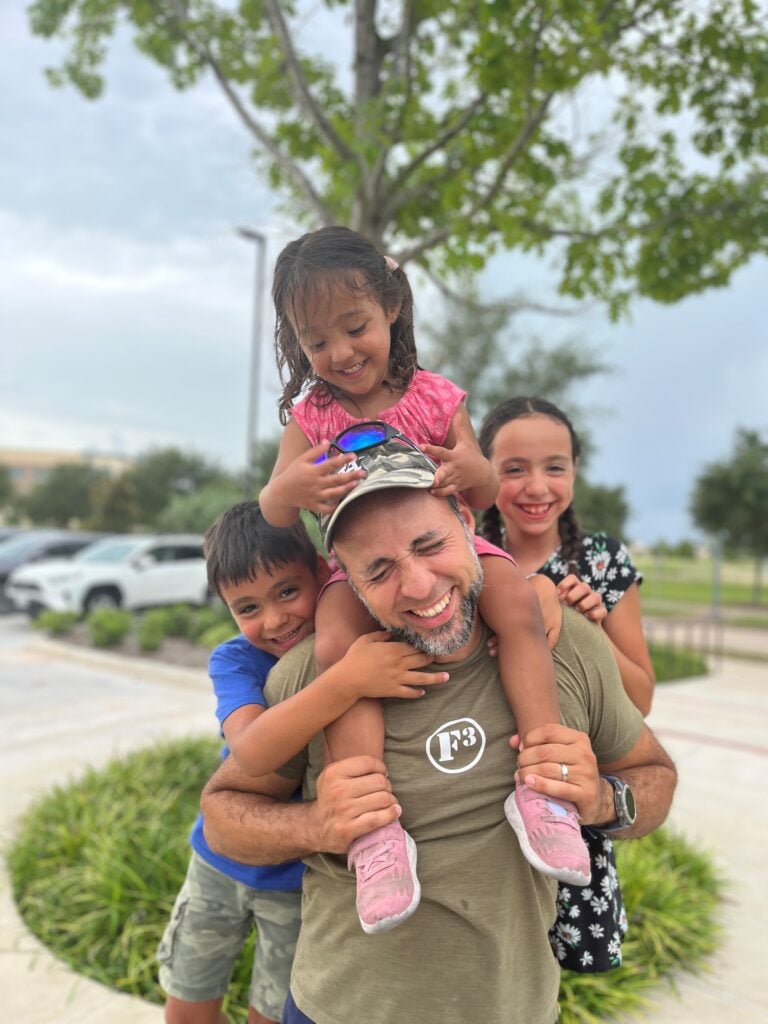
His connection to the retreat center was strengthened by the men and women who work there and share the power of presence regardless of their job titles.
“The opportunity to work with the vowed and the lay staff, that is what connected me and drew me to the Passionist community. It is key to my still being here and working as Director of Operations,” Paul explains. “Everyone lives the spirit of the Passionist Rule. With the vowed Passionists, it is visible in how they act with others, in their simple lifestyle, following the rule of poverty and in how welcoming they are. They do not talk down to you. They talk with you.”
His wife knew about the Passionist Congregation before first working at the retreat center, but Paul did not.
“We really feel a strong call. It is a blessing to be involved with a community so strongly connected with the Passion of the Lord,” he shares. “While that path is not the easiest to follow, it is rewarding. Crosses come in many shapes and sizes.”
As the Director of Operations, much of Paul’s work now happens behind the scenes. The perspective is different, but the focus on making sure everyone who comes to Holy Name feels comfortable and welcome remains the same.
“I see what it takes to make this place feel special for people,” says Paul. “We ensure the room is clean and the food is good. The grounds are kept up and clean. If someone wants a snack or a cup of coffee, it is in the kitchenette waiting for them. All our ministries go hand in hand. We each have a key role.”
Paul is thankful for the blessing of Holy Name’s staff, who are an enthusiastic team dedicated to making sure every person who comes on the campus feels like they have come home.
“When I used to volunteer, I usually came onto the property on the weekend or in the evening, and the people who were behind the scenes were already gone,” Paul remembers. “Then I got to see them in action. I began to understand both the front lines and all the support behind them,” Paul shares.
“For everyone here, it is more than just a job. There is a real ministry of hospitality in the way people welcome and care for those who come through our doors.”
Paul Valdez
“Our staff genuinely wants to see Holy Name succeed, and you can see that in the work they do. You see it in their faces, in their actions and in how much they enjoy coming to work, all for the glory of God.”
Read more about Holy Name Passionist Retreat Center
Extended Video Interview
This transcript has been prepared for clarity, accessibility, searchability and readability, though minor variations from the original video may occur.
How Am I Listening?
Question: You’ve had a relationship with Holy Name and the Passionists for a long time. When you hear the phrase “the power of presence,” what does it mean to you personally?
Paul Valdez: The first thing is: how am I listening? How am I giving attention to that person, or persons, or group? Especially in this high-tech age that we’re in, we say we’re listening, but are we really listening? That can be applied across many areas, across many of the pillars that are part of the Passionist community. So often we want to listen to answer, but rather we should just be listening to listen, because sometimes that’s all that person, or those people, need.
Volunteering with the Men’s Catholic Retreats
Question: What have you experienced of the power of presence yourself with the Passionists, would you say?
Paul Valdez: This connects for me in two ways. I first got involved with the Passionists, I want to say in May 2010, as a volunteer, just helping out here and there on the retreats when my wife worked for Holy Name. Then I got involved with the promotions committee for the Men’s Catholic Retreats. So my presence there, in those two aspects, was helping out with the music during the adoration portion of the retreats, and serving on the promotions committee, or ProCom, as they call it, ensuring that we’re not just getting good numbers, but that knowledge of the Men’s Catholic Retreat is spread to multiple parishes so we can get more men to attend.
It was important then, and I think it’s even more important now, that men are able to connect and have good fellowship with other men. In this case, a superb added bonus is that they get to do it while also having the opportunity to encourage themselves in their faith and grow in their Catholic faith. So it’s key.
A Welcome That Draws People In
I really love being part of the Passionist community. To get back to fully answering your question, what drew me to it is not only the stories of the different saints, blesseds, and venerables that are part of the Passionist community, but that when you walk into a retreat center, and I’ve now been to three of them, you’re automatically welcomed. You’re made to feel at home.
I think that is what drew saints and blesseds to the Passionist community, to the Passionist Rule, as they say. For example, St. Gemma, if I remember correctly, became truly part of the Passionist community after she had passed, because she could not become a Passionist while she was still on this earth. That just shows how strong a connection she felt to the Passionists. And that goes hand in hand with the sense of purpose we have here in ministering across so many demographics and to so many people.
A Family Devotion to St. Gemma
Question: As you were getting to know the community, you said your wife was working there. Did she help get you interested in it, or were there things that attracted her that were also attractive to you?
Paul Valdez: A couple of things. Our eldest’s first name is Gemma, after St. Gemma, and that was key, because my wife has a really strong connection to St. Gemma. So there’s that. There’s also, in working on the promotions committee and helping out with the Catholic retreats, the opportunity to interact with both the vowed Passionists here and the lay staff, and then the men and women I got to know over the years. I would definitely draw on those experiences as what connected me and drew me to the community, and that is still key to my still being here, in addition, of course, to now being the director of operations.
The Witness of the Vowed Passionists
Question: What kind of experiences did you have with the vowed that were really inspiring? Was it things they said, how they lived? What really resonated with you?
Paul Valdez: They live the Passionist Rule. They live the Passionist way. It’s shown in how they act with others, both in their simplicity and the poverty the Passionists observe, and in how welcoming they are to everyone they meet and work with. Everyone you meet is not going to be the same. They’re going to come from different walks of life and be in different places, both financially and personally. We’re not here to be judged. The only one who judges is our Lord. And they welcome you and they speak with you. They don’t talk down to you. They talk to you. And that’s so key.
Called to the Passion
Question: Did you and your wife know about the Passionist congregation before she started working there?
Paul Valdez: About the retreat center, I did not. I believe my wife knew a little bit. Then, when she heard about the job, applied, and got it, it just blossomed from there, and we’ve really taken that to heart. I know another saint who also had a calling to the Passionists was St. Maria Goretti, and I mention that because our youngest’s first name is Maria. So we really feel a strong call, because the first part of “Passionist” is “Passion.” Being involved with a community that’s so strongly called and connected to the Passion of our Lord is really key for myself, my wife, and our family. While that path may not always be the easiest path, it is the true and correct path, and there’s no way that we can live on earth and not be carrying a cross.
Question: Exactly. Crosses come in many shapes and sizes.
Seeing the Work Behind the Scenes
Paul Valdez: I’d like to say something else. I mentioned a minute ago being director of operations. I look at the Passionists, and in particular where I am in Houston at Holy Name, and you appreciate it so much more now that I’m behind the scenes, as I say, and more involved. You see the other side. You see the work and preparation that goes into making the experiences feel special and important, so that you, the attendee, feel that way.
We call them little things, I guess, but they’re important: ensuring that your room is clean and prepared before you go in, that the food is good and prepared well, that the grounds are kept up and clean, and that the retreat itself has a good theme and is well thought out. All those ministries go hand in hand.
No One Ministry Is More Important
Now, as director of operations, I speak to that in my staff meetings. Every one of our ministries, and when I say that, I’m looking at all of our full-time leads, whether it’s maintenance, landscaping, bookkeeping, hosted groups, spiritual direction, and so on, is important. Each of us has a key role, both in our day-to-day work and when our groups arrive on the weekends or during the week. If one of us is not able to complete our job to the full extent, that affects everything else. So it’s all important. There is no one ministry that’s more important, because we are all headed toward the same goal of ensuring the retreatant has a good retreat, that they’re cared for and well fed. And when I say well fed, that’s both physically and spiritually.
Finding a Second Home
Question: When you came to Holy Name, when did you realize that you belonged there? When did it become more than just a retreat center you visited and start to feel like home?
Paul Valdez: It was very soon after I started volunteering here. Here in Houston, whether you’ve been or you haven’t been yet, when you drive up to Holy Name, and I say “up,” but we’re all flat here anyway, it’s nestled in the middle of an upscale neighborhood. Eighty years ago, when they got this land, they probably thought, “Oh, Houston won’t grow that far,” and it sure did. If you’re not looking, you can miss the entrance.
But when you drive in, almost immediately there’s a sense of calm. We have a labyrinth up front. We have a statue of St. Michael and a statue of Our Lady up front. We have multiple areas, including the Stations of the Cross. And you walk in to a welcoming lobby. Just little things.
So I’ve felt called to call this a second home since right after I started, I’d say within the first month, because it’s not just the grounds or the ministries you experience while you’re here. It’s also the team here, both vowed and lay. They give 110 percent all the time. And that’s so key, because when you feel accepted, when you feel wanted, and when you are cared for and fed spiritually and physically, it really breaks down, not that I had any, but for somebody else coming here, any possible mental barriers they might have about going to a retreat center: “What’s it going to be like?”
What Is a Retreat?
People have asked me that before, or asked, “What do you do?” and I tell them what I do. So many people don’t understand what a retreat center is or what a retreat is. What we’re able to offer here is so many different kinds of retreats. You have a Catholic retreat, you have a hosted group, and we have all the recovery retreats offered at many of our retreat centers. So there’s an opportunity for so many people to come onto the grounds and, as I like to say, get a little taste of Jesus.
The Need to Unplug
Even if you’re not Catholic, and I’ve mentioned this to so many friends, just come walk the grounds. For those 15 or 20 minutes, more or less, ignore your phone. Everything will be fine. Just be, for a minute. As a collective, we’re going so fast in this day and age that the need to unplug, in my opinion, is so key. I was able to unplug and just be, and that’s what I really appreciate about being part of the Passionists.
Leading Operations with a Sense of Responsibility
Question: Now, as director of operations, you’ve got a different perspective, and you’ve talked about it a little so far. How does this role change the way you see the retreat center and the ministry, would you say?
Paul Valdez: Sure. I feel more responsible. I feel we’re more responsible. It’s about how we go about providing for those who come onto the property for a hosted group, a Catholic retreat, or even a recovery retreat. How is the property maintained? How is the food? Are we getting good reviews on the food? Do we need to change the menu? Is our housekeeping team keeping up? Do they need help? Lots of different things cross my mind.
I’m also much more appreciative of what everyone does. When you stop and think for five or ten minutes, it goes much further, in terms of what everyone here does to help the bigger picture. I haven’t even mentioned it yet, but we also have a director of development who works on the events we hold every year to help raise funds to keep the center moving forward and to spread the word about what we say and do here. All of those are key aspects of Holy Name and this ministry. If we are lacking in any of those areas, that falls first to me as director of operations, working with our director of ministry to ensure that we are caring for the people who come here, and also for the people who work here. Because if we are taking care of both of those, that’s the future of our ministries.
The People Behind the Face
Question: I’m sure you saw the people working behind the scenes even when you were volunteering, but is there a different level of that now? I think in society we’re so keyed on the people out front who are the face of something, and we don’t recognize that it takes so many other people besides that face, and how valuable what they do every day is. Like you’ve been saying, it’s a team.
Paul Valdez: No, you’re right. When I used to volunteer, I would usually come onto the property either on the weekend or maybe in the evening during the week for a volunteer meeting. By that time, those who are behind the scenes are usually gone, because they get here early and get to leave early. As I got more involved and was working with the groups, I got to know a little more, and then it changed again when I became director of operations.
The mindset of how much more I appreciate, and how much I see the finer details of whatever it takes to form the hospitality we present here, is completely different. You only see the outside. Like you mentioned, you see the front line, so to speak. Now I’m seeing all the support staff, all that goes into each week and each event, all the fine details that really, as they say, bring home the event.
More Than a Job
Question: How does the staff appreciate working for the Passionists? I don’t know if you’ve worked with people in the service industry before, but do you see a different attitude, a different focus, than maybe in other places? Probably because they’re appreciated more.
Paul Valdez: Yes. When I started here, it was my first time working with nonprofits, and for everyone here, it’s not just a job. You’re here because you love Holy Name and the Passionists. You want it to succeed. You want us to succeed. And you see that in the work that’s done. You see it in the people, in how they go about their work, and in how you interact with them, both the office staff and the support staff. All of that is key in what I see in the team as they go about their day-to-day.
Everyday Details as Hospitality
Question: When a retreatant comes in, their experience is shaped by things they’re probably not thinking about: the welcoming environment, the meal, the grounds being lovely, the room being comfortable, or somebody anticipating what they might need while they’re there. How do you see those everyday details forming hospitality and presence? How does that all play together when we’re talking about the power of presence?
Paul Valdez: Sure. We ask for an evaluation after every retreat, whether it’s a Catholic retreat or a recovery retreat, and we take those notes seriously. Wherever we can make improvements, we do. We have both an electronic and a written version, and if someone took the time to write a note and submit it, then it was important enough that we need to do our best to make that change, because they felt a little uncomfortable.
Maybe it was too hot. Maybe the music was a little too loud at morning prayer when they were still thinking, “I need my coffee first before we do this.” Maybe they got to breakfast at the tail end, and by that time the food was no longer hot, even though it says breakfast is from 8 to 9. Or, “I wanted to go for a walk, but a drain was backed up and looked like it had been that way for a day or two, so I couldn’t walk in this one area because there was water or mud on the ground.” Those are things not everybody would think about. But in my position, I ensure that the team catches those things, and they really do, because they love being here and working for it.
All of that goes hand in hand in the experience of coming onto the property for a retreat, or for a hosted group for a day, and in how they experience it, which helps them, when they leave, appreciate their retreat, their meeting, their experience.
The Gift of Being Invisible
Question: Well, because they don’t have to think about it, you know what I mean? Then they can focus on whatever is happening in the retreat and on making that connection with Christ through the speakers. You’re not thinking about all the other things. So, in a society where you’re not supposed to be invisible, where everybody’s supposed to notice you and give you a thumbs-up for doing a great job, it’s almost as if what you’re looking for is to be invisible.
Paul Valdez: Exactly. You don’t want to have to go looking around thinking, “Man, I need an extra pillow,” or “I’m cold, I’m going to go get a blanket.” You open the closet door, and it’s right there. Or it’s Saturday afternoon, you’re feeling snacky, and you go to the little cafeteria nook, and there it is: coffee, water, and snacks, instead of having to find the host and say, “Hey, I need this,” or “I would like this,” and have them go get it for you.
It’s right there down the hall. There’ll be a table with extra towels, extra sheets, extra pillows, extra blankets, all the essentials you’re going to need. We have a little area where the coffee and snacks are, and we make sure the host makes fresh coffee in the morning on Saturday and Sunday, and again in the afternoon. So if you need that little afternoon pick-me-up because your Friday started early, and you’ve still got a good dinner, a retreat session, and maybe an evening reflection before you get to go to bed, you want to make sure you don’t fall asleep during the reflection after that good meal. So there’s that as well. It’s lovely to have that experience prepared for you.
Preparing for Every Event
There are some events we have to prepare for in advance. We just had the assembly here in June, with many attendees from different retreat centers, plus the provincial team, so there were definitely more details we had to review, verify, and prepare for. We just had a donor appreciation dinner this past Sunday, which took more details. We were here prepping a bit on Friday, then we had an AA retreat over the weekend, and on Sunday, as soon as they left the property, we had about two and a half hours to prepare and set up and get everything ready, and then shut it down afterward. But all that being said, usually it’s second nature, and you only have to go double-check a few things, if that.
A Long-Standing, Joyful Team
Question: How long have most of your team been there? Are they pretty long-standing employees?
Paul Valdez: Oh, yes. I think our maintenance coordinator has been here almost 30 years. Landscaping, not as long. But let’s see: everybody currently on staff, minus our landscaper, has been here since 2010 or before. You can see in their faces and in their actions how much they appreciate and love Holy Name, which is great. It’s a really awesome feeling to be around people who want to be here, who love what they do, and you’re able to feed off each other in that way.
Question: Isn’t that great? Because you’ve worked places where it just takes one person who’s unhappy about something, and it brings everybody down.
Paul Valdez: Yeah, when you have that one sour patch. If you’re here at a nonprofit, you have to love what you do. And if you’re no longer loving it, then, if God wills it, you would hope they would choose a different path. Not because you don’t want them here, but because you want them to be happy. Going about being a sour patch is just not the best path. It’s not, as they say, fun. You want everyone to be that positive ball of energy.
Question: And it makes any job fun. If everybody’s happy, it really makes such a huge difference. There are always going to be rough days, but it’s so much easier when you have a cohesive team, which it sounds like you do. Good Lord, even when there are problems, it’s easier to get them handled. And none of your retreatants know. [laughter] It’s a mystery.
Paul Valdez: Exactly. They don’t know. You’re talking with them and everything’s fine, but in actuality, on the other side of the property, you might have a broken pipe. Or it’s Friday afternoon, maintenance was finishing up the lawn, and the belt broke on the mower, so they have to run and get a new belt and come back and finish. We do what we can, when we can, and take things in stride whenever possible.
Question: Like I said, I think that’s easier when you’re working at a Catholic nonprofit like the Passionists. It’s so much easier to take things in stride because you have that regular reminder of what the big picture is. And that idea of service, I think, is just huge.
Passionist Spirituality in Daily Work
Question: Having known the Passionists for many years, what have you learned from them about compassion, accompaniment, and being present to others? And how do you hope to bring those values into your leadership now that you’re director of operations?
Paul Valdez: Passionist spirituality is key. I see it in my office neighbor, our director of ministry, Father Nicholas. I think he’s going 100 miles an hour all the time. He has spiritual direction, he has Mass, he’s meeting with our pastoral associate about what’s next. We had a staff holy hour today. We now have daily Mass on Wednesdays. We have our community Masses that we want to make sure are set up. So that spirituality is really key.
But also, when you see the people who come through our doors, I think everyone has a spiritual need, or they’re suffering in some way, shape, or form. I’ve seen multiple members of the team take it in stride, go and meet with that person, and help them as much as possible. Even when we can’t change the circumstances they’re in, we are at least listening to them, and I mean listening without answering, like we talked about earlier, or just making them feel a little more comfortable, making them feel welcome. Because we don’t know what cross or crosses they’re carrying.
Within our capacity, whether we’re just coming up to them as they enter the lobby and making them feel at home with “Hey, want some coffee or water? Welcome,” or whether they’re actually meeting with someone, coming for direction, coming to ask for confession, or wanting to set up a retreat for their school, we make sure all those fine details are taken care of. I see that, and I take it to heart.
Leading with Compassion
Back to your question, and let me make sure I heard you correctly: bringing that into my leadership as director of operations. You wear so many hats at one time, whether it’s HR, finance, calendar setup, bookkeeping, and so on. Those are just a few of the multiple hats I wear.
Am I listening to the team member with compassion? Am I listening to the idea and actually taking interest in it, or am I already, quote, “turning it off” in my head, thinking, “That’s a no”? Now, yes, there are going to be circumstances where it’s automatically, “Nope, that’s not what we do,” or “Not at this time,” or “I understand what you’re saying, and I understand you may feel very strongly about it, but we’re not going to go that route right now.” So it’s also a matter of how you respond.
Responding with Kindness
It’s funny you asked that question, because we’re working on this at home with our kids too: responding with kindness. It’s so easy to, quote, “bark back,” or to be very minimal in our response. If we handle ourselves with respect and care in how we respond, both verbally and in our body language, that goes a long way with those we’re speaking with. At minimum, and this is key, it shows that you respect what they’re saying and you respect them as a person. Because when someone can sense that you’re only, as they say, half plugged in, that you’re already moving on to the next person, or that you’ve already written them or their idea off, that’s going to be a negative step for the next time you interact with them.
What Retreatants Take Home
Question: When someone arrives at Holy Name, maybe they’re bringing stress or grief, maybe they have questions, maybe they just need to get away. What do you hope they experience while they’re at the retreat center? And what do you hope they take home with them?
Paul Valdez: I hope they experience here, even if it’s only for 15 minutes, being able to unplug. What I mean by that, and I mention this strongly when I talk to anyone coming on a retreat, is: leave your phone in your room. Put it on silent, and turn off the vibrate option too. Because of who we are in this day and age, you’re going to check it within the next 20 minutes anyway. And if someone really needs you, the message will be there. Right now we are so plugged in, whether it’s our phones, our smartwatches, our emails, or notifications coming to our phones. We’re on all the time, and I think it’s so key that we’re able to unplug.
The other part of your question is what I hope they carry home: that they felt welcomed here. That they feel a sense of relief because they were listened to, and that their questions, even if they weren’t answered, were heard. That they feel they can come back and that they’re not going to be judged. We’re not always going to be able to resolve every difficulty, spiritual or physical, here, but at least here at Holy Name they’re able to be listened to, to feel a little more at peace, to have more hope, and to know that they’re not alone. They’re not walking the path that they’re on by themselves. They have someone to walk it with.
Face-to-Face Ministry
When you’re able to give someone a sense of hope, some sense of relief, it means a great deal. Because in this day and age, and I think this is key, with everything that makes us, quote, “feel more connected,” at the same time it can make someone feel really disconnected. This connection technology can sometimes take away from the simple opportunity to meet with someone face to face. And that is what you get here. We’re primarily a face-to-face ministry. Even if we’re setting things up over the phone or by email, you’re still able to meet with someone face to face. And that’s key, because then you leave feeling heard. You leave feeling important.
Question: Yeah, and I think that is vital.