

Reflection
Where are the Nine?
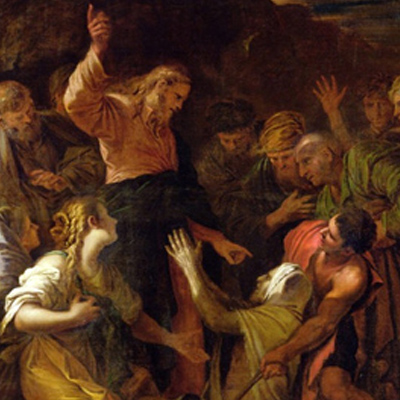
The story in the Gospel of Luke, that of the ten lepers Jesus encountered on his journey to Jerusalem, is familiar to most of us. They are then who shout to Jesus, begging him to heal them of the cursed disease that has banished them from family, friends, and Sabbath worship.
Jesus simply tells them “Go show yourselves to the priest.” And along the way, all ten were cleansed of their leprosy.
The traditional reading treats this story as a straightforward moral lesson on gratitude versus ingratitude.
In this interpretation, the nine Jewish lepers are scolded for their entitlement, and the lone Samaritan is praised for this gratitude and spiritual insight.
Pardon me for saying this, but I believe the nine have been treated grossly unfairly in this interpretation.
If we look a little closer at the text, the social dynamics, the strict rules of the ancient world, we will find that a fairer interpretation — and one consistent with the Gentile audience to whom Luke was writing — will emerge.
Firstly, in the borderlands between Samaria and Galilee, an unusual community existed. Leprosy had leveled all ethnic and religious boundaries. Nine Jews and at least one Samaritan were living together, struggling to survive, and looking out for one another.
It is no surprise that they shouted in unison to Jesus to heal them.
Jesus simply instructed them to go present themselves to the priest, who under Judaic law, was the only one who could observe them and declare them cleansed of all leprosy.
Secondly, those nine Jewish lepers obediently followed the directive Jesus gave them.
Good Jews that they were, they rushed off to the Temple to be declared cleansed.
Their healing, ironically — and this is what Luke wants his “marginalized” Gentile Christian community to understand — destroyed the inclusive community of the ten lepers.
What was the Samaritan to do? He could not go with the nine to the Temple; he was still an outcast — an ethnic, religious outcast.
By turning back, however, the Samaritan returned to Jesus. He chose the person of Jesus over the prevailing Judaic institution — one that separated Samaritans from Jews.
When Jesus asks the Samaritan, “Where are the nine,” it is not a criticism of their ingratitude. Rather, Jesus is condemning an exclusionary system, one that separates and marginalizes the people of God.
“Where are the nine,” may be less a question and more a poignant plea that all should be together.
Luke’s community would have understand the meaning of this story because this story is about them.and their experience of being marginalized, just like the Samaritan.
And therein lies the Good News in the Gospel of Luke.
We are created in the “imago Dei,” in the image of God. Therefore, we all are to treat all, and be treated with dignity, respect, and love. No one is to be marginalized.




 English
 Español