


Reflection
This past week, I was reading a story about a person who had always been self-centered and self-absorbed, and how he was changed because of the suffering he had to endure. The narrator was a medical technician who met with this person twice a week at a hospital where the man received medical infusions. Over time, failing health led to a deep sharing between the two. The narrator commented that this man began to speak honestly for the first time in his life. The article concluded with an implied question, “Why is it that we have to wait until the end of our lives before we start learning some of life’s most important lessons?” In reading this story, I was left with a feeling of trying to fill a deep emptiness. For so many people who live their lives incompletely, their last chapters are about trying to tie loose ends together.
I feel that today’s readings left me with a similar feeling of incompleteness and a void in the life of King David. We hear of David’s final days and of his final request. Many of us have final requests before we say our last goodbyes. Even St. Paul of the Cross spoke some of his most profound words from his deathbed. But, of course, final requests lose their force as years go by. David, as hard as he tried to make his final wishes a blessing for Israel, are ultimately lost in a void.
I see this incompleteness in today’s Gospel as I try to make sense of the gift Jesus gives to the disciples, and the message the disciples go out to preach.
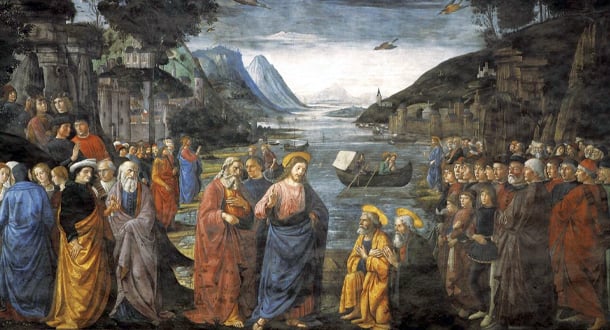
Jesus gives them this remarkable authority to cast out unclean spirits. But Mark says that they went off and preached repentance. I would want to ask the disciples, “Why are you preaching repentance when you have just received the authority to cast out demons?” Notice that in spite of all the instructions Jesus gives them, he doesn’t tell them what message to preach.
Any Hollywood scriptwriter would show them walking down the middle of Main Street, casting out demons right and left. The townsfolk would come out to see what is taking place, and would be filled with amazement. If truth be told, no one is going to show up when you start by preaching repentance. Did the disciples not follow instructions? Were they too timid to use this gift or power? Did they not trust the gift of authority or did they believe that this authority had some limitations? What if the real gift Jesus gave them was the gift of repentance and not the authority to create a spectacle?
Sadly, our definition of repentance falls short of the word in Greek. The Greek word is metanoia, which means to change the way a person thinks and understands. It has nothing to do with feeling badly or living with regrets.
The disciples, in preaching repentance, are asking people to change the way they are thinking.
That wouldn’t be possible if they were going around performing spectacular demonstrations of power. Metanoia is not a demand to fix oneself; it is an invitation to admit that the way we have been seeing the world is not enough. There is a void in our understanding.
Looking at the divisions which have taken place in our world, the common response is to entrench oneself, and to point out the flaws of the others. This behavior is all too familiar to us. But it only makes the void of incompleteness grow. Ironically, todays Gospel says that casting out demons makes it appear that the problems are “out there.” Repentance says that the problem is also within us, in the way that we see.

Fr. David: Very Inspirational! Best Regards, Ed