Reflection
I tend to avoid political conversations. I am afraid that a simple question about a particular government policy might trap me in a conversation where conflicts cannot be resolved.
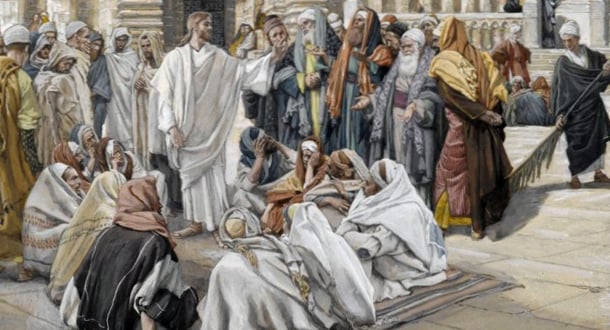
In today’s Gospel, Jesus is asked a political question designed to trap Him. The hot political topic at that time was about a census tax paid to the Roman emperor, Caesar. For many Jews, the tax was a constant reminder of their subjection to Rome. However, the Pharisees tolerated collaboration with Rome and supported paying the tax. Another group, the Herodians, were more nationalistic, and they opposed paying the tax. These unlikely bedfellows joined together to trap Jesus:
Is it lawful to pay the census tax to Caesar or not?
-Mark 12: 13-14
Should we pay or should we not pay?
If Jesus answers “No”, the Herodians can claim Jesus is rebelling against the Roman emperor. If Jesus says “yes,” he is seen as not supporting Israel. Jesus did not answer the question. Instead, he asked them to bring him the coin in question.
And then he asked them a question in return:
“Whose image and inscription is this?”
They replied to him, “Caesar’s.”
So, Jesus said to them:
“Repay to Caesar what belongs to Caesar
and to God what belongs to God.”
One of the early Church Fathers, St. Augustine of Hippo (354-430 CE) interpreted this Gospel story by contrasting the images involved. The inanimate image on the coin is that of the current emperor, but Christians are created in the image of the living God: “The coin has no knowledge of its bearing the image of the prince. But you are the coin of God, and so highly superior, as possessing mind and even life, so as to know the One whose image you bear.”
St. Augustine says that, because we possess a mind and a soul, our higher purpose is to consciously know, love, and belong to the One in whose image we were created.
During this season of Pentecost, we pray for the gifts of knowledge, understanding and wisdom, so that we can “know the One whose image we bear.”