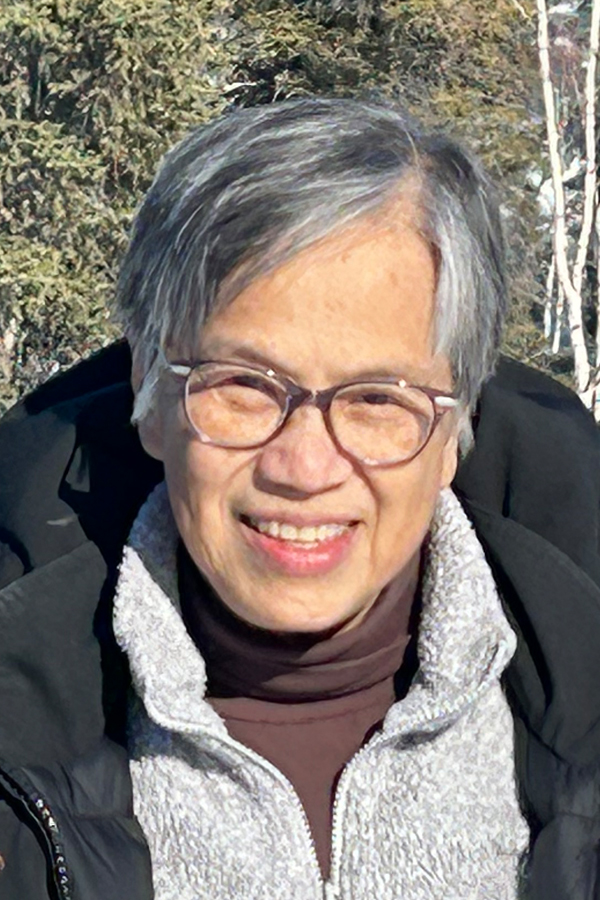
During six years of ministry in Northern Canada, Fatima Lee, of Toronto, Ontario, Canada, discovered what she offered most was her presence. Relationships were more powerful for the Indigenous People she served than catechetical programs.
“The truth is, the power of the Cross moves hearts and brings about change.”
Fatima Lee
Fatima felt called by God to teach and work in ministry.
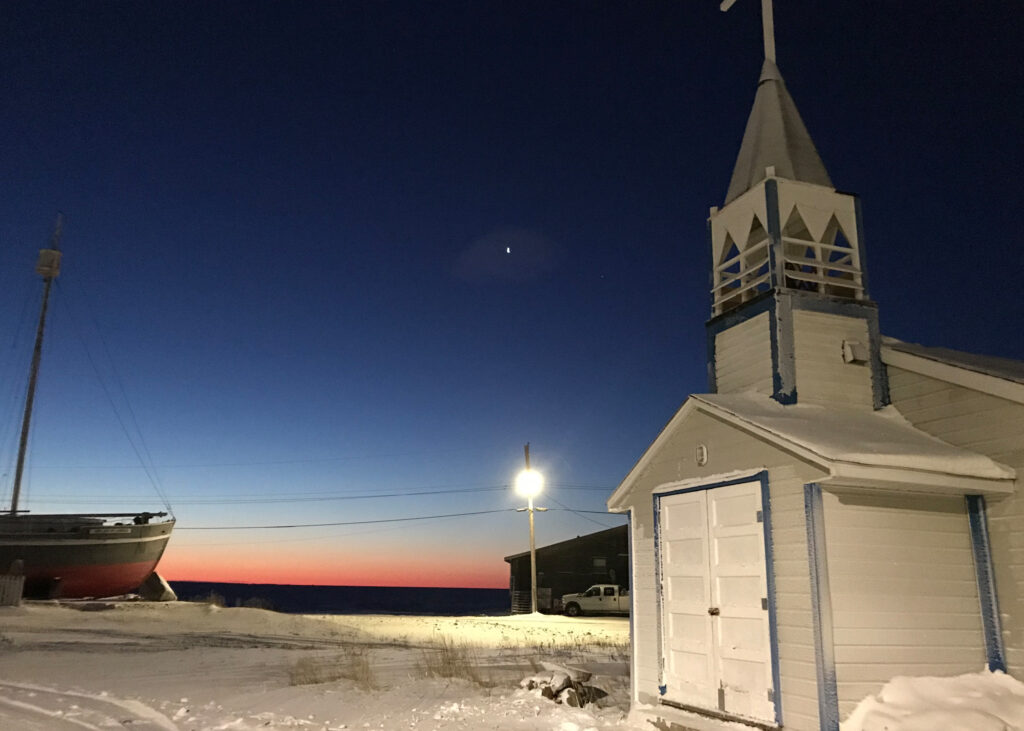
“As time went by, I sensed stronger and stronger a call within the call — and this very much was in response to the Passionist charism — to go out to the crucified of today, those abandoned and marginalized, and be a witness of God’s love to them,” shares Fatima. “I ended up being sent to a diocese up in the Canadian North, which covers an area of close to 600,000 square miles, sparsely populated and frigidly cold with harsh winters. Communities, mainly Indigenous, are small and often have no road access.”
As coordinator for religious education, Fatima learned as much as she taught. “I trained catechists for the various sacramental programs as well as lay leaders for pastoral roles,” recalls Fatima.
“This huge diocese has, on average, seven to nine priests serving at a given time. Until last year, all were on loan from other dioceses or religious communities. In this vast territory, there are four parishes and more than twenty missions. Many communities can be visited only occasionally by a priest and have the Eucharist celebrated.”
Thirty years ago, the diocese recognized how scarce priests would become.
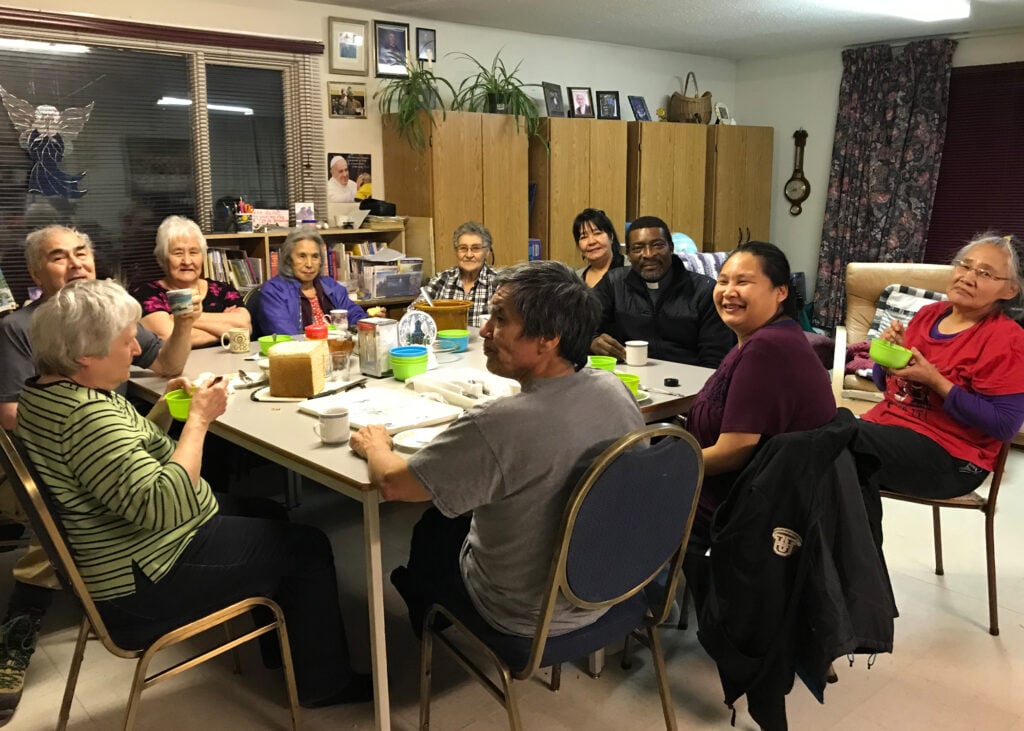
“The laity stepped forward and wanted to be trained and to serve as lay leaders to the faith communities. They would be mandated by the bishop to lead Communion services in the absence of a priest, and to baptize, bury and witness marriages when needed,” Fatima says.
Fatima was to help train lay leaders. But she quickly recognized the work was more than she expected.
“When I first arrived in the diocese, I thought my role was mainly teaching and imparting knowledge,” remembers Fatima. “I learned it was not that simple. The people, the culture, the language and the land were all foreign to me. To be a good teacher, I needed first to observe, to listen, to empathize and meet them where they were. I knew I had to learn FAST.”
She learned from those who did understand. The retired bishop, who came to the diocese as a young priest 60-some years ago, was of tremendous help.
“‘Ah,’ he said, ‘our people were hunters; they do not plan. They have their guns, and when they see an animal, they shoot. You do not plan for the appearance of an animal,’” explains Fatima.
“He continued, ‘You probably were frustrated, too, by them having very little sense of time. You know, time is a Western concept. They did not use a clock, they observed sunrise and sunset; they watched for the seasons to come and go. Modern life has forced them to begin to adapt.’ That was a precious lesson to learn!”
Fatima’s experience changed how she approaches ministry.
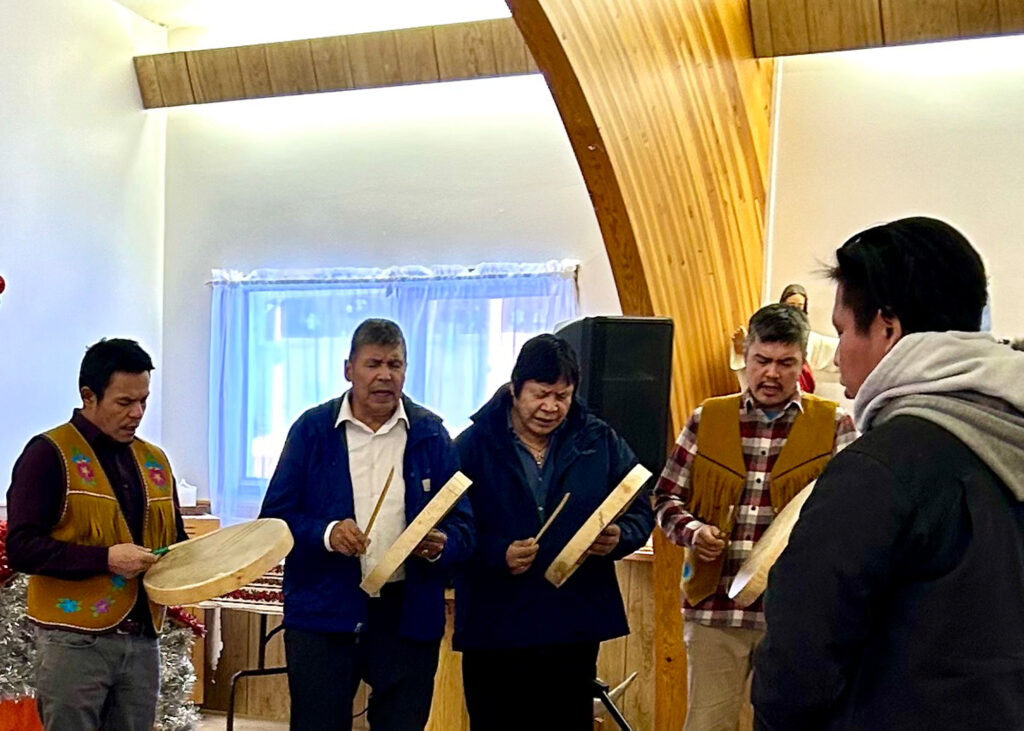
“When I first arrived in the North, I thought I had a lot to give, theologically and intellectually. The more encounters I had with the people, the more I realized that we must be close to them and understand them before we know how to bring God’s love to them,” Fatima says.
“My pastoral orientation has been changed by my experience there. I no longer put as much emphasis on theory and doctrine. It is not that they are unimportant, but we can only meet people where they are. Each individual is unique. Each encounter is a blessing. Closeness and accompaniment are always predicated on listening attentively, loving tenderly and judging sparingly. It takes work, but above all, it asks for our willingness to think less of ourselves, more of the person in front of us, and, if need be, to walk through the dark night with that person, as Pope Francis encouraged us to do.”
Extended Video Interview
This transcript has been prepared for clarity, accessibility, searchability and readability, though minor variations from the original video may occur.
What the Power of Presence Means
Question: When you hear the phrase “the power of presence,” what does it mean to you personally and in your ministry?
Fatima: First, I’d like to say a few words about power. I think power, as the world understands it, is more about domination: what one uses to dominate, to control, and to bully. My understanding of power is more as Paul talks about it in First Corinthians: Christ crucified is the power and wisdom of God. That power is sometimes seen as weakness or foolishness in the eyes of the world, but it is actually what really touches the heart and changes things. So that’s how I understand power.
A Long-Awaited Call to Ministry
I’ll start with a bit of history, because you asked how I understand it personally and in my ministry. I have always felt the call to ministry, and some five decades ago I went through formal theology training with a class of seminarians who were, of course, ordained at the end. The first job I had was teaching theology in a seminary. Decades later, with a doctorate in sociology, my first job was also in teaching, this time at a university. In between those years, my work was mostly in university administration.
But all through these years, I felt restless. I knew deep down I was being called to minister to God’s people. I was just waiting for the opportunity. A couple of years into teaching sociology, the turning point came out of the blue. I was asked if I would be interested in being the lay pastoral associate of my home parish, and I was ecstatic. This came at a moment when I was about to pivot into a different career path altogether. But then came this opportunity, something I had waited for almost 30 years by that time, and it gave me real joy and peace.
I was put in charge of adult faith formation, and at the same time I had a pastoral presence through my other roles in the parish.
The Example of Charles de Foucauld
While engaging the mind and discussing ideas are interesting pursuits, from my early years I also found myself attracted to being present, as Charles de Foucauld was when he journeyed to the Sahara Desert and lived among the Muslims: not to preach or engage in theological discussions, but simply to bear witness to the gospel through his daily living and by building relationships and friendships with the Muslims. His presence among the people was his way of preaching the gospel.
A Call Within the Call
To go back to my story, more than another decade had gone by in pastoral ministry when I felt, stronger and stronger, a call within the call. This was very much in response to the Passionist charism. I failed to mention that my home parish is actually a Passionist parish, and it was through the parish that I came to know the Passionist charism. I felt this call to go out to the crucified of today, those who are abandoned and marginalized, and to be a witness of God’s love to them.
After much prayer and discernment, and perhaps also some divine intervention (I’ll leave that story out for the time being), I ended up being sent to a diocese in the Canadian North, which covers an area of 600,000 square miles.
Question: Wow.
Ministry Across 600,000 Square Miles
Fatima: It is sparsely populated and frigidly cold, with very harsh winters, and the communities there are mainly Indigenous. They are small and often have no road access. So being physically present, to go back to your question, means flying into these communities.
Officially, I was the coordinator of religious education for the diocese. I was tasked with training catechists for the different sacramental programs, as well as training leaders for pastoral roles. The latter needs some explanation, because this huge diocese has, on average, seven to nine priests at any given time. Until last year, all of them were on loan from other dioceses or religious congregations. Since last year, it has its first incardinated priest.
So on this vast territory of 600,000 square miles, there are four parishes and more than 20 missions, and we have seven to nine priests. One can easily see from these figures that many communities will only occasionally be visited by a priest or have the Eucharist celebrated.
Lay Leaders Step Up
In the early 1990s, the bishop at that time already saw the writing on the wall and called a diocesan synod to ask, “What do we do?” All the lay leaders in the diocese, from different communities, met together for a few years, and the laity decided that they would step up. They asked to be trained and to be ready to serve, to lead communion services and to be leaders in the faith community. They would then be mandated by the bishop to lead services, to baptize, to bury, and to witness marriages whenever necessary.
Question: Wow. This is the 1990s.
Learning a Culture Completely Different from My Own
Fatima: When I first arrived in the diocese, I thought my role was mainly a teaching role: preparing catechists and strengthening the education of lay leaders. Very soon I learned that it was not that simple, because the people, the culture, the language, and the land were all so foreign to me.
It’s not that I am a stranger to different cultures. I grew up in a society where I had to navigate both British and Chinese culture, and I lived in two more cultures before my family immigrated to Canada some 30-some years ago. But the North, the Indigenous culture, is something completely different, something I could never have imagined. To be a good teacher, before I could speak words that are meaningful and connect with them, I needed first to observe, to listen, to empathize, and to meet them where they are. And I knew I had to learn fast. [laughter]
Holy Week in Gamètì
Question: Were there times when being present was more important than having a program, a solution, or even the right words? What happened in those moments?
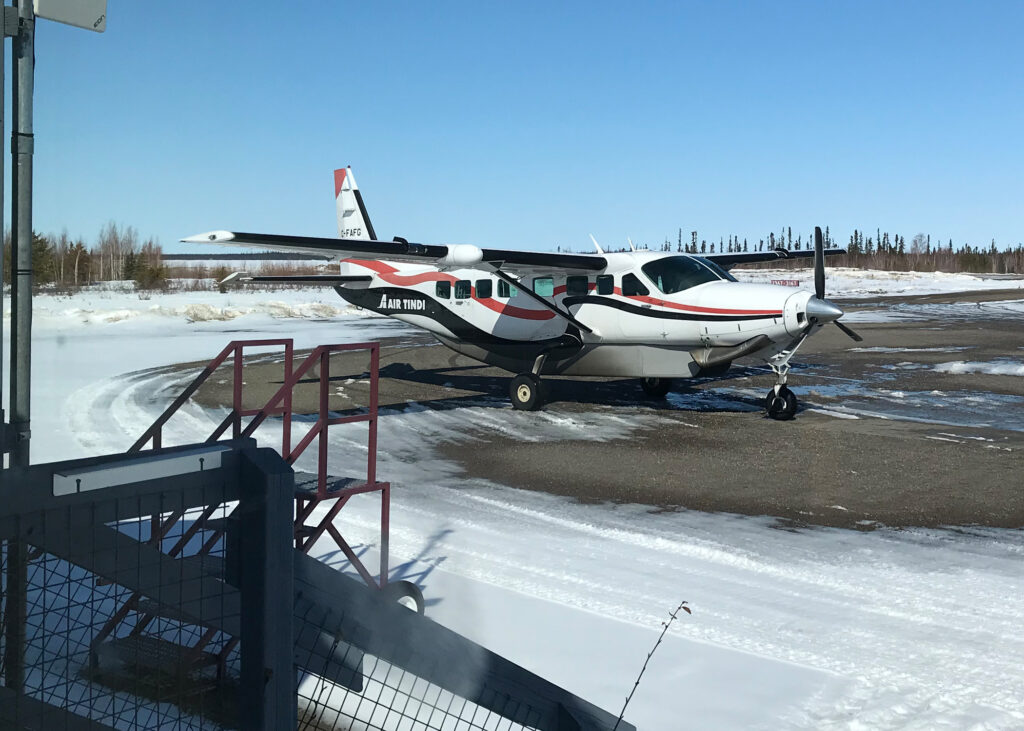
Fatima: My first major assignment in the diocese was to go into Gamètì, a small, remote community about 150 miles from Yellowknife, where the diocesan office and the seat of the bishop are located. I was to go in for Holy Week. The community has no road access, so I flew in on a small propeller plane.
I was to arrive on Wednesday of Holy Week, and it was already Palm Sunday, and the community still had not confirmed what they expected me to do. I was frustrated. I needed to know what I was expected to do during the Triduum so I could get ready. I’m one of those people who can’t just stand on my feet and talk.
Question: Yeah.
Fatima: I also needed to know about travel logistics: the flights, who was going to meet me, and so on.
“Our People Were Hunters”
I was really frustrated. By chance, I met our retired bishop, who was 87 at that point, and he gave me the first of many important lessons. Hearing my frustration, he laughed and said, “Ah, our people were hunters. They do not plan. They have their guns, and when they see an animal, they shoot. They can’t plan on the appearance of an animal.” Then he continued, “You were probably frustrated too by their having very little sense of time.” [laughter]
I said, “Yes, you read my mind.”
Then he said, “Time is actually a Western concept. They did not have a clock. They observe sunrise and sunset. They see the seasons come and go. That is their sense of time.”
That was a precious lesson to learn. It opened my mind to my own unconscious biases, formed by how I had been shaped. I had made that judgment very quickly: they were disorganized [laughter], they were not punctual, they were always late.
This truly helped me in my years of being with the people. Communion services are scheduled for a certain time, but they will always start only when enough people have gathered, and even then, someone may request, “We want to say the rosary before we start.” Our feasts and meetings would almost always be late, sometimes by hours. In the end, I took it all in stride. [laughter] The bishop’s advice was a big help. So Holy Week happened, and all was good, though not without its challenges.
Confirmation After 30 Years
A few weeks later, I was back in the community, this time to do confirmation preparation. As we know it in the south, confirmation preparation is mainly for teenagers, unless it is in the context of RCIA. When I heard that 40 people had registered for the program, in a community of 300 [laughter], I was shocked. I dug deeper and found out that the community had not had confirmation for over 30 years.
Question: Oh my gosh.
Fatima: That’s about one and a half generations, because there was no priest or bishop available. Because of that, it was also difficult to find a catechist to prepare the people. So the bishop sent me in.
The Computer Crash
I put a lot of work into preparing a confirmation preparation program for adults, because one wasn’t available. I thought I had done an excellent job. I finished a day before, with beautiful PowerPoint presentations, even with videos embedded. I was proud of it. I thought I was ready.
But God has His own mind. [laughter] The next morning, as I was getting ready to fly to the community, my computer crashed without any warning. I was at a loss. I tried to get help, and when it finally became obvious that nothing could be done, I panicked. [laughter]
My bishop was just next door, and he heard what happened. In his usual calm and wise way, he said, “Evangelization takes much more than presentations, even if they are beautiful presentations. It’s really your presence among the people that matters.”
Question: Wow, that was wise.
Fatima: It was really a big help. But despite that advice, I felt the need to apologize profusely to the participants, who faithfully showed up every day and on time. [laughter] Midweek, I found myself apologizing to them again in class. This time Brandon, a middle-aged Dene man, had had enough, I think. He said in front of the whole class, “Maybe this is what it’s meant to be. Maybe God just wants you to listen more to us.” [laughter]
Yes, again that word, presence, and this time from the mouth of an Indigenous person whom I had been called to serve.
Question: What an experience. Fatima, I can’t even imagine. We go through life and don’t even realize we’ve got tunnel vision, that we think we’re in control of everything. That’s how we are. And then you went there and it all exploded like fireworks.
Fatima: Yes, that’s a good description. [laughter]
Three Worries: Listening Before Acting
Question: Ministering in a culture or community different from your own often requires listening before acting. What did the people of Northern Canada teach you about listening, relationship, and accompaniment?
Fatima: On another occasion, I was asked to go into a small community, this time in the Arctic Circle, a community of 150 people. I was going to train a young woman so that she could teach confirmation preparation. She was bright and articulate, and she made a very simple request: “Would you be able to teach a class so that I can experience it?” I couldn’t very well say no, could I? But I did not tell her that I had never taught teenagers before. [laughter]
We had a class of 11 teenagers from grades 8 to 12. As part of the class, the students were asked to name and share three worries they have in life. I expected the normal answers: searching for an identity, relationships, finding the love of your life, that sort of thing. When I tallied their answers, I was totally floored. The first was food insecurity. The second, the fragility of life. The third, losing someone they love.
I did not know how to respond. I ended the class without asking them to elaborate, because these were definitely not concerns one would expect of teenagers. I had my assumptions about what young people worry about, and they turned out to be totally wrong in this case.
The Suffering We Cannot See
As I talked to the adults in the village later on, I learned that the community had been worried for a couple of years about the disappearance of the migratory caribou herd they depended on for food. Meetings had been called; they talked about the phenomenon, tried to understand it, and tried to figure out strategies.
Then somebody showed me pictures of two young people who had died very recently. One was killed in a quad accident. A quad is an all-terrain vehicle.
Question: Okay. Yep.
Fatima: And a couple of weeks later, another young person, also a good friend of these young people, died by suicide. No wonder these issues were at the top of their minds.
If I had been closer to them, or more ready to listen, I would have learned, and perhaps I would have been able to walk with them a little better. But I had not learned fast enough to do that. It was another good lesson for me in how important closeness and listening are; both are so important in accompaniment. The suffering that people are immersed in often is not obvious and cannot be assumed.
Question: It’s hard. You go in thinking at the top level, not at ground level, and you’re not expecting that. That’s the thing when you go to a culture that’s in a different time and place from where you’re from. Oh, how hard that was. But it made you wiser, right?
Fatima: I hope so. [laughter]
Question: That had to be hard to leave there.
Fatima: In one sense, yes. [laughter] Communities all have their problems, and each community is so different. That’s part of the problem when you don’t have enough pastoral workers. It used to be that missionaries were able to stay in a community, right? That makes a huge difference. Now everyone is always visiting; even the priests are visiting.
Question: But those 10 days were probably an important 10 days for them too, because they did feel seen and heard, at least for a short period of time. And once they got to know you, I’m sure they knew you were going to take that with you and share it.
Fatima: Yes. But I also felt totally how inadequate I was.
Question: That’s hard enough with people you know, when there are losses, or when someone says, “I’m afraid all of our food is going to leave.” What do you say? Let’s say the Our Father. At least that helps a little, the idea of bringing prayer to them. But it’s just huge how much time it takes to listen and get to know people.
Seeing the Name of Jesus on the Foreheads of the Poor
Question: Can you share a particular person, encounter, or moment from your time with Indigenous people in the Canadian North that taught you what it means simply to be present with another person?
Fatima: Again, because of the shortage of priests, and because my bishop saw that I might also be able to serve in a pastoral role, halfway into my six-year tenure I was given added responsibility. I was to be part of the pastoral team that went into two small villages regularly, whenever I could. One of these villages was again Gamètì, which I basically considered my community, and which I continued to serve until I left the North.
In my six years of accompanying the Indigenous people in the North, I gradually learned to understand more of their culture and their pain. Time and again, the words of St. Paul of the Cross came to mind: “I see the name of Jesus written on the foreheads of the poor.”
Poverty Beyond the Material
But I’d like to say a word about “poor.” I quickly learned that the situation of each Indigenous group across Canada is different. We do not have one Indigenous culture. I had expected to find extreme poverty when I arrived, because this is how our media often portrays Indigenous communities. But in the Northwest Territories we have only two small reserves. Most of the communities are in various stages of self-government through land claims settlements, and that changes things, slowly, but it is changing things. They have been given more control of their resources.
So poverty may not be so much in a material sense, but it definitely strikes in other ways. They are suffering, and really, the cries are deafening, if we would only listen.
The Wound of Residential Schools
The experience of residential schools is front and center in that. Again, a qualifier: not all residential schools were the same. There were better-run schools, and there were institutions with horrific cases of abuse. Some students did learn English or French, which helped them eventually settle into careers in the modern world. But intentional racist policies of erasing the culture and language of Native people really left a gaping wound.
George’s Story
Here is an encounter I had. Most of the time, those who attended residential schools came back to the community as strangers among their own people. I’ll give the example of George, not his real name. He came back to the community after many years in residential school, and he painfully recalled that when he first returned, he could no longer speak his own language, and he was alienated from the culture and the land, especially the land of his people.
His father, who was chief at the time, took him to live on the land, teaching him his native language again and coaching him in the life skills he needed to live on that land: hunting, trapping, fishing. After years of immersion, he flourished. He was one of the fortunate ones. Without his telling me the story, I would never have guessed.
So again: are we ready to sit down, listen, and be with people? This is especially important for pastoral workers, lay or otherwise.
Intergenerational Trauma and Addiction
Today we understand that culture and language are not just skill sets. They are more like anchors. Their loss affects a person’s identity, self-worth, and spiritual grounding. As a result, many resorted to alcohol or other addictions to blunt the pain of the loss of identity, or of abuse.
Alcohol, unfortunately, is an evil whose effects often pass from generation to generation. In addition to the possible effects of fetal alcohol syndrome, kids also did not receive the nurture and care they needed from drinking parents. All kinds of violence can happen when the mind is no longer in control, and I have heard many stories of that. On top of that, those who started residential school very young, at four or five, actually do not know what a family is, and this in turn affects how they raise their children. Very sadly, this often gives way to more drinking or other forms of addiction, and such intergenerational trauma often persists from one generation to the next. We know now that hopelessness and trauma are the main drivers of addiction.
The Church’s Inheritance
Unfortunately, the Church was a central part of the residential school trauma, because she agreed to run these schools on behalf of the government. So we, as a Church on the ground today, inherit all these consequences. How do we regain that trust? How do we listen and accompany? And how do we bring healing?
Sixty Years of Change
I would add another observation. Beyond residential schools, there are other challenges that the communities in the North face. Just imagine: some 60 years ago, they were still living a nomadic life, hunting, trapping, and fishing. They lived in tents out in the snow and traveled by dog team. This was only 60-some years ago. Now, all of a sudden, they have a money economy. They have settled in houses and villages, and now they are faced with new technologies and all the ill effects new technologies bring. Just imagine dealing with all that change in 60 years.
When I was there, I kept asking myself: what good news are we bringing them in the life and death of Jesus, and how can we share that good news? Gradually, I think by osmosis, through being with the people, hearing their stories, and feeling their pain, I became more and more aware of where they are. But at the same time, I have no solution.
Standing with the Crucified of Today
Question: The Passionist charism calls us to recognize and stand with the crucified of today. How did your experience with the Indigenous people deepen or change your understanding of that call?
Fatima: As I mentioned earlier, the effect of alcoholism is pervasive. I could see the wounds it leaves on individuals: those who are still struggling with it, and those who have overcome it but may still bear the scars left in their souls and bodies.
Veronica and the Papal Visit
In 2022, Pope Francis came to apologize to the Indigenous people of Canada for the suffering caused by the residential schools. I was asked to accompany a group of residential school survivors and their descendants from our diocese on this trip to Edmonton to meet with the Pope.
There I met Veronica, again not her real name. At the beginning of the trip, she was a recluse, all on her own, isolated. As the days went by, she became more comfortable and befriended me. We sat together at dinners and on buses, and gradually she came alive. I have always been the timid and shy one, and very soon she was dragging me around everywhere. [laughter] She was bold and adventurous.
As we shared conversations, I learned more about her pain and suffering, and how her drinking had almost killed her. It had caused devastating physical harm to her body. By sheer power of will, and, she would admit, by God’s grace too, she stepped back from the precipice. That break from alcohol happened just several months before we met.
I saw the marks of suffering that still existed in her body. But I also saw God’s love and faithfulness enveloping her. She showed me her wounds and allowed me to touch them, but she also showed me the life she had regained. Through our journeying together, we actually ministered to each other.
Question: That’s beautiful.
Fatima: Yes, it is.
How the North Changed Me
Question: We often think of ministry as what we give to others. How were you changed by the people and communities you encountered there? This is going to be a short answer, right, Fatima?
Fatima: I think you can almost draw conclusions from what I said earlier. When I first arrived in the North, given my background and experience, I thought I had a lot to give [laughter], logically and intellectually. But the more encounters I had with them, the more I realized that we must be close to them and understand them before we know how to bring God’s love to them.
I saw firsthand their love of the land; the suffering they went through because of colonialism and racism; their loss of identity and language; and the consequences of that, as seen in broken families and in the ill effects of using alcohol or drugs as coping mechanisms. If we are to bring them the good news, I know it cannot be empty words or abstract concepts, which is exactly what I thought I would be able to offer. We need to respond very differently: by caring, through love, and through empathy.
Listening Attentively, Loving Tenderly, Judging Sparingly
My own pastoral orientation has changed through my experience there. I no longer put as much emphasis on theory and doctrine. It’s not that they are not important, but we can only meet people where they are. Each individual is unique, and each encounter is a blessing. Closeness and accompaniment are always predicated on listening attentively, loving tenderly, and judging sparingly. It takes work, but above all, it asks for our own willingness to think less of ourselves and more of the person in front of us, and, if need be, to walk through the dark night with them. This is true of every encounter, but it is especially true if we want to go out to the margins.
Removing Our Sandals
Pope Francis’s words come to mind. He asked us to remove our sandals before the sacred ground of the other when we try to accompany others. This is what my experience in the North taught me: I have to remove my sandals, my own formation, my cultural baggage, my prejudices, before I can really connect with the other. Being immersed in the totally different culture, language, and environment of the Indigenous people heightened my awareness of this.
Letting Go of Control
I believe I have also gained a much more relaxed attitude toward things we have no control over, and I’ve learned to let go of the need to control. The words of our retired bishop, which I quoted at the beginning, remain with me: “Our people are hunters. They do not plan on when an animal appears.” Being close to them and seeing how they react to unforeseen circumstances was a life lesson for me.
After many years of being thwarted by weather, by the crash of a computer, or by the many unexpected crises that come along, from frozen pipes, to the early melting of winter roads, to not being able to get a single piece of fresh fruit in the local store, I have become much more ready to just let go when something unexpected happens. I remind myself to take a deep breath and deal with each situation as best I can.
I must say my time in the North has really stretched me theologically, spiritually, and physically. And hopefully it has been a time of growth.