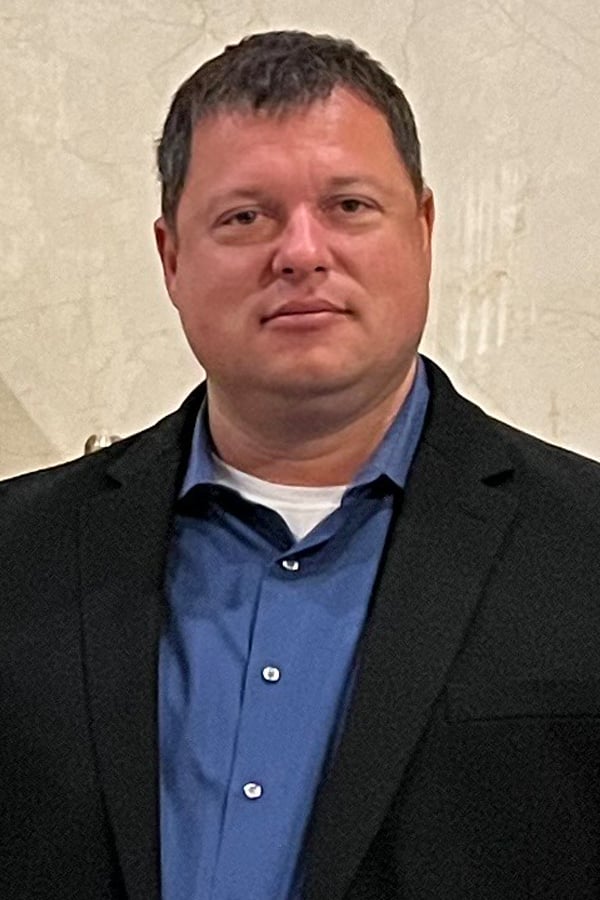
Hace quince años, durante su despliegue en Irak, Brian Owens pasó seis meses sin poder recibir la Eucaristía. Cuando finalmente tuvo la oportunidad de volver a recibir a Jesús, decidió que jamás volvería a privarse voluntariamente de ese encuentro sacramental.
Su fe católica y los sacramentos ayudan a Brian a mantener su esperanza en tiempos de tensión y lo sostienen en su trabajo como director de la escuela católica San Anselmo, en Dearborn Heights, Michigan.
“Uno tiene que elegir deliberadamente no solo la esperanza, sino también la oración por la esperanza. Es fácil dejarse arrastrar por la rutina diaria”, comparte Brian. “De lo contrario, solo nos queda la desesperación. Creo que al elegir deliberadamente la esperanza, encontramos la fuerza para levantarnos cada día.”
La esperanza ha transformado la vida de Brian.
“En mi trabajo, con mi personal o con los estudiantes, trato de filtrar todo lo que no sea positivo”, explica. “Es importante abordar las cosas desde una perspectiva positiva. En cualquier conversación uno tiene la opción de actuar positivamente o negativamente. A veces hay que tomar la decisión conscientemente que voy a responder positivamente.”
Durante muchos años, Brian trabajó en el sistema de escuelas públicas, en el área de educación especial. Era un trabajo importante, pero difícil.
Un día, Brian le dijo a su esposa Kathy que, cuando se jubilara, quería trabajar para la Iglesia. “¿Y por qué esperas?”, le preguntó ella.
“Hace dos años y medio dejé las escuelas públicas y me pasé a las escuelas católicas”, cuenta Brian. “Ahora no solo trabajo con los niños, sino que los ayudo en su relación con el Señor. Trabajo con sacerdotes extraordinarios. Es maravilloso que eso sea el ambiente escolar de cada día. Los niños te levantan el ánimo, el personal también. ¿Cómo puedes estar de mal humor cuando diario conversas con alguien vestido en el hábito franciscano? Simplemente, no se puede.”
“Uno tiene que elegir deliberadamente no solo la esperanza, sino también la oración por la esperanza.”
Brian Owens
Los Pasionistas han tenido un papel importante para Brian en cuanto vive la esperanza y mantiene firme su fe. La relación con los Pasionistas comenzó en el Centro de Retiros y Conferencias San Pablo de la Cruz, en Detroit, Michigan.
“Me sentí atraído por los Pasionistas porque ellos te aceptan como estás y te ayudan a cargar la cruz”, comparte Brian. “En mi caso, mi cruz se manifesto en enfrentar las secuelas de haber estado en una guerra y haber perdido amigos.
Siempre le digo al Padre Pat Brennan, C.P., que probablemente me salvó la vida. Ese año mi retiro fue el 19 de enero, pero el 12 de enero mi mejor amigo, Zach, se había quitado la vida. Yo apenas estaba empezando a procesar que mi amigo, que había vivido las mismas circunstancias que yo, se había suicidado. El Padre Pat Brennan, C.P., director del Centro de Retiros, compartió lo que él vivió tras la muerte de su hermano en Vietnam. Que él compartiera algo tan doloroso me permitió abrirme y expresar lo que sentía. Que uno esté dispuesto a ser vulnerable es el mejor regalo que se le puede dar a alguien.”
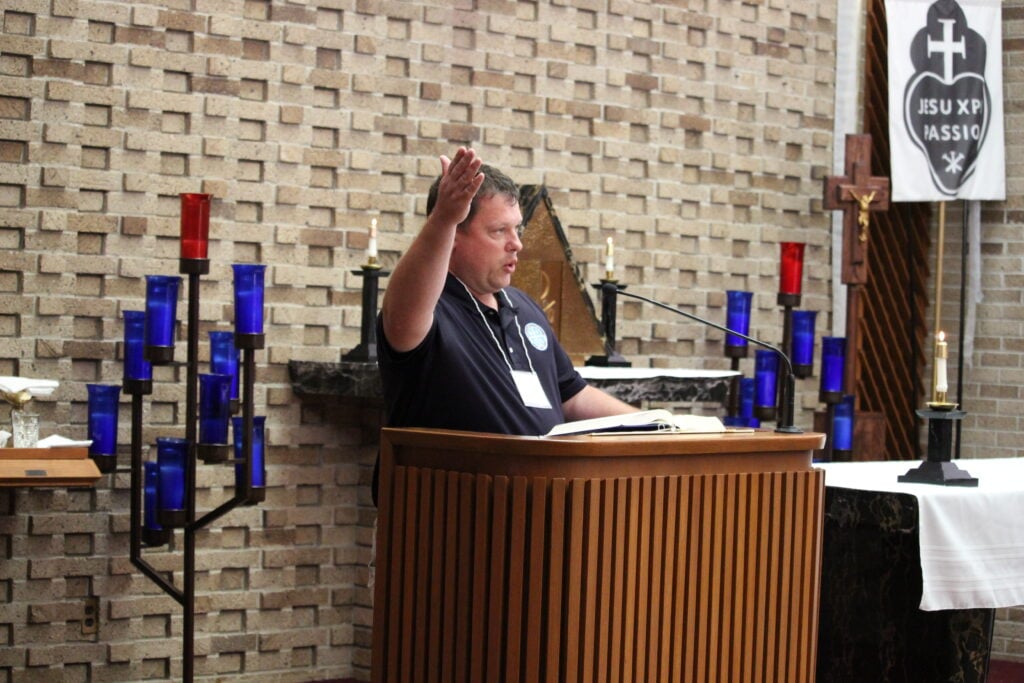
Brian ha visto cómo el diálogo puede crear conexión y dar esperanza.
“La gente que conozco y que se siente sin esperanza, cuando está hundida, no tiene con quién hablar. La esperanza es precisamente poder tener esas conversaciones y decir: ‘Aquí es donde estoy luchando.’”
“Que uno esté dispuesto a ser vulnerable es el mejor regalo que se le puede dar a alguien.”
Brian Owens
Brian está agradecido por las personas que lo acompañan y cuidan. Su esposa, Kathy, es el mayor regalo que Dios le ha dado.
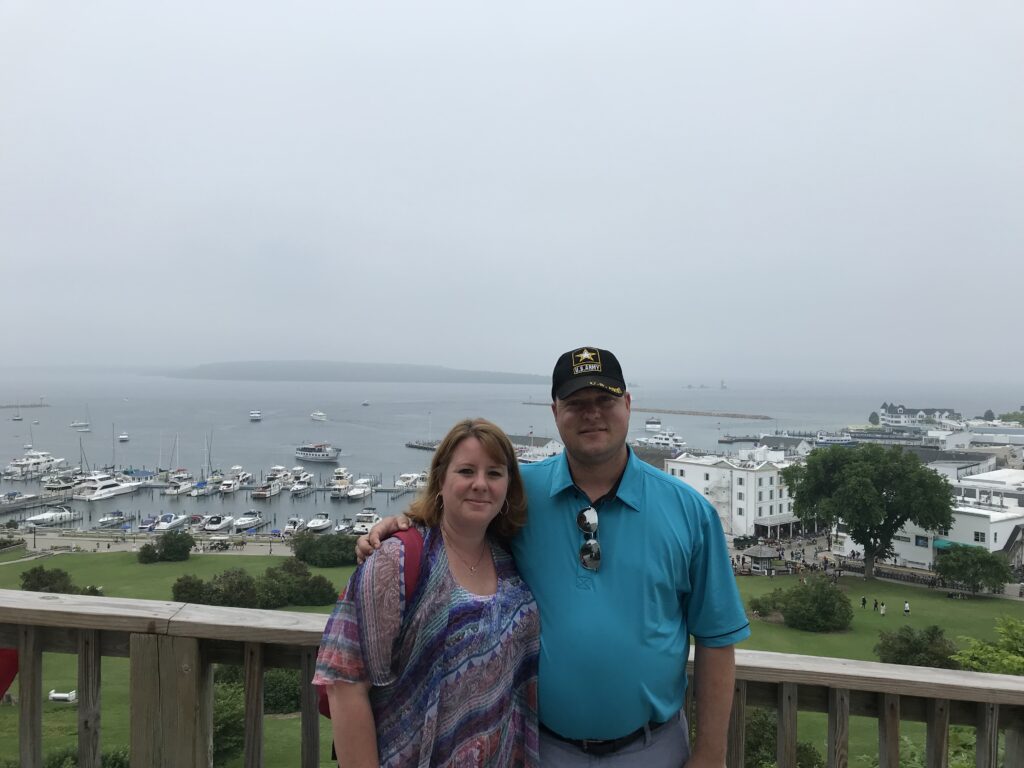
“En cada momento en que empiezo a decaer o a sentirme perdiendo esperanza, ahí está ella. Me dice: ‘Vas a estar bien’”, comparte Brian. “Ella es mi compañera perfecta, mi alma gemela.”
Durante más de veinte años, su párroco, el Padre Tom Belczak, ha ayudado a Brian a profundizar su fe y su participación en la Iglesia. El carisma Pasionista lo guía e inspira, dándole fortaleza.
“Hay dos cosas que recargan mi capacidad de mantener la esperanza y la fe: mi retiro anual en el centro San Pablo de la Cruz y la Semana Santa, que celebra el acto más grande de amor y esperanza que el mundo haya visto”, explica Brian.

Brian desea que otros también descubran el poder de la fe, incluidos quienes asisten regularmente a una iglesia.
“¿Cómo te defines como católico?”, pregunta Brian. “¿Solo marcas la casilla ‘católico’, o dices: ‘Es todo lo que soy’?”
La entera entrevista en inglés
Question: Do you see hope as an active state, a prayerful one, or both?
Answer: I see it as both. You must actively choose hope and also pray for it. It is easy to get dragged down by everyday struggles, so I make a conscious choice each day to pray for hope and stay mindful of what brings hope instead of what brings me down. I learned this during my time in Iraq—every day was a choice between focusing on hope or despair. The Eucharist played a central role for me. During the first six months I did not have access to it, but once I did, it grounded me again. The act of prayer and the Eucharist became essential to who I am as a Catholic.
When I later volunteered to help my parish stream Masses during the pandemic, I realized how much I hungered for the Eucharist. Even when only twelve of us were allowed in the church, I needed to be there.
Why We Need Hope
We need hope because without it we are left with desperation. Choosing hope gives us purpose—to get up each day with the intent to make a positive difference. Without hope, we simply try to survive the day.
Nurturing Hope in Others
As a principal, I nurture hope among staff and students by focusing on the positive. In every conversation—whether celebrating success or addressing problems—I emphasize growth, value, and potential. Even discipline can be approached with compassion. I tell my staff: you can be a positive, uplifting force or you can tear someone down. I choose to build up.
When addressing challenges, I focus on what comes next rather than on what went wrong. I remind people that they are valued, capable, and appreciated.
Finding Hope at Work and in Faith
I find hope in my community, especially in Catholic education. After years in public and charter schools, I returned to the Church’s mission-driven environment. Working alongside Passionist priests and laypeople who are dedicated to discipleship uplifts me daily. The focus is spiritual growth, not bureaucracy. And honestly, it is hard to be grumpy when your boss is a Franciscan in a brown robe!
Choosing Hope Amid Chaos
The world can be chaotic and angry. I have learned to compartmentalize—to not let the negativity on the news steal my peace. I empathize deeply, but I also know I cannot serve others if I live in constant frustration. The Passionist way reminds me: walk with people in their chaos, but do not become part of it.
The Passionists live this beautifully. They meet people where they are, helping them carry their crosses—whether those crosses are grief, trauma, or daily struggles.
Being a Pilgrim of Hope
You do not need to travel to Rome to be a pilgrim of hope. Most of us find our pilgrimage in daily life. For me, St. Paul of the Cross Retreat Center is my place of renewal and hope. Every Passionist retreat center I have visited carries that same spirit of healing and connection.
The Supplies for Pilgrimage
The essential tools for being a pilgrim of hope are openness, honesty, and connection. Hopelessness thrives in isolation. We all need someone to talk to and trust enough to say, “Here’s where I’m struggling.” Veterans especially know the power of talking—it can save lives. Silence isolates; conversation heals.
The Importance of Talking and Mental Health
I encourage everyone, especially veterans, to seek help. I lost a close friend to suicide, and it taught me that asking for help is strength, not weakness. I found a therapist who has been my guide for over a decade, and that relationship continues to help me grow. We all need someone who will listen without judgment.
Community and Connection
Being a pilgrim of hope means journeying with others. Having a faith community—a “tribe”—keeps you from feeling alone. For me, Passionist gatherings feel like family reunions. Leaving my leadership role will be bittersweet because of the deep sense of belonging those meetings bring.
How God Has Nurtured Hope and Trust
I was a “cradle Catholic,” but it took an “aha” moment in Iraq to realize my faith was not just inherited—it was my identity. When I was reunited with the Eucharist, I felt peace and purpose again. Prayer and Mass have since become my anchor, rebuilding my hope each day.
Being surrounded by the Church, both in ministry and in work, constantly reminds me that my faith defines how I see the world—not perfectly, but authentically.
People and Practices That Sustain Hope
My wife, though not as religious, grounds me. She knows when I need encouragement and always reminds me that I will be fine. My pastor, too, has an incredible gift for knowing when I need support—even when I say he doesn’t have to call back. The Passionist community at St. Paul of the Cross has been a constant source of strength and understanding.
When I am overwhelmed, I turn to simple practices: listening to podcasts about the saints, playing Christian music in the car, or praying a decade of the rosary with my finger rosary. That small act centers me.
The story of my first finger rosary stays close to my heart. A man named Rico gave it to me before I deployed to Iraq, telling me it had been through seven landings in the Pacific. I carried it through my deployment, later passed it to another soldier, and now it continues its journey with others.
The Power of Example and Vulnerability
Passionist priests like Father Pat taught me the healing power of vulnerability. When I was grieving the loss of my friend, he shared his own pain of losing his brother in Vietnam. His openness gave me permission to seek help. I now share my story to help others the same way.
Vulnerability connects people—it is the antidote to isolation. When leaders and teachers show their authentic selves, others feel seen, valued, and safe to seek healing.
Walking With, Not Judging
The Church must walk with people through their struggles, not judge them for them. Everyone’s story is complex—veterans, the divorced, the broken. Christ met people in their pain, not in perfection. True pastoral care is loving people where they are and helping them find their way back, without shame or checklist. That is the Passionist way.