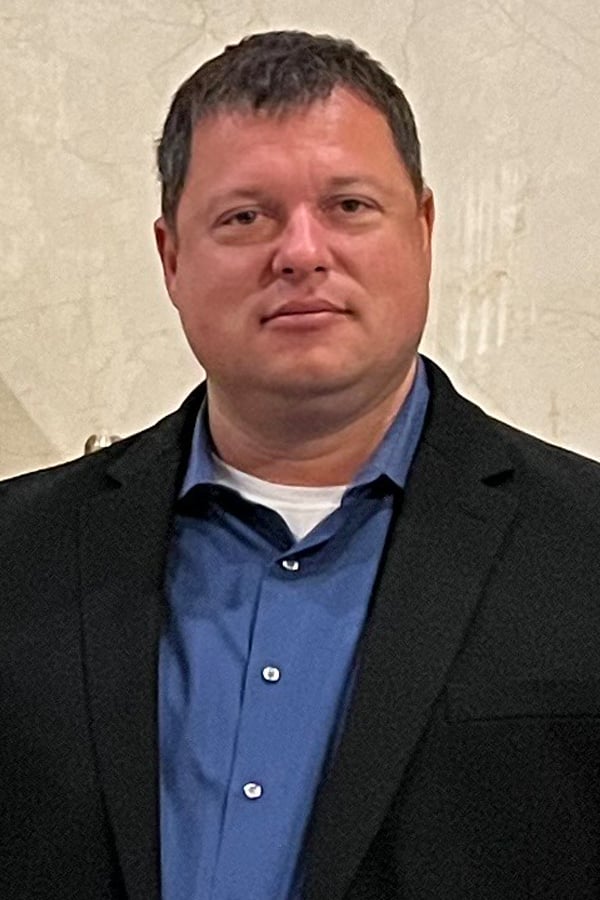
While deployed to Iraq 15 years ago, Brian Owens went for six months without receiving the Eucharist. When the opportunity to receive Jesus returned, he knew he would never go without the Eucharist voluntarily again.
His Catholic faith and the sacraments help Brian find hope in times of stress and sustain him in his work as principal at St. Anselm Catholic School in Dearborn Heights, Michigan.
“You have to actively choose not only hope, but the prayer for hope. It is easy to get dragged down in the everyday,” Brian shares. “Otherwise, we are left with desperation. I think that by choosing to find hope we can get out of bed every day.”
Hope is transformative in Brian’s life.
“When working with my staff or students, I filter out everything that is not positive,” he explains. “It is important to approach things from a positive perspective. In any conversation you have the option of being positive or negative. Sometimes you have to make positivity a conscious choice.”
Working in the public school system in special education was Brian’s life for many years. His work was important but tough.
One day, Brian said to his wife, Kathy, that when he retired, he wanted to work for the Church. “Why are you waiting?” she asked.
“I switched from working in the public schools two and half years ago to the Catholic schools,” says Brian. “I now not only get to work with the kids, I help them in their relationship with the Lord. I work with phenomenal priests. It is so wonderful for that to be the focus every day. The kids are uplifting, and the staff is uplifting. How do you get grumpy talking to a person in a Franciscan robe? You just cannot.”
“You have to actively choose not only hope, but the prayer for hope.”
Brian Owens
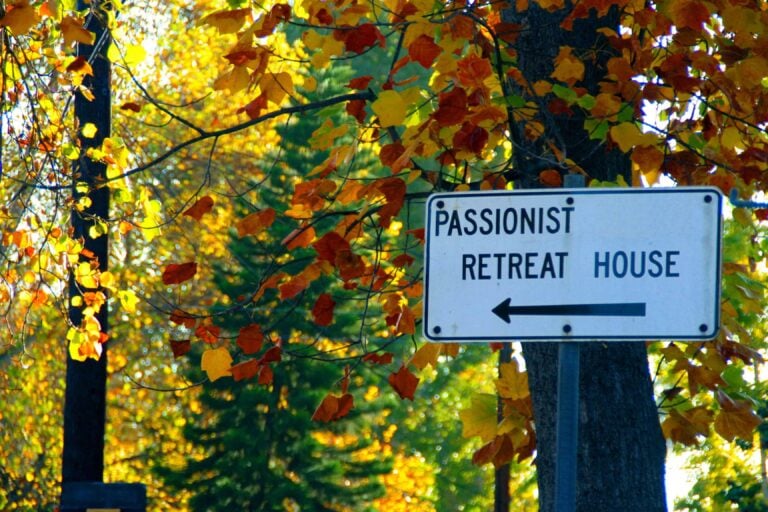
The Passionists play a big part in how Brian stays hopeful and grounded in faith. The connection began at St. Paul of the Cross Passionist Retreat & Conference Center in Detroit, Michigan.
“I was drawn to the Passionists because they will meet you where you are at and help you carry the Cross,” Brian shares. “In my case, it was dealing with the aftermath of being in a war and losing friends.
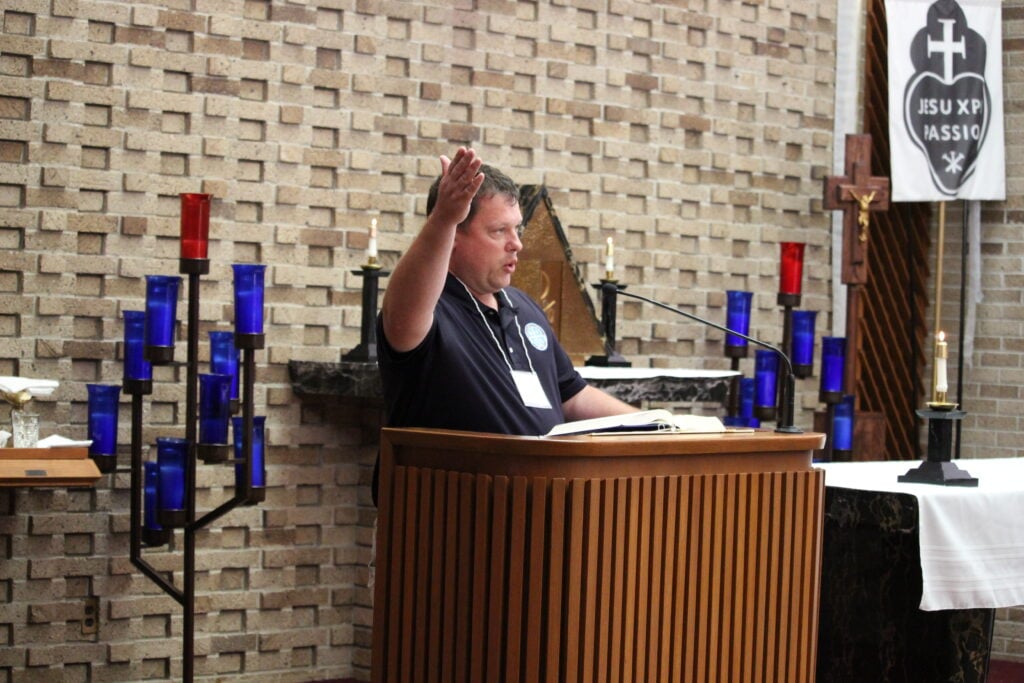
I always tell Father Pat Brennan, C.P., that he very well might have saved my life. My retreat that year was on January 19, and January 12 was the day my best friend, Zach, killed himself. I was a week into processing that my friend, who had been in the same circumstances as I, had killed himself. Father Pat Brennan, C.P., Retreat Center Director, shared what he went through after his brother died in Vietnam. His sharing something that was so painful allowed me to open up about what I was feeling. The willingness to be vulnerable is the best gift you can give to people.”
Brian has witnessed how conversation can build connection and give hope.
“The people I know who feel hopeless, when they are bogged down, do not have people to talk with. Hope is the ability to have those conversations and say, ‘Here is where I am struggling.’”
“The willingness to be vulnerable is the best gift you can give to people.”
Brian Owens
Brian is thankful for the people who watch over him. His wife, Kathy, is his greatest gift from God.
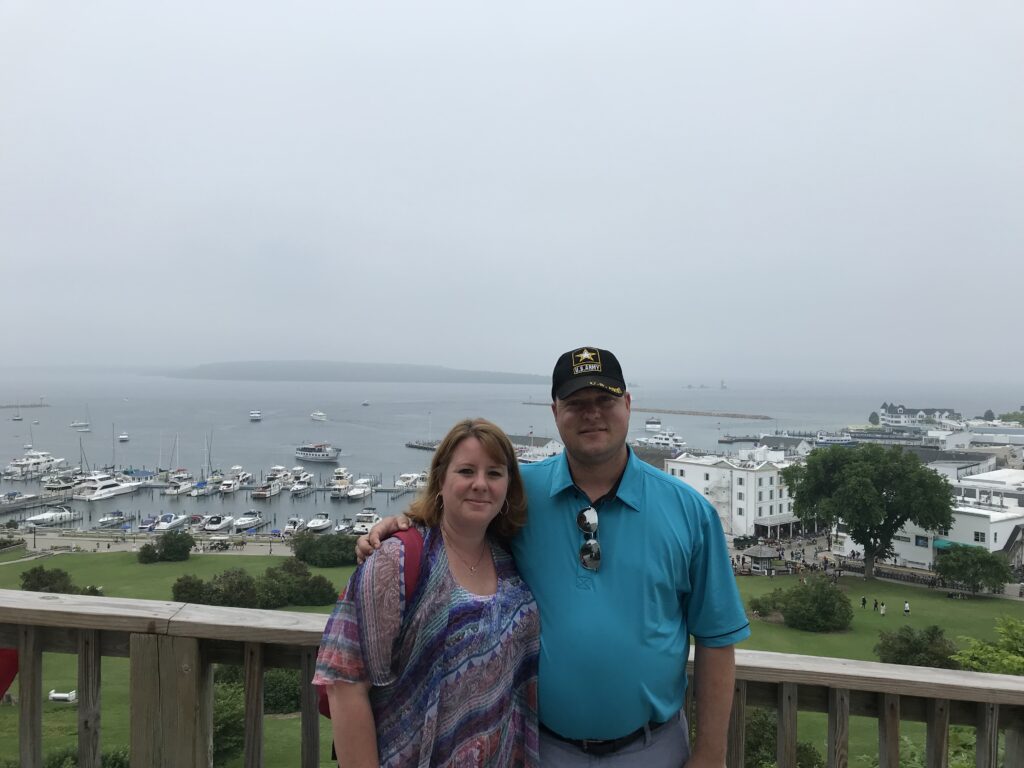
“In every moment where I start to drop or dip into hopelessness, there she is. She says, ‘You are going to be fine,’” Brian shares. “She is my perfect and my absolute soulmate.”
For more than 20 years, his pastor, Father Tom Belczak, has helped Brian navigate the Church and the Catholic faith. Guidance and inspiration from the Passionist charism give Brian strength.
“There are two things that recharge my ability to hang on to hope and my faith, my annual retreat at St. Paul of the Cross and Holy Week, which celebrates the greatest act of love and hope that the world has ever seen,” explains Brian.

Brian hopes others find the power of faith, including regular churchgoers.
“How do you define yourself as a Catholic?” asks Brian. “Do you just check the box or say, ‘It is everything I am?’”
Full video interview
Question: Do you see hope as an active state, a prayerful one, or both?
Answer: I see it as both. You must actively choose hope and also pray for it. It is easy to get dragged down by everyday struggles, so I make a conscious choice each day to pray for hope and stay mindful of what brings hope instead of what brings me down. I learned this during my time in Iraq—every day was a choice between focusing on hope or despair. The Eucharist played a central role for me. During the first six months I did not have access to it, but once I did, it grounded me again. The act of prayer and the Eucharist became essential to who I am as a Catholic.
When I later volunteered to help my parish stream Masses during the pandemic, I realized how much I hungered for the Eucharist. Even when only twelve of us were allowed in the church, I needed to be there.
Why We Need Hope
We need hope because without it we are left with desperation. Choosing hope gives us purpose—to get up each day with the intent to make a positive difference. Without hope, we simply try to survive the day.
Nurturing Hope in Others
As a principal, I nurture hope among staff and students by focusing on the positive. In every conversation—whether celebrating success or addressing problems—I emphasize growth, value, and potential. Even discipline can be approached with compassion. I tell my staff: you can be a positive, uplifting force or you can tear someone down. I choose to build up.
When addressing challenges, I focus on what comes next rather than on what went wrong. I remind people that they are valued, capable, and appreciated.
Finding Hope at Work and in Faith
I find hope in my community, especially in Catholic education. After years in public and charter schools, I returned to the Church’s mission-driven environment. Working alongside Passionist priests and laypeople who are dedicated to discipleship uplifts me daily. The focus is spiritual growth, not bureaucracy. And honestly, it is hard to be grumpy when your boss is a Franciscan in a brown robe!
Choosing Hope Amid Chaos
The world can be chaotic and angry. I have learned to compartmentalize—to not let the negativity on the news steal my peace. I empathize deeply, but I also know I cannot serve others if I live in constant frustration. The Passionist way reminds me: walk with people in their chaos, but do not become part of it.
The Passionists live this beautifully. They meet people where they are, helping them carry their crosses—whether those crosses are grief, trauma, or daily struggles.
Being a Pilgrim of Hope
You do not need to travel to Rome to be a pilgrim of hope. Most of us find our pilgrimage in daily life. For me, St. Paul of the Cross Retreat Center is my place of renewal and hope. Every Passionist retreat center I have visited carries that same spirit of healing and connection.
The Supplies for Pilgrimage
The essential tools for being a pilgrim of hope are openness, honesty, and connection. Hopelessness thrives in isolation. We all need someone to talk to and trust enough to say, “Here’s where I’m struggling.” Veterans especially know the power of talking—it can save lives. Silence isolates; conversation heals.
The Importance of Talking and Mental Health
I encourage everyone, especially veterans, to seek help. I lost a close friend to suicide, and it taught me that asking for help is strength, not weakness. I found a therapist who has been my guide for over a decade, and that relationship continues to help me grow. We all need someone who will listen without judgment.
Community and Connection
Being a pilgrim of hope means journeying with others. Having a faith community—a “tribe”—keeps you from feeling alone. For me, Passionist gatherings feel like family reunions. Leaving my leadership role will be bittersweet because of the deep sense of belonging those meetings bring.
How God Has Nurtured Hope and Trust
I was a “cradle Catholic,” but it took an “aha” moment in Iraq to realize my faith was not just inherited—it was my identity. When I was reunited with the Eucharist, I felt peace and purpose again. Prayer and Mass have since become my anchor, rebuilding my hope each day.
Being surrounded by the Church, both in ministry and in work, constantly reminds me that my faith defines how I see the world—not perfectly, but authentically.
People and Practices That Sustain Hope
My wife, though not as religious, grounds me. She knows when I need encouragement and always reminds me that I will be fine. My pastor, too, has an incredible gift for knowing when I need support—even when I say he doesn’t have to call back. The Passionist community at St. Paul of the Cross has been a constant source of strength and understanding.
When I am overwhelmed, I turn to simple practices: listening to podcasts about the saints, playing Christian music in the car, or praying a decade of the rosary with my finger rosary. That small act centers me.
The story of my first finger rosary stays close to my heart. A man named Rico gave it to me before I deployed to Iraq, telling me it had been through seven landings in the Pacific. I carried it through my deployment, later passed it to another soldier, and now it continues its journey with others.
The Power of Example and Vulnerability
Passionist priests like Father Pat taught me the healing power of vulnerability. When I was grieving the loss of my friend, he shared his own pain of losing his brother in Vietnam. His openness gave me permission to seek help. I now share my story to help others the same way.
Vulnerability connects people—it is the antidote to isolation. When leaders and teachers show their authentic selves, others feel seen, valued, and safe to seek healing.
Walking With, Not Judging
The Church must walk with people through their struggles, not judge them for them. Everyone’s story is complex—veterans, the divorced, the broken. Christ met people in their pain, not in perfection. True pastoral care is loving people where they are and helping them find their way back, without shame or checklist. That is the Passionist way.