The Messiah

“Comfort, give comfort my people.” I cannot read these words of Isaiah without hearing a tenor sing them as George Frederic Handel set them to music in the Messiah. “Speak tenderly to Jerusalem… cry out that her penalty is paid”. The Advent journey is a ‘wilderness’ journey – one not subject to boundaries of what we know or expect – one made easy with joyful expectation, for at the end the glory of the Lord shall be revealed.
My reflection today is on vocation. Are we compassionate as God is to us as we live out our vocations? I offer the author of the Messiah as an example of a man who shares compassion through the exercise of his life’s vocation as a musician.
The first performance of the Messiah was in Dublin in 1742. There is the expected rush, a new production, so many details. Handel hires a singer, Susannah Cibber, as the production nears. Susannah is a story unto herself. The short version is a somewhat arranged marriage to an abusive husband, a man whose life centers upon himself. An affair with a married man then brings on a public trial with testimony published in the London papers in such graphic detail that it could never be published today! Susannah is found guilty of breaking the law, and public opinion sides with her as a wronged woman. But it does not end there, in various ways, Susannah erupts into the papers over the following years. She has a very good voice, but she is not exceptional. However, she is able to convey deeply the feelings about which she sings. This is her gift.
Handel gave Susannah the song in the oratorio, not ‘Comfort, give comfort’, but one from the Passion section, ‘He was despised’.
When she finished, there was a tremendous response from the audience, with the Chancellor of the Dublin Cathedral yelling out for all to hear, ‘Woman, for this be all their sins forgiven, thee’.

Was he voicing the conscious or unconscious motives of Handel’s compassion to choose Susannah to sing this role in the Messiah?
Jumping to the present, the Foundling Hospital for abandoned children had just opened in London. The struggle for its creation was long, and it also met with much opposition. In Handel’s will, not long after the creation of the hospital, there is a bequest of ‘a fair copy of the score and all parts of the oratorio called the Messiah’. Royalties would help with the expenses for the children into the future.
We will hear the Messiah these Advent days. Remember Handel. He was a hard-working professional who did not always have success. To those with little hope because of being abandoned or tarnished and defamed, he was compassionate.
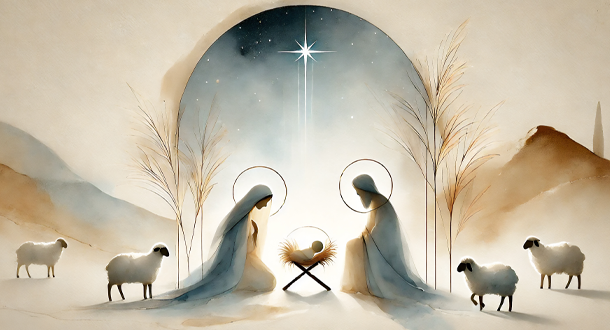
Joseph enters the mystery of Mary’s life with compassion; our journey to the manger invites compassion for Mary, Joseph, and the baby. In Jesus’ birth, we feel the compassion of the Father for us.
Compassion embraces others, wraps them in hope through our love. It says to them have hope, salvation is here.