Reflection
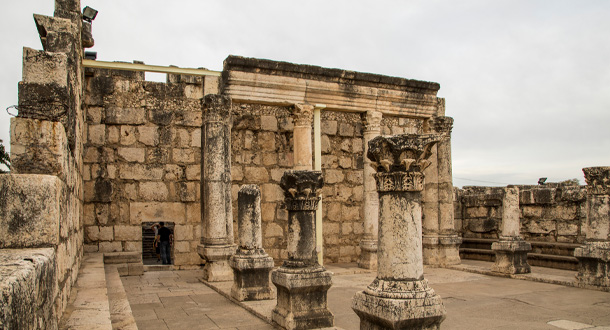
Several years ago, my husband and I traveled to the Holy Land. One memorable experience was visiting Capernaum, where we stood beside the ruins of a fourth-century synagogue built atop a first-century synagogue, likely the one in today’s gospel. I remember standing there, absorbing this ancient scene.
While there, we stayed at a Jewish kibbutz. That morning, as we left, I noticed a man hurrying to morning prayer. That image returned as I contemplated the ruins. I imagined men rushing to this synagogue, eager not to be late for prayer on a day that began like any other but turned out to be extraordinary for this community.
Mark tells us that “the people were astonished at his teaching.” This was different, new and unexpected.
From this small Galilean town, Jesus begins his ministry of teaching with “authority,” and the people took notice. Often when reading the gospel of Mark, I get the sense of hurry, as if the author cannot wait to get to the passion story. For example, we are still in chapter one, and already we’ve read about the baptism of Jesus, the temptation in the desert, the arrest of John the Baptist, and the calling of the first disciples. Yet this text invites me to pause and ponder with those in the synagogue, “What is this?” The only one who recognizes Jesus is the unclean spirit. The same exchange will appear again when Jesus commands the sea to be “Quiet,” and the disciples ask the same question, “Who is this, that calms the sea?” (4:35-41). The unclean spirit and the sea are both under the authority of Jesus.
There is something about this “new” that catches my attention. Here we are at the beginning of a new year, with many pressing issues in our world. It feels like the old year, and its problems have rolled along into this new year. Wherever we look, we are faced with concerns and issues mostly beyond our control. It can rob us of our energy and our joy. As I reflect on this, I know that life was also challenging for those in that synagogue. This was an occupied country with a clear and present danger posed by the Romans. I wonder, did they dare to hope for this “new authority” to bring liberation –to change their lot? Were the seeds of hope beginning to take root among them?
In our first reading, Hannah feels hopeless. Unable to conceive a child, she is the laughingstock of her husband’s concubine. Coming to the temple at Shilo is her only hope. This poor woman is pouring her heart out to the Lord at the temple. I admit to feeling bugged by the priest, Eli’s judgment of her as being a drunkard. Talk about being kicked when you are down! Yet, she triumphs!
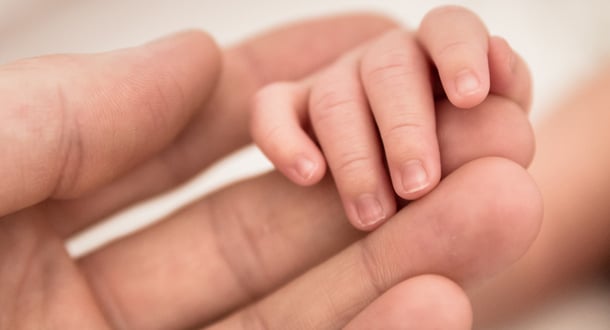
The responsorial psalm, also taken from 1 Samuel, demonstrates her joy in birthing her son, Samuel. The Lord’s blessing to her.
This text is often compared to Mary’s Magnificat from Luke’s gospel (Luke 1:46-55). Although Mary speaks more to God’s work in liberating Israel than does Hannah. Nonetheless, it speaks of the power of hope in the Lord when life seems challenging and dark.
Can you feel the seeds of hope in Jesus in this new year? Do you think the “new” is possible? Can you imagine, as we rush along in our daily tasks and duties, that the Lord can break through with something new for you? That is always the hope and the possibility nourished by faith. May your new year be filled with the power of hope and joy in the ever-newness of the Lord!
May you feel blessed in this new year!