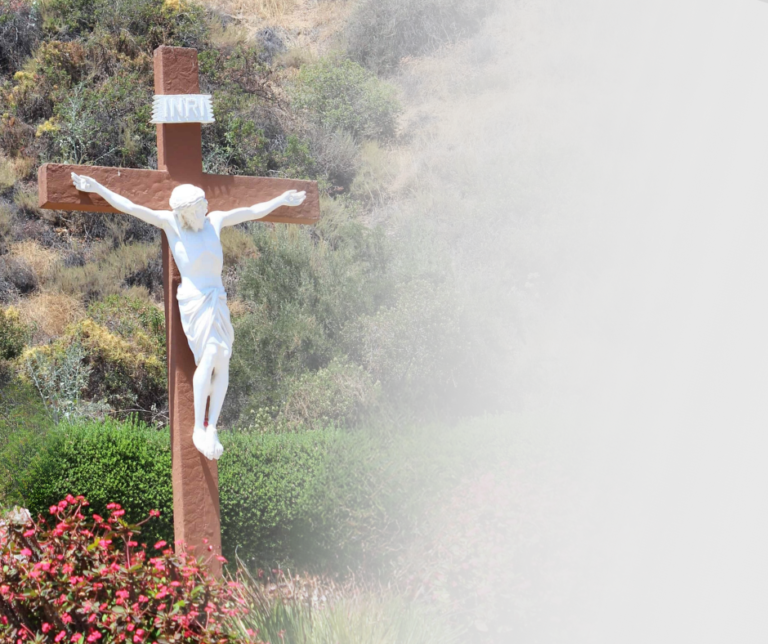
In this video reflection, Amy Florian shares a deeply personal story that reshapes how we understand prayer — not as a way of getting what we want, but as a relationship that changes us.
Through Scripture and her own experience of loss, she reminds us that God is not distant or fickle. God is present, faithful and always at work healing us where we most need it.
Lent renews our commitment to prayer as encounter, trust and transformation. As you watch, let this be an invitation to deepen your relationship with the God who never leaves.
Introduction
I am Amy Florian, and it is my privilege to be part of this Lenten series. Prayer is one of the most recommended practices of Lent. In fact, it is a foundational practice of Christian life, it is just that we often renew our commitment to prayer during Lent. During this fifteen minute reflection, I would like to make a few points about prayer. Some may be directly helpful to you, or maybe you are already aware of them, or perhaps this will help you explain prayer to someone else.
Point One: Prayer Is Relationship, Not a Wish List
When I was taught by the good nuns in my Catholic grade school and high school, they certainly taught me about different forms of prayer. But when I listened to the prayers of everyone around me, and every time a teacher led a prayer, I got the message that prayer is mainly me asking God for things, with thanking God added in for good measure.
As a result, my primary image of God was like a benevolent Santa Claus, a gift giver who knew whether I was good or bad, naughty or nice, and who gave good things to good people. My job was to gain God’s favor, to be a good girl, to obey, and then if I asked rightly enough, often enough, and with enough faith, this Santa Claus God would consider giving me what I asked for.
Now, petitionary prayer is a good thing. Not because God needs it, God already knows, but because we are human. It is good for us to put into words what we need and what we want. And yet Scripture taken as a whole, our faith tradition, and especially Jesus’s prayer practices tell us that the deeper purpose of prayer is to encounter God and build a closer relationship with God. Petitions and gratitude fall into that larger context instead of forming the entire context.
Let me give you an example. Less than a week after we moved into our house, my car would not start. Dead battery. I very tentatively went over to neighbors I did not yet know and asked if they could jump it. They did, and I thanked them profusely and gratefully went on my way. Now, what if the next time I saw them, I asked for something else? And when they gave it to me, I thanked them profusely. Then the next time I asked for something and they could not do it, and I grumbled under my breath, what kind of neighbor is that?
Do you see the point? I would be contacting my neighbor because they were useful to me. They would learn a lot about what I need and hopefully know that I appreciate it when they come through for me, but we still would not have a relationship.
In the actual instance, the next time I saw the neighbors, we simply talked. We both did the talking. I listened and got to know them, and they listened and got to know me and my family. We often did things for each other without being asked. We became good friends. Then any requests for help were situated in that larger context. Our relationship went far beyond petition and thanks, and petition and thanks were not the major part of it.
So yes, during Lent, pray for what you need. But concentrate first on praying to deepen your relationship with God.
Point Two: Prayer Does Not Change God, It Changes Us
An often unconscious view of prayer is that we pray in order to change God’s mind, so that God will give us something or do something that we assume God would not do unless we begged for it. We try to prove to God how much we deserve something, or to prove that we do not deserve what is happening so God will come down and make it right. We pray to coax God into being who we think God ought to be and to act toward us the way we wish God would act toward us.
Intellectually, we know that is off base. You may find yourself saying, “Oh no, that is not me.” But let us be honest. Look inside. Is there some of that in your prayer?
We know God already knows what we want, what we need, and what is good for us. But what God most wants is to help us become ever more the people God created us to be, the best version of ourselves. One of the most powerful prayers we can offer, as Scripture says, is a humble and contrite heart that God can change and mold. We do not pray to change God’s mind. We pray so that we can be changed, so we can be open to God’s guidance and wisdom. We pray so we can become better instruments of Christ. In fact, if we can do that, perhaps God’s will might actually be done on earth as it is in heaven.
A corollary to this is that many people believe God is not answering their prayers if they are not getting the answer they want. Even worse, because we are taught we are supposed to be good and obey, and that if we ask rightly enough, often enough, and with enough faith, we begin to believe that if God is not giving me what I ask for, then I must have displeased God, or I did not pray hard enough, or my faith is not strong enough.
I worked with a couple whose baby was born very ill. Those parents stormed heaven with their prayers. They enlisted many others to pray. Everyone prayed, but the baby died. In that same hospital nursery, another baby was born with almost the same condition. Those parents stormed heaven with prayers, enlisted many others, and their baby lived. They celebrated and attributed it to their faith.
What is the first couple supposed to believe? That they are not loved as much by God? That they did not get enough people to pray? That their faith was not strong enough? That their baby’s death was somehow their fault?
Those who do not get what they asked for, who do not get the healing, the job, or whatever it may be, can feel abandoned, betrayed, alone, convinced that God is not listening or answering. They fear they are unworthy of God’s love and attention.
Of course, God is not a puppet master pulling all the strings. Many things happen that are not God’s will, and God does not intervene. That topic could take a whole college course, and we are not going to explore it tonight. Instead, let us focus on one truth: God is never going to give us everything we want, but God will always give us what we need. God is not going to wave a magic wand and give us a lottery win, darn it. But God will always give us patience, strength, perseverance, tolerance, kindness, whatever we need to handle what life brings. God always answers prayer and God always heals, even if it is not in the way we think we want or need.
A Scripture Example: The Paralytic
Remember the story of the paralytic. When I prayed with lectio divina, I put myself into that story. I imagined myself as the man lying on the mat. One day my friends burst in and says, “Jesus is in town. All we have to do is get you to him. He will heal you. You will walk.” They pick me up and run through the streets. We get to the house and cannot even get in because there are too many people. So they climb onto the roof with me on my mat. I do not even know how they did it. They rip a hole in the roof and lower me down, and suddenly I am face to face with Jesus.
Do you remember the first words out of Jesus’s mouth? “My son, your sins are forgiven.” What? I thought I would be furious. What kind of God are you? You are supposed to heal me. I am supposed to walk. What do you mean my sins are forgiven?
But then I reconsidered that story through the lens of people I have worked with who live with disabilities. And I thought, maybe that man, for the first time in his life, had someone look at him and not see a disability. Maybe he had someone see his heart, love him, and know what he truly needed. Perhaps he had hurt people out of his own hurt. He needed forgiveness, love, and recognition. Jesus gave it to him. Maybe he cried for joy.
Of course, that was not good enough for the people around Jesus. “Only God can forgive sins.” So Jesus says, “So that you know I have the power to forgive sins, pick up your mat and go home.” And according to the story, that is exactly what he did. He did not jump for joy or throw a party. He simply picked up his mat and walked home. Very anticlimactic.
But maybe it was because by that point he had received what he truly needed, and walking was icing on the cake. God knew what he wanted, and God knew what he needed.
So this Lent, can you pray and then let God be God? Can you let God heal you where you most need healing, not just where you most want it?
Final Point: Emotions Are Fickle, God Is Not
Emotions are fickle. God is not. God is not far away if we do not feel God’s presence. In fact, God cannot be far away. God is our breath. It is only through God that we are alive. God is within us, above us, around us, behind us, below us. God is here always, no matter what.
I learned that most powerfully when my husband was killed in a car accident when our son was seven months old. I had many people who loved me, but no matter how many times they said, “Call me anytime,” they did not mean three in the morning when I could not sleep, the tears would not stop, and I did not think I could go on. None of them could be there at three in the morning all the time, but God could.
As my tears hollowed me out like a blowtorch, God was there, slowly and gently filling me back up again. When I was angry, and oh, was I angry, God took everything I had to give. When my anger was spent, God put an arm around me and led me on. When I sinned, when I hurt people out of my own hurt because I was hurting so badly, God forgave me and took me back. In every way possible, God loved me back to life.
Now, I did not always feel God’s presence, far from it, any more than Jesus did on the cross when he cried out in abandonment. But just as in Psalm 22, the psalm Jesus was quoting on the cross, even in the midst of feeling abandoned, Jesus could trust God. I can trust God because God has proven worthy of that belief. And that has remained true through the tragedies, sufferings, and difficult things I have lived through. God is here.
It is us who leave, who take a walk, who go on an extended trip. It is us who turn away. It is us who place our trust in things that do not last. It is us who are capricious, basing our loyalty on what we get or what is in it for us. It is us who come and go. God is here. Emotions and humans are fickle. God is not.
Summary
So, in summary, this Lent, can you commit to deepening your relationship with God? Can you learn to see and listen to God, and let God see and listen to you? Can you allow yourself to be known and fully loved by God, and become aware of the God who is always present, whether you feel it or not?
Then yes, ask God for what you want, for the people you love, and for more, trusting that God will always, always give you what you need and will always hold you close.
Closing Prayer
As we end, let us pray. You can close your eyes if you choose. If you prefer not to, that is fine. Just take a deep breath. Breathe in the Spirit. Become aware of the God around us.
Good and gracious God, you see your children sitting here, and you sit with us. You see our hearts, our hurts, our joys, our sufferings. Help us this Lent to open our hearts so that you can heal us where we most need healing. Grant that we may serve you with our lives, becoming ever more effective instruments of your healing and loving power in this world. Give us eyes that see, ears that hear, and the courage to follow you. We ask all this in the name of the one with whom we walk through Lent and the Passion, your Son Jesus Christ. Amen.
Let us take that spirit of prayer with us this week and throughout our Lenten journey. Thank you for spending this time with me, and may God richly bless you.