Reflection
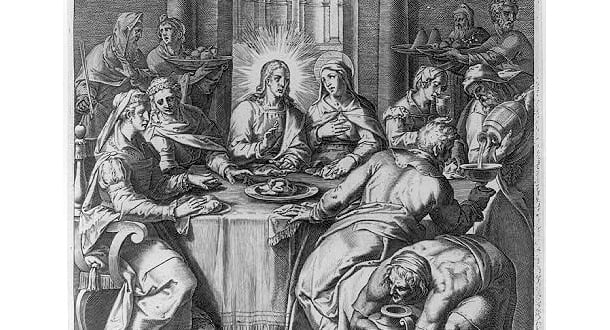
Today’s readings present an irony and a tension, as both focus on observing the law. In Saint Paul’s letter to the Galatians, Paul, a Pharisee, argues that observing the law is like the “yoke of slavery” (v.1) and is no longer necessary. In the Gospel of Saint Luke, “a Pharisee” finds fault with Jesus’ lack of observance, neglecting the ritual cleansing before their meal.
In the case of the Galatians, whom Paul had initially converted from paganism to Christianity during his second and third missionary journeys (Acts 16: 6; 18:23), they were being enticed to add observances of the Jewish law, including the rite of circumcision, by others from Jerusalem who insisted that Paul’s teaching was incorrect. Paul, in his “diplomatic” way, does not mince his words in addressing them, suggesting in essence that if they do elect for circumcision, they are moving backwards into slavery, and Christ is of no benefit. Don’t you feel sorry for the Galatians who, in their new life in Christ, are asked to choose between two opposing teachings as they earnestly try to follow whatever would express their ongoing transformation. Being new to the faith, how do they choose?
In some ways, life-in-Christ and the desire for faithful living still have those same tensions and divisions. Is it any easier today, I wonder?
Biblical rituals are not meant to be empty mechanical rules; they are physical acts of worship which connect outward actions to inward faith. Every ritual act points to something beyond its simple action; Jesus speaks to that in his comments to the Pharisee. It is possible to be “clean” on the outside without the inside being “clean.” In faithful Christian living, it is impossible to be clean on the inside without it affecting the outside. True ritual worship has deep value in bringing us into profound kinship with our Maker and each other.
In reality, Jesus’ suggestion to “give alms, and behold, everything will be clean for you,” might also fall under the category of outside actions. Let’s face it, we humans “give alms” for many reasons and not always with the right intentions. (I remember a recent beach vacation with our six grandchildren when we gave “from the heart with love;” even though it was successful, it had its challenges.)
However, true almsgiving, as God intends, can happen; as Paul teaches, “only faith working through love” is what matters.
Today, may we pray like the disciples, “Lord, increase our faith.” May our eyes be opened to see the power of your love in action in our lives. May our faith working through love be a sign of your presence in our fractured, broken world. May our Lady of Fatima, whose final apparition is marked on this day in 1917, enlighten all hearts with her gift of peace.
Amen!