“I believe that Saint Francis is the example par excellence of care for the vulnerable and of an integral ecology lived out joyfully and authentically…. He was particularly concerned for God’s creation and for the poor and outcast. …He shows us just how inseparable the bond is between concern for nature, justice for the poor, commitment to society, and interior peace.”
Laudato Si’, 10
Everything Is Connected
Integral ecology is a framework that understands care for the environment as inseparable from human, social, economic, and cultural well-being. It rests on the principle that “everything is connected”: ecological crises and social injustices have shared root causes and must be addressed together (para. #137).
Integral ecology can also be understood on mental, emotional, and spiritual levels. All of life is interrelated and interconnected.
For example, when war broke out in Ukraine in 2022, Ukraine stopped shipping wheat and corn to other parts of the world. Agriculture is Ukraine’s largest export industry, significantly contributing to global food security.
As a result, families in distant importing nations face hunger. This illustrates integral ecology.
Seeing Integral Ecology Through the Passionist Charism
The Passionist charism, Memoria Passionis, offers another example.
As members of the Passionist Family, we are called, in the words of Superior General Fr. Giuseppe Adobati, CP, to “a prophetic return to our charism, Memoria Passionis.” He reminds us that “it is from our wounds that our capacity to authentically co-suffer with the afflicted emerges,” and that “our Constitutions remind us that it is precisely at the foot of the Cross that we find our strength” (Rule and Constitutions, Congregation of the Passion of Jesus Christ, Const. 3).
Such a return will also “demand an inner conversion” (Fr. Giuseppe Adobati, C.P., Superior General, Congregazione della Passione di Gesù Cristo, Roma, 2026-04-03).
Recognizing the Suffering Around Us
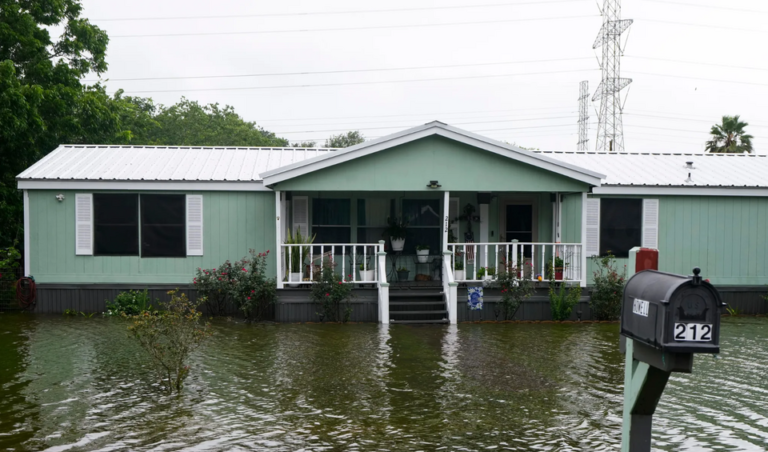
I have been reflecting on how I am celebrating the Season of Creation—especially how I might more deeply identify with the “crucified” and the suffering people of today, and how I might pray for them more intentionally.
Often, I first encounter stories of suffering through local and national news broadcasts, along with information about ways to help, such as donating to a GoFundMe campaign or contacting organizations like the Red Cross or Catholic Charities. I keep a pad of paper and a pen near my television so I can note the names and needs of people whose stories are shared.
I invite you to do the same: make a list of suffering people you hear about in the news and consider whether there is something concrete you can do for them, either through donation or direct service. If that is not possible, please hold them in your prayers.
Four Questions for Reflection
In his April letter, Fr. Giuseppe Adobati, CP, offered four questions for reflection as we recognize that “the Passion continues today in the suffering of the world.” These challenging questions invite us to examine our lives and respond in a spirit of synodality and responsibility:
Reflection Questions
- How does the Crucified Christ look upon our Passionist community and family today?
- Where in our local area do we encounter the “crucified” today—the victims of injustice, the poor, migrants, the excluded, and those who are lonely on the “digital continent”?
- How, in the spirit of integral ecology, can we care for the “suffering Earth,” which also bears the marks of crucifixion today?
- What must we let go of so that we can step out prophetically and hopefully toward these existential peripheries, bringing the joy that flows from the Cross to a world losing its sense of meaning?
Turning Compassion into Action
A few years ago, I worked in downtown Denver. Our office was next door to a Catholic church and near a Salvation Army shelter that provided overnight accommodations. Many people gathered outside our office door asking for help.
The church also needed volunteers on Monday mornings to prepare sandwiches and pack lunches for people in need. When my colleagues and I learned about this need, our president allowed 25 to 30 employees to spend each Monday morning making sandwiches and packing lunches for 1,000 people, which were then distributed throughout the week.
That small act of service brought smiles to the faces of those we served—and to ours as well.
Whom might you be able to help?