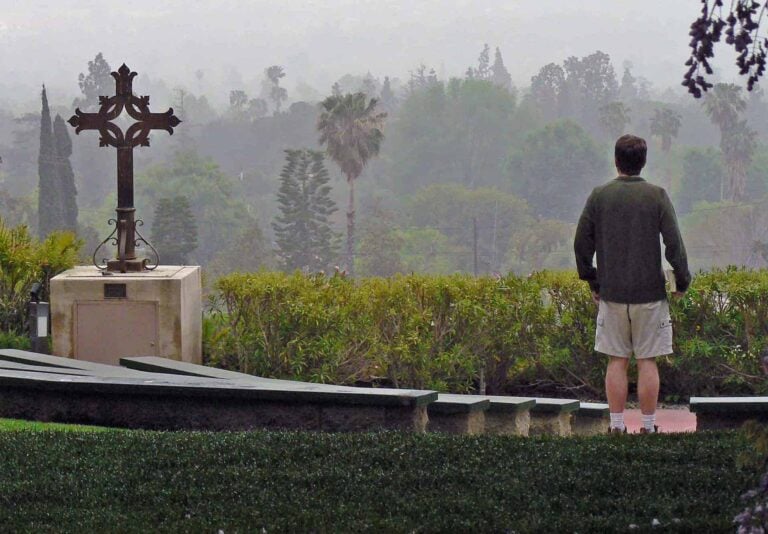
On the Feast of the Exaltation of the Holy Cross, we remember that the cross isn’t just an ancient symbol of suffering — it’s a mirror of God’s love. A love that chooses vulnerability, transforms wounds into windows, and turns weakness into strength.
Fr. Johnson Emmanuel, CP’s reflection dives into the paradox of the cross with humor, storytelling and hope. Watch and discover how even your splinters can become part of the bridge between heaven and earth.
Transcription
You know, if Jesus had hired a modern marketing agency, they would have fired him immediately. Picture the boardroom meeting. “So, let me get this straight, Jesus. Your brand message is suffering. Your logo is an execution device. And your tagline is ‘take up your cross and follow me.’ Have you considered maybe a nice sunset or a motivational quote about following your dreams? Something more aspirational?”
But Jesus being Jesus probably would have smiled and said, “Actually, I’m thinking we go with ‘die to live’ — really lean into the paradox.” And the agency would respond, “Sir, that’s literally the opposite of what every focus group has ever told us.” Exactly. That’s the point.
Celebrating the Cross
Today we celebrate the Feast of the Exaltation of the Holy Cross — Christianity’s way of throwing a party for the thing that should be the ultimate downer. It’s like celebrating a broken heart because it taught you to love better.
St. Paul in Philippians gives us the framework: Christ emptied himself. Kénosis — one of those fancy theological words that makes us sound smart at dinner parties but actually describes the most radical thing imaginable: God choosing limitation.
God’s Radical Choice
Think about it. If you and I were God, maybe the first thing we’d do is invent calorie-free cheesecake that still tastes heavenly. Beyond that, if we were infinite, omnipotent, eternal, what’s the most dramatic thing we could do? Get bigger? Already infinite. Get wiser? Already omniscient. No — the most radical thing an unlimited God could do is choose limits.
Choose smallness. Choose vulnerability. To know what it’s like to need a bathroom, to get hangry, to have your feelings hurt. It’s like Beyoncé deciding to bomb at karaoke night — except infinitely more significant.
The Scandal of Weakness
As Father Richard Rohr once said, the gospel is the scandal of God’s weakness being stronger than human strength. That drives our achievement-obsessed culture crazy.
We worship strength, admire winners, follow influencers who look like they have it all together. But Christianity says: that broken man on an execution device — that’s God, and that is what love looks like when it goes all the way.
Most of us don’t want a cross. We want a spa day with Jesus — scented candles, soft music, maybe a latte from heaven. But love isn’t a Hallmark card. It’s messy. It requires little crucifixions — your pride, your ego, your need to be right. They die, and intimacy is born.
Daily Deaths that Lead to Love
The cross isn’t just about Jesus dying 2,000 years ago. It’s about the daily deaths that lead to love. Dying to resentment in marriage. Dying to cynicism in friendship. Dying to despair when life breaks your heart.
Dying to jealousy when others get what you prayed for. Dying to fear when love asks you to risk again. Dying to comparison when everyone else’s life looks easier.
For us Passionists, this feast is not abstract. Our founder, St. Paul of the Cross, said, “The Passion of Jesus is the greatest and most overwhelming work of God’s love.”
We wear the Passion sign not as jewelry but as a declaration that love is found here — in Christ’s wounds, in the world’s wounds, in our own wounds. When you stand before the cross, you’re not looking at a monument. You’re looking at a mirror.
The cross doesn’t just say, “Look what they did to Jesus.” It says, “Look what love did with it.”
Finding God in Suffering
St. Paul of the Cross didn’t found a congregation to help people escape suffering but to help them find God in suffering.
So here’s the practice for the week, as my friend Faith puts it: Don’t run from your cross. Name it, hold it, lift it up — not as punishment but as participation.
When you exalt the cross in your life, you declare, “Even here, God is present. Even here, love is stronger.”
Maybe your cross is illness. Maybe unemployment. Maybe a teenager’s attitude that could qualify as the eighth deadly sin. Whatever it is, don’t drag it alone. Hold it up with Christ. And in that holding, watch how your wounds become windows, pain becomes path, and suffering becomes solidarity.
The Cross as a Mirror of Love
The cross is the family table where grace and failure sit together. The awkward family photo where everyone is included — even the ones who forgot to smile.
A woman once told me, “When I look at the cross, I don’t see pain anymore. I see proof that God will never abandon me. It’s like when my kid brings me a crayon drawing — messy, colors outside the lines — but I put it on the fridge because it’s love.” The cross is God putting my messy drawing on his fridge forever.
That’s exaltation — to take what looks like failure and declare it beloved, to take what looks like death and call it life, to take what looks like the end of the road and say, “Actually, this is the narrow door to resurrection.”
Grace Plays Generous
We exalt the cross because it keeps messing with our math. The thief gets paradise today. The prodigal gets a feast before confession. We get loved while still sinners.
Grace does not play fair. Grace plays generous.
So today let’s celebrate the cross — the world’s worst marketing logo that turned out to be the greatest love story ever told. And this week, when life hands you splinters, remember: you are not holding debris. You’re holding the wood that built the bridge between heaven and earth.
Happy Feast of the Exaltation of the Holy Cross, everyone. And if any marketing agency ever tries to rebrand Christianity, just show them our engagement numbers: two thousand years, and still trending.
Amen. God bless you all.