Addressing Pollution, Waste, and Energy Issues
The focus of chapter four of Laudato Si’ is integral ecology.
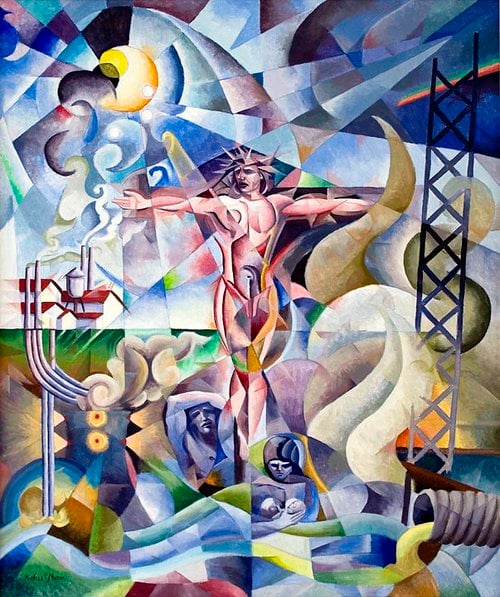
The key principle of integral ecology is that human beings live in a universe in which everything is intimately connected to everything else. Thus, we cannot talk about care for creation without also talking about justice to the poor, and we cannot respond to the expanding challenges of climate change without simultaneously considering how our economies, politics, cultural assumptions, educational philosophies, patterns of production and consumption, and even our theologies and spiritualities must change.
“It cannot be emphasized enough how everything is interconnected.”
LS 138
Francis gives several examples of how embracing integral ecology will affect how we think, judge and act, but two seem especially pertinent.
First, our commitment to the common good, a cornerstone of Catholic social teaching, will be deepened and renewed; however, now we must consider not only the common good of other human beings, but also of other species and the whole of creation.
Second, because how we live today has inescapable consequences for the well-being of those who come after us, in addition to what we owe in justice to our contemporaries, we must also acknowledge our responsibilities to future generations and the natural world.
Integral ecology prompts us to search for new answers to ageless questions: “What is the purpose of our life in this world? Why are we here?” (LS 160)
Passionists certainly have something important to contribute to this urgent and exciting conversation. Let us seize the opportunity!