

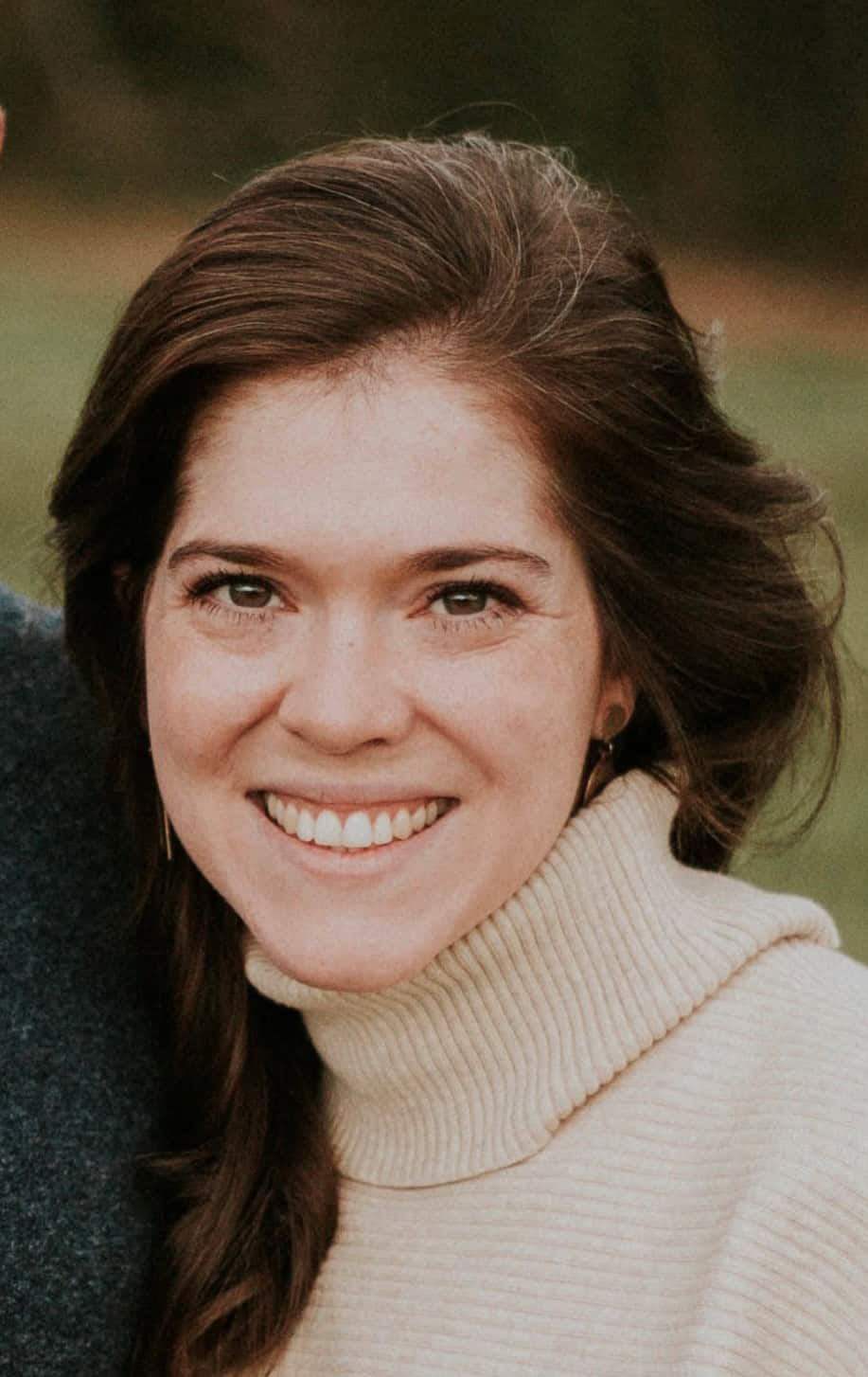
Prayer has been an intimate connection to God for Cassia Shumate of Columbia, Tennessee, her entire life. She learned the power of prayer as a child guided by her parents.
“My parents were missionaries. They were church planters in central Europe,” explains Cassia. “Growing up overseas, we were pretty poor. We were living in Romania in a tiny apartment—my parents and four kids. My mom used to call me in to pray with her every night. As a 6-year-old, I would pray for a house with a porch and friends all around. I prayed for six months. Then we found a house in Hungary. Our house had a back porch. Over the years, other missionary friends moved in the neighborhood. God hears and He moves, and we can ask Him anything.”
A Mother’s Prayer
Now, as a wife and mother of three boys—Keller (9), Elan (7) and Rowan (3)—Cassia’s prayer conversations have changed from the simple prayers of childhood.
“I think I do pray differently as a mom,” she says. “Not that I did not struggle with the need to control earlier. I remember when my oldest was first born, I was really afraid of Sudden Infant Death Syndrome (SIDS). I would lay my hands on his chest multiple times in the night to see if he was breathing. I remember thinking I could not sustain this fear, and I thought, ‘He is as much in the Lord’s hands as he has ever been,’ and that helped. That focus has helped me pray a little differently about my boys. I know ultimately whose hands they are in.”
Her prayerful relationship with God is rooted in years of practice and a firm belief that God will provide what she and her family need.
“Prayer is an ongoing conversation between me and the Lord. Sometimes it is more like, ‘God, help! I do not know what to do.’”
Cassia Shumate
Walking Elan’s Journey
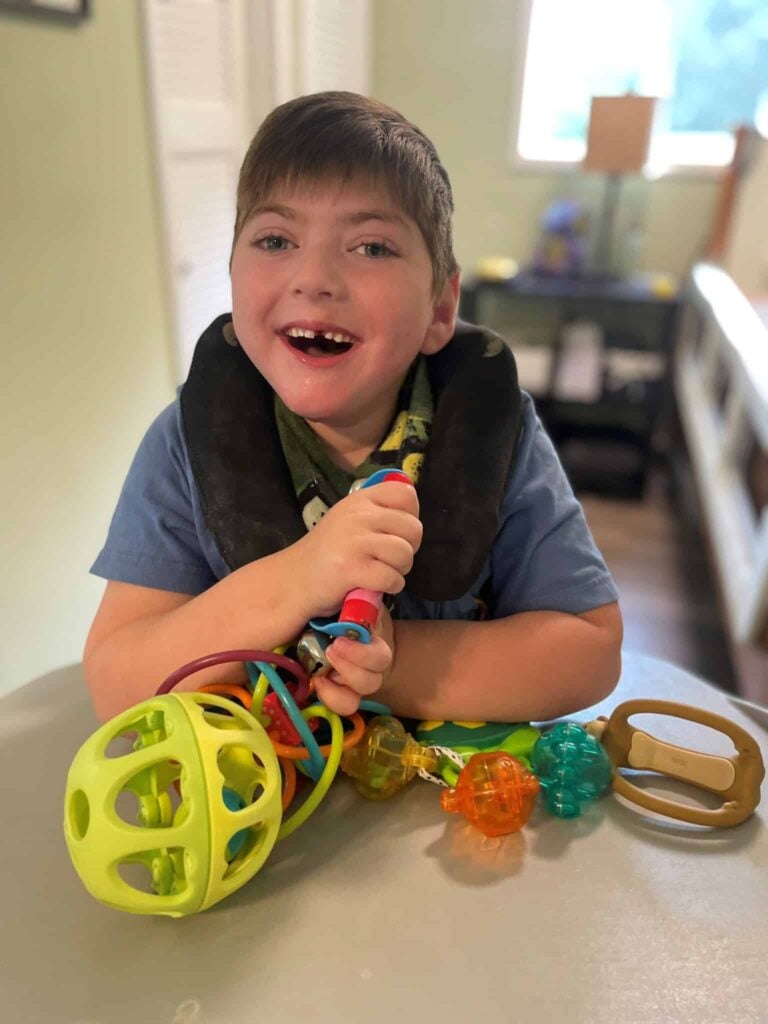
With the birth of their second son, Elan, prayer became even more central to the lives of Cassia and her husband, Cory. Their conversations with God also expanded to include a community of people they had never met.
“Our middle son, Elan, was born with his brain significantly undeveloped,” explains Cassia. “He is going to be 7 in October. He has a number of issues, including epilepsy, functional blindness and bilateral hearing loss. We had no idea until about three months after bringing Elan home.”
A Ministry of Hope
Navigating Elan’s journey has been greatly helped by a Facebook page that Cory originally created to keep friends and family updated.
“The phrase that God kept bringing to my mind was ‘For My glory.’”
Cassia Shumate
“It has turned more into a ministry opportunity,” Cassia explains. “The phrase that God kept bringing to my mind was ‘For My glory.’ I think it has been a mission of mine to get as many eyes on Elan as I can. It has been a way to let people know, here is how to pray for him, here is the latest update. It is also a way to present what really is going on. I was struggling and feeling broken down. It helps people find themselves in our story. People have found this experience as a way to find hope in darkness.”
Building Community Through Faith

Other families’ experiences have helped the Shumates recognize and advocate for children and adults who are often overlooked because of their disabilities. Sharing Elan’s story has fostered greater understanding and compassion.
“Part of finding out about Elan was finding other mothers with children with complex health issues,” shares Cassia. “We all experience grief at the loss of a normal childhood differently. I enjoy finding other kids like him now. Ask the questions! Help those families feel less like a spectacle. The beautiful thing about having this Facebook page is I have had strangers come up to me and say, ‘You do not know me, but I have been praying for Elan for years.’”
Learn More
To learn more about Elan and the Shumate family, follow Elan’s Story on Facebook.
Extended Interview
This transcript has been prepared for clarity, accessibility, searchability and readability, though minor variations from the original video may occur.
PRAYER IN EVERYDAY LIFE | 0:00
[Music]
Interviewer: How would you say prayer is a part of your day?
Cassia Shumate: For me, prayer is an ongoing conversation between me and the Lord. I’ve got three strong-willed little boys at my house, so a lot of times prayer for me looks like, “God, help. I don’t know the right response here. I don’t know what to do.”
At other times it looks like lament. It looks like saying, “God, this is not how things should be,” with the things that we’re walking through, and bringing him that frustration and angst. Sometimes it’s just sitting quietly in his presence. But from day to day, a lot of times it’s a quick, “God, you’ve got to get me through.”
Interviewer: All of us mothers have been there.
Cassia Shumate: Oh, man. Yeah.
Cassia Shumate: I think we’ve all got our stuff, but it’s my two bookend boys that have a lot of personality and a lot of, “Well, why not?” And I’m like, “I don’t know, but no. Because I said so.”
Interviewer: That doesn’t always work with little people, does it?
Cassia Shumate: It really does not.
JOURNALING AND MAKING SPACE FOR GOD | 1:34
Interviewer: You’ve got a lot going on. You’ve got a busy family. You’re working. How do you stay focused in prayer? Maybe not the “God, help me right now” prayers, but the conversations, your connection to God?
Cassia Shumate: I think the ways I’ve been able to stay most connected and have that complete thought—because, let’s be honest, my first response is that I don’t stay super connected. A lot of the time my mind is moving a million miles a minute. I’m thinking about something I said 15 years ago that I’m still embarrassed about, and I’m just not giving the Lord my full attention.
What’s been really helpful for me is that I’ve got a journal, and that helps me slow my mind down. I have to keep pace with my pen, and that allows me to have a complete quiet time with the Lord.
I usually pull that journal out when I’m trying to process through something, trying to garner some wisdom on something: “God, I feel between a rock and a hard place, and I just need you to walk with me through this next step or through this next decision.” Or I just have a lot of grief that I need to hand over to you, or anxiety that I need to hand over to you. That journal has been really helpful for slowing my mind down to the speed of the pen.
Interviewer: That is a good thing, and it is very helpful sometimes to write things down and connect that way.
Cassia Shumate: That’s my bread and butter. Are you a good journaler?
Interviewer: I’m decent. I sort of started about a year ago doing it, and I do it on my phone because I have a journaling app.
Cassia Shumate: Oh, there you go.
Interviewer: You can put photos in with it and videos.
Cassia Shumate: Partially because it’s physical, you can go back to that later. One of my favorite things is pulling open my journal and going, “Oh, God, you heard me and you met me. It wasn’t the next day. It wasn’t immediate, but you listened and you answered.” It’s such a bolster for my faith, for sure.
CHILDHOOD FAITH AND LEARNING TO TRUST | 3:50
Interviewer: When did you first discover the power of prayer? Is it something you’ve done your whole life? I don’t know if you’re comfortable, if you want to talk about your faith background, because I understand that you are not Catholic.
Cassia Shumate: My parents were missionaries. They worked as church planters in Central and Eastern Europe right after communism fell. There were not a lot of churches in that area. A lot of them had been shut down during communism.
Growing up overseas, we were pretty poor. Out of that, God just moved in some really profound ways, and they’ve become really beautiful foundation stones for me, and honestly, sometimes for my parents as well.
We were living in Romania in this tiny little apartment. It was my parents and four kids. We were thinking about moving to Hungary, out of Romania, so my parents were starting to look into it. We were renting this apartment, and they were seeing if we could find something like that in Hungary, but it was more expensive in Hungary.
My mom used to call me in to pray with her every night. I would go in and sit with her, and as a six-year-old I started praying that God would give us a house with a back porch and friends all around. My mom told me later just how skeptical she felt. She was like, “I don’t want to tell you no. You’re this sweet little six-year-old girl asking God for the moon, but no, we can’t afford a house.”
I prayed like that for six months or so, and God, in his faithfulness—we found a house in Hungary in a quiet little neighborhood. There was a little international school close by that I spent all my growing-up years at. Our house had a back porch, and over the course of a few years, other missionary friends started moving into the neighborhood.
It’s always been a sweet memory of mine that the Lord hears us. His answers are not always immediate, but he hears and he responds.
He did the same thing with a piano probably seven or eight years later. I was like, “God, we need a piano,” and started praying for it. Suddenly someone calls my mom and goes, “Hey, is there any way you want a piano for free?” Just watching him jump in and move.
Those experiences when I was young instilled in me this: God hears. God moves. We can ask him for anything. We can come to him with anything. Especially moving into this new chapter with my son Elan, it was a really good springboard for me, or at least a good place for me to start from: I can bring anything to him, and even when he’s not responding immediately, I know he hears me.
Interviewer: That’s the hardest thing, I think, being patient in prayer. When you need intercession, being patient and realizing that it’s going to happen. We may not know exactly what. You didn’t get a baby grand piano, probably, but that was okay.
Cassia Shumate: I think I did. [A few words are unclear.] A piano that was a hundred years old. It was just an amazing thing. They had literally been growing a house church and had run out of space for it. Could we keep it for them? They just wanted it back at the end. We were like, “Yeah, we’ll take it. That’s just fine.” But it was a beautiful piano.
HELPING CHILDREN DEVELOP A LIFE OF PRAYER | 7:55
Interviewer: With your family, how and when does your family pray together on a daily basis? I’m guessing you’ve brought the boys into this and that you probably share the experience with your husband.
Cassia Shumate: Like a typical family that’s bringing their children up in the faith, we’re mealtimes and bedtime. We’re setting up habitual rhythms of prayer throughout the day.
What’s been really sweet for me is watching my boys start to incorporate that into their own walks with the Lord. My older son—we had a friend who he was very concerned about, and he stopped the entire family. He was like, “Hold on. Everybody come here. We’re going to pray. Come on.”
We stood there, and he prayed for her, that she would be cared for and well. He was very adamant that everybody needed to stop. I liked that posture of, “Hey, we can stop everything and prayer can come first.”
It’s been really rewarding to watch them start to bring that into their own lives, even with things like nightmares or, “I feel nervous about something.” Watching them go, “Hey, I can take my concerns and my fears to the Lord, and you are safe with him.”
Interviewer: That’s a good feeling. Like you said, it’s interesting how it pops up with them. Sometimes it’s probably not always the prayers we’re wanting our kids to pray for, but that’s okay because at least they get the idea of it. It’s about relationship, so I think that’s a beautiful thing.
Cassia Shumate: My husband is a pastor at a local church here. He and I have been running small groups where we invite people into our home and study scripture together. This has been going on for about a decade.
I remember some of the things that caused people the most anxiety about praying: “I just don’t know what to say. I don’t know what words to use. I feel awkward. I feel like I need to be using language here instead of my regular vernacular.” They get stuck.
What’s been really sweet with the kids has been, “Hey, you can talk to…
SHARING A FAMILY’S STORY WITH HONESTY | 11:10
Interviewer: I noticed on your Facebook posts you’re so upfront and honest about going to God for help, and then you share when things happen and that it’s usually more than what you ask for. How has that relationship affected other people? With regard to Facebook, I see the positive responses you get back from other people as well.
I guess you’re sort of doing a ministry using social media. Tell me a little bit about that. Is it easy for you to share that connection in a public venue? How does that work for you?
Cassia Shumate: I think so. I can give a little bit of background on Elan and that Facebook page, if that’s helpful for folks.
Our middle son, Elan, was born with a significantly underdeveloped brain. It’s nothing he got from my husband or me. In utero, a certain gene didn’t develop, and his brain didn’t develop.
He’s going to be seven in October. He’s functionally blind. He’s got epilepsy. He’s [feeding term unclear in the supplied transcript]. He’s wheelchair-bound. He can’t roll or sit without assistance. He’s got hearing loss. He’s got a whole host of things going on.
As we were finding out about all this—because he came home with us from the hospital—we had no idea until about three months in the severity of what was going on with him. We started this little Facebook page called “Elan’s Story.” Largely at first it was because we had so many people saying, “How’s Elan? How’s it going? What’s going on now?”
It was like, “Okay, let’s put something together so we can send out blasts on how Elan’s doing.” Over time, we continue to use the page for that, but I think you’re right: it has turned more into almost a ministry opportunity.
As we were figuring things out with Elan, the phrase that the Lord kept bringing to my mind was, “For my glory.” Knowing that Elan’s story holds significance, and the Lord is going to use his story and has been using his story despite the levels of disability that Elan is dealing with.
Because of this “for my glory” phrase, it’s been more of a mission of mine to get as many eyes on Elan as I can: “Okay, God, whatever you’re doing through Elan and through his journey, let’s get eyes on him.”
That’s what this Facebook page has become. It’s been a way to let people know, “Here’s how to pray. Here’s how Elan’s doing. Here’s the most recent update,” but also to offer that vulnerability as we walk through wilderness.
A lot of times on social media we present the nice, pretty-bow-on-top version of what’s going on. But by presenting, “This is really what’s going on. I was very angry with the Lord because of X, Y and Z,” or, “I really struggled with this, and I’m feeling broken and completely worn down,” presenting a little more authentic picture of what has been going on helps people find themselves in that story and say, “Okay, I’ve been there. I know what it’s like to feel like I’m at the end of myself.” God meets us there too.
People have found that encouraging and a way to find hope even in dark spaces.
COMPASSION AND THE IMAGE OF GOD | 15:17
Interviewer: I think that’s very true. The other gift that comes with it is that you open the door to compassion. People need to be able to feel that. When they’re walking with somebody in a struggle, even if it’s not something they can relate to directly, they feel that compassion, and it makes it real.
I look at how it’s changed people’s opinion of children who have Down syndrome. You didn’t see it a whole lot before, and when you did, you kind of thought, “Oh, well, these are just kids that can’t do anything.” Would it be the same thing with Elan? That, “Well, they’re just here.” But all of a sudden now you get to see that they are also people, that they are also doing things and they have attitude. They experience joy, even if it’s a little visually different than what we’re used to.
I think people get excited because we’re made to care. Down deep inside, as humans, we’re like God. We’re made to love, and we’re made to care.
Cassia Shumate: It’s expanded our view of “image bearer,” right? He bears the imago Dei as much as the next person, and the way he shows that imago Dei is not going to be the way I do. That’s been really important for us as we navigate his care and the way we love and facilitate the world around him: remembering that he is an image bearer too.
Interviewer: Yep.
Cassia Shumate: Giving that humanity, showing that to people.
A CHILD’S EXAMPLE OF INCLUSION | 17:18
Cassia Shumate: I had this really sweet experience—this will probably be my next post on “Elan’s Story”—at church three weeks ago. This sweet little boy, he was six years old, came up to Elan and said, “Hey, they’re giving out little tattoos,” the little rub-on tattoos. “They’re giving those out to everybody. Does Elan want one too?”
He came and put a tattoo on Elan. Elan cannot see. This tattoo will be there for the next five years because Elan will never touch it. It was really sweet.
Then the little boy started asking me questions. He probably asked me 15,000 questions. I could feel his dad getting more and more like, “Okay, that’s enough. Stop.” But it was great because, in asking those questions, he was seeing the little boy in Elan. He was trying to help those worlds make sense of one another, if that makes sense.
We get stared at a lot because Elan’s in a big chair with orthotics on. You can tell immediately that something is amiss when you look at him. Instead of staring at Elan, he came over and engaged Elan through conversation and questions. May everybody be more like Everett. Everett was a gift to our family.
Interviewer: That’s the other thing: we’re often fearful of things that are different. I base that on a lot of what goes on in the world. People are afraid of things they don’t know or people who look different. It’s a beautiful thing to be able to get beyond that. Sometimes it takes a six-year-old boy to come and ask questions.
Cassia Shumate: Just the most innocent questions. Some of them were just—ah, it was great.
Interviewer: That’s awesome.
MOVING FROM STARING TO RELATIONSHIP | 19:11
Interviewer: How do you navigate that when you’re out in public and it’s not the six-year-old boy? How do you find that you work with people looking? Do you try to engage, or do you just…?
Cassia Shumate: It’s a good question. Everybody’s different, so let me just say that. Part of finding out about Elan was that there was nobody in my immediate spheres who had anybody like him in their lives. I felt very isolated.
Like a normal mom, I hopped on Instagram. That’s the right place to go. I found a bunch of moms who also had children who were very complex kids. What I learned from that process is that we all grieve the loss of normalcy differently. The way I want to be responded to is going to be different than how another mom wants to be responded to, just as we journey through that grief of the loss of a normal childhood.
For me, what I enjoy is being able to share about Elan. I love stuff like this, where I can tell you about him. He is all boy. He loves a good fart sound. If you make a fart sound at Elan, he will just giggle and giggle and giggle. If you shake a plastic bag really loudly, he will just cackle. He loves tickles. There’s a lot of boy there.
I enjoy finding other kids like him now. I see in myself that same propensity to stare because I’m like, “Oh, I have a kid like that. I have so many questions, but I don’t have the bravery to ask the questions.” Even having that interaction with Everett made me go, “No, ask the questions. Go say hi. Invite relationship.”
On Sunday there was a little girl in a wheelchair at church I’d never seen before. When we went out for lunch afterwards, there was another little girl who was [word unclear] and in a much more robust chair. We stopped and said hi to her and said, “What’s your name?” and got to know her.
Helping those families feel less like a spectacle and more seen and invited into relationship is always a win. My normal experience when we’re out—and I’m still getting used to it—is that we get stared at a lot.
Interviewer: People try to figure things out. Like you said, you think you would be invading somebody’s privacy. One of the cool things about your Facebook page is that it’s a reminder of, “Hey, I know you. I saw you on Facebook.” [A word or name is unclear.] That’s how I would feel if I came up to you because there’s that relationship now, which is cool.
It’s getting to that point. When I was little, it was like, “Don’t stare. Don’t look at them.” Now I think, “Okay, that’s not particularly helpful either.” It’s not as rude as some things, but that’s what kids, especially kids, do.
Cassia Shumate: My heart goes out to their parents because the kids will just stop dead in their tracks, jaw dropped, and watch us go by. Moms and dads are trying, “No, just here we go.” I can feel their angst. Gosh, I do the same thing, so all the compassion. I get it.
Staring is the beginning of questions. It’s saying, “Hey, something’s different. I wonder what happened. I bet her life is really challenging because he can’t get out of that chair.” There are questions there, but hopefully we can pair those questions with courage to ask the question or start the conversation.
Interviewer: Conversation. I think that’s the key. Although probably if you’re trying to hurry to get somewhere, you don’t really want to stop and have 8,000…
Cassia Shumate: That’s very fair. We have places to go, please.
PRAYER AND CONNECTION THROUGH SOCIAL MEDIA | 23:34
Cassia Shumate: To circle it back to prayer, the beautiful thing, like you said, about having this Facebook page is that I can’t tell you the number of times I have been at a church or an event and had a complete stranger come up to me and say, “You don’t know me. I’ve been praying for Elan for years, every day,” or, “My prayer group has been praying for Elan every day. How’s he doing?”
It catches me off guard every time: I don’t have a relationship with you. Nothing I did brought you in, but you are faithfully interceding on behalf of my boy. I love it. Amen. We’ll take it.
Interviewer: Exactly. It’s like with any people who have a public presence: on the other end of it, you feel like you sort of do have a relationship with them.
I was thinking about that yesterday. There’s a columnist who writes for the New York Times, and I’ve read her for a very, very long time. She had a column on Monday that she does with another columnist, and at the end he mentioned that her husband died last week. I felt so upset, like she’s my friend and she lost her husband. She doesn’t know me at all, but you develop that.
Again, that’s the beauty of Facebook. It can be used for that, where it expands our compassion. It expands our prayer life. For some people it would be too hard, so it’s beautiful that you can do it, and that the people who are able to do it do it, because it helps everybody.
It makes you think when you see somebody in a wheelchair when you’re out at the store, or when you’re at church and somebody comes in with a kid in a big wheelchair. You know where they’re coming from a little bit.
Interviewer: We all have our different skills. It’s when God calls you to use something, and you heard him, because in the midst of everything going on in your life, it would probably be very easy to not hear that or feel that call to do that work.
MOTHERHOOD, FEAR AND TRUST | 26:00
Interviewer: Do you find that you pray differently as a mother? Do you find that you pray differently as a parent of a child with disabilities than before?
Cassia Shumate: I think I do pray differently as a mom. Not that I didn’t struggle with the need to control earlier; maybe it’s just a little more pronounced now. I have more articulated fears about the future.
My oldest is nine now, but when he was first born, the pediatrician and the other doctors in my life—and books—had really drilled into us SIDS, sudden infant death syndrome. Kids will just die lying there, or they will suffocate somehow. It happens.
I remember being really afraid of this as a brand-new mom. I’d have him sleep right next to our bed in his bassinet, and I’d wake up and panic, check his ribs. I’d lay my hand on his chest multiple times in the night: “Are you breathing? Are you still okay?”
I remember waking up one night and being like, “This is not sustainable. I can’t live in this level of fear.” That’s when I remember thinking, “He is as much in the Lord’s hands right now as he has ever been.”
That phrase, “as much in the Lord’s hands,” has been really healing and helpful for me, especially as we’ve journeyed into stuff with Elan. We’ve had some really scary moments where he’s been in the pediatric ICU. He’s been on the floor choking on vomit. EMTs are surrounding us. Things like that, where it’s like, “Oh, is this how we lose you?”
That reminder that he is as much in the Lord’s hands in those situations as he is when he’s cheerfully playing with jingle bells. His days are numbered by the Lord. His life is in the Lord’s hands, and it will not go away until the Lord determines so.
That has helped me pray a little differently about my boys. Obviously there’s that tension of, “I need to be the best mom I can be, and I need to feed them and shelter them and all that stuff, teach them to pray.” But I also know ultimately whose hands they are in, and that helps me take the temperature down so I can do my part.
Interviewer: That was a gift because, as a parent, that’s your thing. You feel like you have to control the environment, keep them safe at all times. But that’s very true, that ultimately it’s not what we do, it’s what God does, and he’s there. That is good, although I’m sure in many of the moments you’re still feeling, “Ah!”
WHEN OTHERS PRAY WHILE YOU CARE | 29:41
Interviewer: Are you able to remember that you are in God’s hands as well? Do you think that about yourself when you’re praying?
Cassia Shumate: I think so. I don’t know. I haven’t been the one on the floor choking and vomiting. So far my life has not held a lot of near-death experiences for me.
It’s a gift. Through that first year of Elan’s life, the Lord really taught me about keeping myself engaged in those moments, to not give in to panic, to not give in to fear, but do the next—what is the Frozen song? “Do the Next Right Thing.” Sorry, we watch a lot of Disney at our house. But taking the next rational step to help Elan.
Especially early on, I had a really hard time praying in those moments because it’s something very acute. Elan is actively seizing. I need him to stop seizing so I don’t have to give him what we call his rescue medication. It’s a really strong sedative, and if he has a certain amount of the sedative, then we have to call the ambulance, and they have to get involved. It’s a whole thing.
Early on, he’d be seizing, and I’d be going, “God, help him stop. God, help him stop. God, help him stop.” I would feel myself amping up and up and up, and I stopped making good decisions because, “God, you’re not answering the acute thing.”
So I stopped praying in those moments. I went, “Okay, I need my community to jump in. I need my community to be the ones who storm heaven while I focus on keeping him safe during the seizure, working through our action plan.” Then once we got home from the whole fiasco, that’s when I would be able to turn back to the Lord.
I’m still learning that balance between passing things off to the community and also, on my own, coming before God and being like, “Can you help him stop seizing?” or, “Can you help us get out of the hospital?” Things like that.
Interviewer: It’s a challenging balance, and it’s not one you think you’re going to have to learn when it comes to prayer. You know what I mean? I don’t remember anyone discussing that with me.
Cassia Shumate: You learned something new today.
Interviewer: That’s a challenge.
A COMMUNITY THAT HELPS CARRY THE BURDEN | 32:28
Interviewer: Do you see community prayers making a difference in your life? One of the ways it’s made a difference is you giving them the space to pray and, like you said, storm heaven with prayers for Elan when you’re in the moment of craziness.
Cassia Shumate: That’s absolutely been a huge thing for me, saying, “I am eyeballs deep in this. There’s this much of me keeping me from becoming unhinged. I need to stay engaged.” So passing that to the community.
I don’t think I need to convince anyone that going through something really challenging is best done with somebody at your side. Nobody wants to go through something really hard alone.
Ever since Elan was born and we started finding out about this, that’s always been a knee-jerk reaction of mine. Something is exploding with Elan: quick, get on the family text chain, get on the friends text chain. Okay, now we’re going to put stuff on “Elan’s Story.” Just to invite people in, if for no other reason than solidarity and community, people bearing my burden and walking with me through that.
A lot of them will immediately jump to, “What do you need? How can we help?” It’s like, “We’re okay. This isn’t our first rodeo.” But just knowing there are people by our side praying, walking with us, encouraging us and ready to step in if we do end up needing help with the other two kids—it activates that community, and that has been so encouraging.
Honestly, “Elan’s Story” has grown a little bit, and there are people on there who knew me when I was in elementary school. To hear them now being like, “You can do it, and I’m praying for you,” is just category-shattering for me. This is so good for my soul, to have my community, both past and present, standing alongside me as I stumble my way through parenting Elan. It’s just a gift.
Interviewer: It is, and it’s a gift that you open up and that you’re able to do that too. That’s another thing that’s hard for people. They don’t realize how much strength they can get. It’s a gift to your family and friends because people want to help, and they want to be able to do something.
At least you feel a part of it, that you’re walking with the family and with all five of you, and that’s an important thing.
LAMENT: BRINGING GRIEF AND FRUSTRATION TO GOD | 35:39
Interviewer: How has prayer changed your approach to the challenges of your son’s disabilities?
Cassia Shumate: In this most recent season, understanding and remembering that lament is a very valid and often healing form of prayer.
I put this on “Elan’s Story,” but we were in Illinois, and we moved to Tennessee last year. The 40 days before we moved, Elan was vomiting almost every day. I’m trying to pack up my house, wrap up my job and move my other kids and all of us across the country. I was doing mountains of laundry because he was vomiting on stuff constantly.
I remember coming to my wits’ end and being like, “God, how long?” The phrase, “How long, O Lord, how long?” from Psalm 13 just came out of me. “You’ve got to do something. We cannot stay. I’m going to be in a hospital, and my husband’s going to be driving moving trucks across—this isn’t going to work. You’ve got to do something.”
A few days later I was in the kitchen with my son, and we were just talking. All of a sudden I hear that “How long, O Lord, how long?” on the Alexa. We were listening to a random worship playlist, and I’d never heard this song. There is a song called “How Long, O Lord,” and it’s beautiful. It’s a new rendition of Psalm 13.
I stood there and stared at it and began to cry because it was like the Lord had taken my [word unclear], “How long, Lord?” and turned it into worship and showed me, “Hey, this is worship too. This is prayer too. Coming to me and saying, ‘God, this is not how things should be.’”
Sitting in that tension of, “I’m trusting you with this, but this is awful,” was really good. That song has become a balm for me and my family, especially when things get really rough. We had a really rough spring with Elan. My kids know that song. We play it a lot now because it’s a reminder that grieving before the Lord is just as much worship as coming before him with joyful shouts.
That’s definitely been perhaps not a shift, but a new addition to my prayer life. [A brief phrase is unclear.] I shared that at a women’s event. We had been listening to a speaker, and she talked about how God had met her through a song. Then I got on stage and was like, “Also me. Me too.” Just this surreal experience of, “Okay, so this is something he does. He’ll speak to us through song. Great. I love it.”
Just a reminder that we don’t need to sanitize our prayers. Like we talked about in the beginning, we don’t need to have these perfect, beautifully laid-out prayers. They’re nice, and they’re out there, and we can use them. But I think the Lord so much more wants our honest and authentic hearts before him, and I think lament brings that.
SIMPLE WAYS TO BEGIN PRAYING | 39:30
Interviewer: This is a slightly more generic question, but if somebody’s reading this and maybe they have not focused a lot on prayer, what prayer practice would you recommend for somebody who’s new to the process, who maybe wants to be more prayerful?
Cassia Shumate: We talked about it before: journaling, writing things out. Writing to God like you’re writing a letter to somebody and offering that unsanitized version of yourself, to say, “Hey, this is how I’m really feeling.”
When we were leading one of those community groups and we had a lot of new believers in the room, they were just learning how to pray. Sometimes we’d be like, “Write down your high, what was really great this week. Write down what was really bad this week, your low.” You can just go, “Dear God, thank you for [high]. Dear God, help with [low]. Amen.”
Just to start giving people the language or the courage to actually do it. I think we get stuck in our own heads.
Another nod to what we said earlier: praying through the Psalms. The Psalms cover the full gamut of the human emotional state. There’s anger, there’s joy, there’s fear, there’s frustration. Praying through those psalms can give us language again for how to engage with the Lord.
I know I’ve spent a lot of time being like, “You don’t have to have the right words,” and you don’t. But sometimes it’s really helpful to go out and find—we use Every Moment Holy. It’s a book of liturgies, really beautifully written liturgical prayers. There’s the Book of Common Prayer. There are other prayer books out there that can be really helpful for helping us find words when we don’t have them.
Early on in Elan’s story, I had a lot of emotion, but I didn’t have words. We found this woman who had an Elan, but it was her daughter. Her daughter was about a year older than Elan. I remember reading through her blog posts, and she put language to all of those pent-up feelings I had. It was so cathartic and so healing to be like, “Ah, yes. Yes, that’s what…”
I almost think the Psalms and the Book of Common Prayer or Every Moment Holy, these different liturgies that are out there, can be really helpful for putting language to those things that are bottled up in us. Anyway, those are some ideas.
Interviewer: That’s perfect. Exactly. [Brief words unclear.] That’s why God put so many of us here on earth together. We’re not just one person.
Cassia Shumate: We guide each other through the darkness, I think.
Interviewer: Yeah, that’s…
This is such a touching testament to the power of shared faith in family life. The way prayer is framed not just as a routine, but as a steadying anchor through life’s uncertainties and hardships, offers a really beautiful model of spiritual resilience and trust.
Ashley, we have to agree! Prayer can be such a steady source of strength, helping families remain rooted in faith, hope and love through every season of life.