Lent invites us into prayer, fasting, and almsgiving. But what does almsgiving really mean?
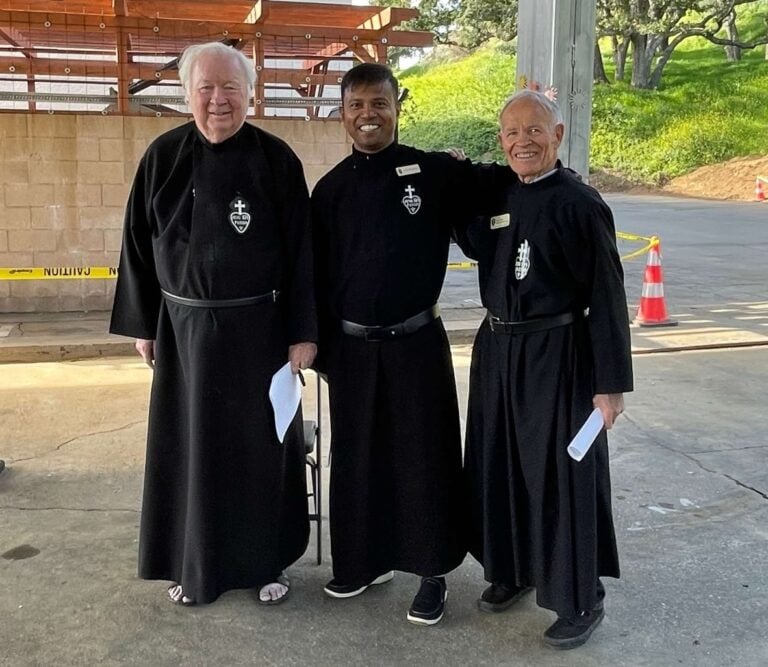
In this reflection, Fr. David Colhour, CP, explores the deeper purpose of almsgiving through the words of Jesus and the tradition of the early Church. Rather than seeking recognition or praise, true almsgiving flows quietly from a generous heart that participates in God’s own generosity.
Filmed at the historic Immaculata Church in Cincinnati, Ohio, this reflection also considers how communities of faith have long come together through generosity to build something greater than themselves.
As you journey through Lent, consider how the gifts you have received can be shared to meet the needs of others and build up the Body of Christ.
Welcome to our new Lenten theme
Welcome back to our Passionist series From Noon to 3 p.m. I’m Father David. It is my joy and privilege to walk with you this week as we begin reflecting on a new theme. Throughout this week we will explore not only prayer and fasting, but also almsgiving and what it truly means.
Before we begin reflecting on that theme, I want to show you this place. A couple of weeks ago, I was at St. Michael’s in Pittsburgh, our first foundation established in 1852. After our communities were founded in New York and New Jersey, the Passionists began moving westward. From Cincinnati we traveled down the river to Louisville and St. Louis.
Today I am at our site on Mount Adams in Cincinnati. Our parish here is named Immaculata. We arrived here in 1871, just nineteen years after coming to the United States.
When you look at the richness of this history and tradition, you cannot help but wonder how many believers in Christ have come here to pray and worship. This place also holds a unique Good Friday tradition. Steps climb the steep hill beside the church, and every year people ascend those steps on their knees in prayer.
Almsgiving in the Early Church
Let us take a moment to reflect on our theme for the week: almsgiving.
From the earliest days of the Church, almsgiving was never optional. It was a core value. For many people it meant that what we could withhold from ourselves could be shared with others. In this way it became a living proof of how deeply the Gospel had taken root in people’s lives.
Jesus says in the Gospel:
“When you give alms, do not let your left hand know what your right hand is doing. Give your alms in secret, and your Father who sees in secret will repay you.”
For first-century Jewish people, almsgiving, prayer, and fasting were all common practices. These were ordinary parts of religious life. Jesus does not say if you give alms. He says when you give alms. The practice was assumed.
Giving for Recognition or Giving for God
What Jesus focuses on is the intention behind the action.
Are you doing it for yourself, or are you able to give without seeking a reward?
This question speaks strongly to our culture. If I give so others can see me, if I give to build my own reputation, or if I give to receive praise and recognition, then as Jesus says, I have already received my reward.
I received the applause. I received the praise. But it never had the power to transform me.
True almsgiving happens when we give simply from the goodness of our hearts.
Do Not Blow the Trumpet
In Scripture Jesus uses a vivid phrase: do not blow the trumpet.
In other words, generosity is not meant to be a performance. It is not meant to draw attention to ourselves.
We all know people who like to blow the trumpet about what they have done, who they know, and what they have accomplished. Their language often centers on themselves: I did this, I know that, I achieved this.
Jesus reminds us that almsgiving is not about the self. Those who blow the trumpet have already received their reward.
Instead, generosity should be so natural that even our right hand and left hand are not competing for attention. The focus is not on the act of generosity itself but on sharing in the generosity of God.
Participating in God’s Generosity
Imagine if angels blew trumpets every time God was generous.
The world would be deafening, because God’s generosity happens everywhere, every day.
Our own almsgiving is meant to reflect that same quiet abundance. We share the richness and generosity that come from God.
This is why almsgiving becomes so important during Lent. It connects us with others. It moves our attention outward.
Almsgiving is not about asking what God will do for me. It is about recognizing that I am part of a much larger community. Others have needs, and the gifts I have received are meant to be shared.
Almsgiving Is More Than Money
Almsgiving is not limited to financial giving.
It involves asking deeper questions: How do I notice the needs of others? How can I use what I have to help, encourage, and build up the Body of Christ?
Lent leads us toward Easter not simply through personal improvement but through shared mercy. That mercy flows from the generosity of God and spreads through the generosity of God’s people.
A Witness of Generosity
As I look around this remarkable church, now more than 150 years old, I cannot help but wonder how people built something like this in 1871.
The answer can only be through hard work and tremendous generosity. People offered their time, their talents, and their treasures. They united themselves around a common purpose and built something lasting.
That generosity is truly impressive.
A Question for the Week
Perhaps the question to reflect on this week is simple:
How do you share the immense generosity that God has given to you?
That question lies at the heart of almsgiving.
These are just a few thoughts to ponder as we continue reflecting throughout the week on this gift of almsgiving and the traditions from which we come.
I wish you a very blessed week. For those who would like to continue the conversation, check the schedule for Saturday when I will be available via Zoom.
Have a blessed week. God bless you.