Coming Together
Happy Easter! This Sunday concludes the Octave of Easter, but continues the season of Easter until Pentecost. This Sunday is also known as Divine Mercy Sunday. As always, our readings for this Sunday have much to say about the times in which we are living.
In our first reading from the Acts of the Apostles (2:42-47), we have perhaps an idealized depiction of the early Christian community:
“The devoted themselves to the teaching of the apostles and to the communal life, to the breaking of bread and to the prayers…All who believed were together and had all things in common; they would sell their possessions and divide them all according to each one’s need…They ate their meals with sincerity of heart, praising God and enjoying favor with all the people. And every day the Lord added to their number those who were being saved.”
Believing in Jesus seems to have brought people together, not drive them apart. They praised God and cared for each other. Now some might say, “Well, Father, that was only for the ones who believed in Jesus.” Well, then how did people come to join them? Were they impressed by Christians offering condemnation, or by them sharing the love of God in Jesus Christ by word and deed?
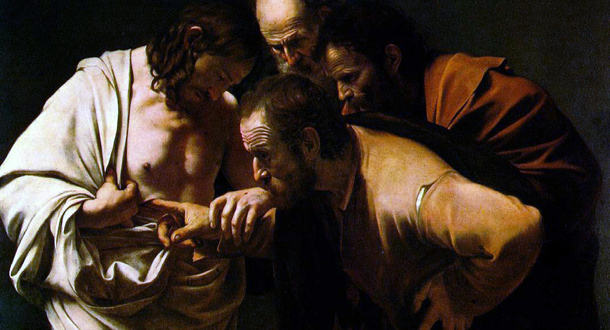
The importance of community is seen in our gospel reading (John 20:19-31). This Gospel passage relates the encounter between the Risen Jesus and the apostles, and then between Jesus and the apostle Thomas. I do not see this account as a judgment on Thomas’ doubt. I see it as another example of Jesus’ healing. Jesus heals Thomas’ grief and disillusionment and despair. But notice where Jesus does this. Jesus could have appeared to Thomas anywhere. He could have appeared to him at his home, or in the street, or in the Temple area. Instead, Jesus appears to Thomas in the midst of the other disciples; in the midst of the community. In fact, Thomas is there because the other disciples somehow convinced him to join them in the upper room.
So, if the love of God in Jesus Christ is to lead us to love one another, how is it that we are so tempted to rush to condemnation and even violence in the name of God? For many who do not believe in Jesus, it may seem foolish to believe in the Resurrection. But for some time now, I see an even more prevalent doubt. That is the doubt of another’s humanity, especially those considered to be too different.
Just as Thomas touched Jesus’ wounds and had his faith restored, we need to try to understand the wounds of others and see their humanity. Maybe we would refrain from pointing at undocumented immigrants or Muslims or trans people or liberals or conservatives or any group people tend to hate, and declare them unworthy of God’s love.
Are not all of us unworthy? And how can we have a devotion to God’s mercy and then withhold it from others?
In our second reading (1 Peter 1:3-9), St. Peter writes, “Blessed be the God and Father of our Lord Jesus Christ, who in his great mercy gave us a new birth to a living hope through the resurrection of Jesus Christ from the dead…” May we not give the lie to that hope by seeking the destruction of others. Instead, may we offer the hope we have in Jesus to others by loving and serving them.
I welcome any comments or questions. Thanks for your time.
In the Risen Christ,
Phil, CP