Reflection
How often have you been asked, or have you asked others, “What do you do?” Work shapes a large part of our lives. We depend on it for income and security, and we hope it brings challenge and fulfillment. There is an inherent trap, though, that work becomes our identity. It shifts from a path we walk, to the measure by which we judge ourselves. Success brings a sense of worth. Struggle or setbacks prompt us to question not only our direction, but our dignity.
Today’s feast of St. Joseph the Worker challenges this way of seeing. In Genesis, the human person is created in the image of God before any task is assigned. Identity comes first. Dignity is not earned through effort or achievement. It is received as a gift from God. Work follows as a participation in God’s ongoing creation, not as the source of our value.
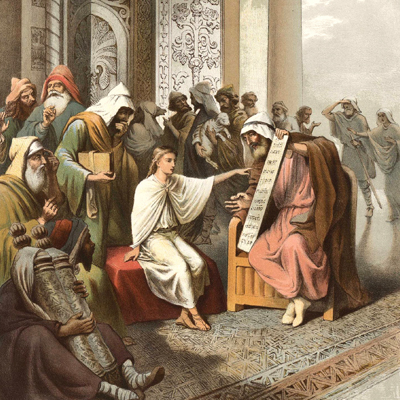
In the Gospel, the people of Nazareth ask a telling question when Jesus teaches in the synagogue: “Is he not the carpenter’s son?” They think they understand him because they know his family and his trade. Falling into the trap of reducing his identity to his work, they miss who he truly is.
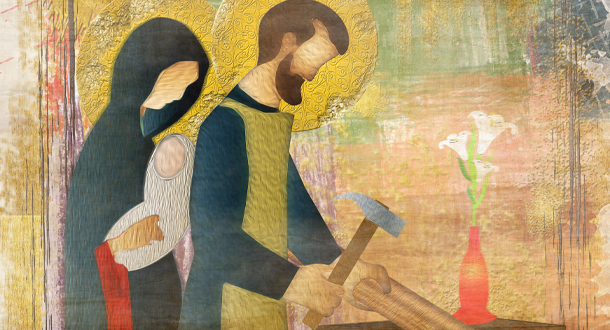
Joseph’s labor was ordinary, steady, and often unseen. He provided for his family and helped shape the humanity of Jesus. Consider the many hours Joseph and Jesus spent together, first in the workshop as teacher and apprentice and later as co-workers in their trade. Beyond teaching a valuable skill, Joseph surely shared his wisdom about love, fidelity, family, and relationships with others and with God. Joseph’s dignity flowed not from status or recognition, but from faithfully becoming who God intended him to be.
St. Joseph, faithful worker and quiet guide, teach us to find dignity not in what we achieve, but in who we are before God. Help us approach our daily labor as a continuation of the Creator’s work. When we are tempted to measure our worth by success or failure, remind us that our identity rests securely in God’s unchanging love.