Some of God’s invitations become clear almost immediately. Others unfold slowly, over years of prayer, uncertainty and waiting.
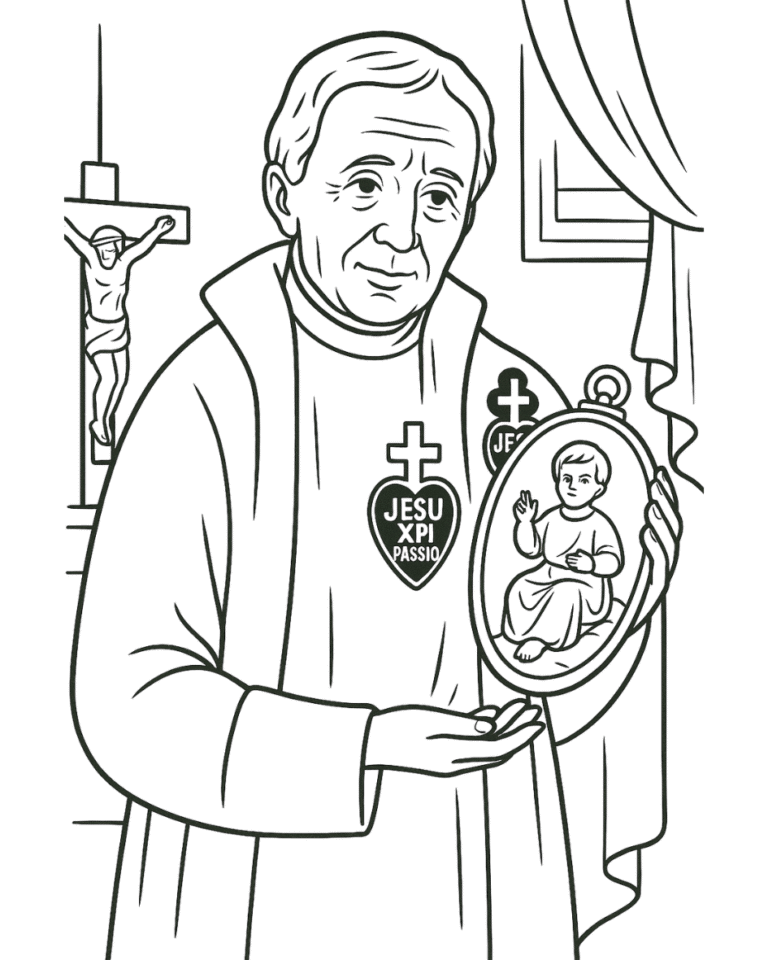
The life of Blessed Dominic Barberi, CP, whose memorial the Passionists celebrate on August 26, reminds us that a calling does not have to happen according to our timetable to be real.
Dominic’s beginnings hardly suggested the life that awaited him. With little formal education, he worked as a farmhand before entering the Passionists. Yet he carried within him a persistent sense that God was calling him to missionary life and, particularly, to England.
What strikes me about Dominic is not simply that he heard a call. It is that he remained faithful to it when its fulfillment seemed very far away.
When God’s Timing Is Not Our Timing
Dominic entered eagerly into his studies and was ordained in Rome in 1821. He became a teacher, writer, preacher of missions and retreats and eventually Provincial Superior of the Passionists’ Naples Province. Through all of this, however, his hope of serving in England remained with him.
Then came what must have been a disappointment: when Passionist missionaries were selected to go first to Belgium and eventually England, Dominic was not among them.
He could have concluded that he had misunderstood God’s call. Instead, he continued serving where he had been placed.
Only later, when the superior of the mission asked to be relieved of his assignment, was Dominic asked to leave his leadership position and lead the Passionist mission beyond Italy. He went first to Belgium and finally, after years of longing and preparation, to England.
There is something deeply reassuring in that part of Dominic’s story.
Waiting is not necessarily wasted time.
We may have hopes for our lives, our families, our ministries or our communities that seem slow to take shape. We may pray for direction and receive no immediate answer. Dominic reminds us that God can be at work even when we cannot yet see where the road is leading.
A Mission Built on Relationship
When Dominic finally arrived in England, he did more than preach. He sought relationships and conversation, including engagement with Anglican clergy at a time when divisions between Anglicans and Roman Catholics ran deep.
His approach mattered. The Passionist Congregation describes Dominic as a missionary whose witness was marked by authentic holiness and whose mission involved patient struggle, discernment and perseverance.
Perhaps the best-known moment of his ministry came in October 1845. John Henry Newman, one of the most influential religious thinkers in England, had spent years wrestling with questions of faith and Church. When Newman finally decided to enter the Catholic Church, it was Dominic whom he asked to receive him.
Dominic traveled through heavy rain to Littlemore, outside Oxford. On October 9, Newman made his profession of faith and was received into the Catholic Church by the Passionist missionary.
Today we know Newman as St. John Henry Newman. Yet Dominic could not have known all that would follow from that encounter. He simply responded to the person God placed before him.
That may be one of the most important lessons Dominic offers us. We do not always know the significance of the small acts of faithfulness we are asked to make. A conversation, an invitation, an act of welcome or the willingness to accompany someone at the right moment may bear fruit far beyond anything we will ever see.
An Apostle of Unity
Dominic’s mission also speaks powerfully to the Church today because he sought unity in a deeply divided religious landscape. His ministry was not simply about winning arguments. He built relationships and accompanied people who were searching.
When Pope Paul VI beatified Dominic on October 27, 1963, during the Second Vatican Council, the pope used the occasion to express his hope for growing relationships among Christians in Britain. The original reflection also remembers Dominic as an example of ecumenical commitment and an “Apostle of unity.”
That witness feels especially important in our own divided world. Dominic asks us to consider whether our faith draws us more deeply into relationship with others.
Can we listen before responding?
Can we remain open to people whose experiences or beliefs differ from our own?
Can we trust that genuine encounter can accomplish something that argument alone cannot?
Faithfulness for the Long Road
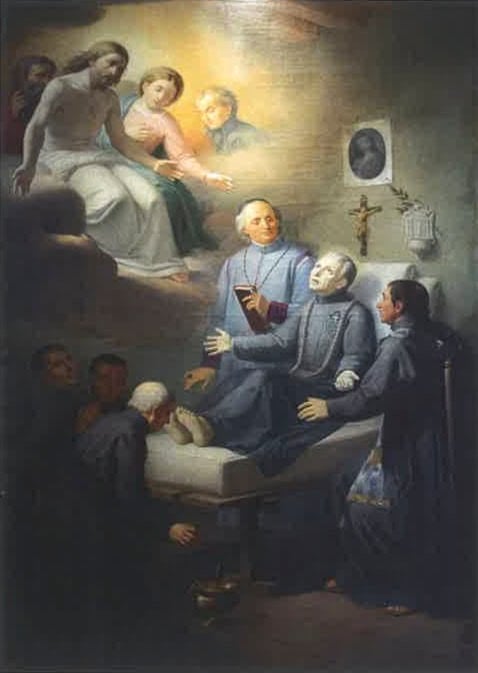
Dominic died suddenly in Reading, England, on August 27, 1849. His years of ministry in England were relatively few. Yet the mission he had carried in his heart for so long had taken root.
His story invites us to reflect on our own calling.
Where might God be asking me to persevere, even when I cannot see the outcome?
What hope or calling have I carried for a long time?
Who might God be placing before me today simply to listen to, welcome or accompany?
Blessed Dominic Barberi reminds us that following God’s call does not always mean knowing where the road will lead. Sometimes faithfulness means studying and preparing. Sometimes it means waiting. Sometimes it means setting out into unfamiliar territory. And sometimes it means arriving, tired and rain-soaked, at precisely the place where God needs us.
Blessed Dominic Barberi, pray for us.