

Nine months underwater.
You began underwater.
Before you had a name, before anyone knew what you would look like, whose eyes you would inherit, or what your life might become, you were a small swimming thing in a warm, dark sea. And that sea was inside another person.
Your first home had no floor. You did not need one. You had not yet learned the fear of falling.
Water held you.
Before anyone carried you in their arms, you were carried by water. Before you knew your mother as a face, you knew her as heartbeat, warmth, darkness, and movement. Before breath, there was water. Before you knew where you ended and someone else began, there was water.
Then came the day when the water broke, or when careful hands opened another way. You were brought into cold air and sharp light. You screamed.
Birth was our first eviction, from the only ocean to which we ever completely belonged. We took one loud breath and joined the rest of humanity in pretending to be independent.
But the water never really left.
It became our blood, tears, sweat, and saliva. It carries food through the body and cools us when we are hot. Even our bones, which seem so solid and dependable, contain water.
Perhaps this is why something in us becomes quiet beside a river. Perhaps the body recognizes an old relative.
The water you used to wash your hands this morning belongs to a cycle older than the first human word for God. Some of it may have moved through clouds, roots, rivers, animals, and human bodies before reaching your tap. That is probably more history than most of us want to picture while brushing our teeth.
We usually speak of water as though it were outside us. We turn on a faucet. We fill a glass. We buy a bottle. We call water a resource.
Calling water a resource is not exactly wrong. But it is a little like calling your mother a useful service provider. It misses something rather important.
Kabir, the fifteenth-century Indian mystic, understood this intimacy:
Water is in the pot,
and the pot is in water.
Water is within and without.
The clay pot makes the water inside appear separate from the water outside. When the pot breaks, the separation disappears. Water returns to water.
Kabir was speaking about the soul and God.
We live inside God while God lives inside us. Yet we spend much of our lives searching for God as though God had wandered off somewhere without leaving a forwarding address.
Kabir also laughed at the picture of a thirsty fish swimming in water. It is funny until we realize that the fish is us. We live inside grace and still search for proof. We carry water within us, but often treat the waters around us as though they have nothing to do with us.
The Bhagavad Gita gives us one small and beautiful line. Krishna says: “I am the taste in the waters.”
The sacred meets us in the coolness that touches a dry tongue.
Water does not have to become extraordinary before it can speak of God. Its clear, ordinary taste is already enough.
The next time you drink a glass of water, pause for a moment before swallowing. Feel its coolness. Think of the rain, river, lake, well, pipe, and human hands through which it came.
What we casually swallow has travelled farther than most of us ever will.
The ancient Chinese teacher Laozi says: “The highest excellence is like water.”
Water does not arrive with a title or demand the best seat. It moves towards the lowest places. It enters cracks. It bends around rocks. It nourishes roots buried in darkness. It gives life to creatures that will never thank it.
And yet, given enough time, water can wear down stone.
There is another kind of strength here. We often imagine power as standing firm, pushing back, rising above, and taking control. Water teaches a quieter strength. Sometimes strength means becoming soft enough to move. Sometimes it means flowing around what cannot yet be moved. Sometimes it means returning, drop after drop, year after year.
Mamang Dai, a poet from the Adi community of Arunachal Pradesh in northeastern India, writes in her poem “Small Towns and the River,” “The river has a soul.”
In the same poem, she imagines the river knowing that water outlives every shape it takes.
A river carries more than water. It carries soil, seed, fish, ashes, prayers, stories, and the memory of those who lived beside it. It carries children’s laughter and the grief of families who have buried their dead.
A river may pass through a town, but the town also passes through the river.
Jesus understood this too. He was a Jewish teacher from West Asia, formed in a dry land where a well could mean the difference between life and death.
One afternoon, he sat beside Jacob’s well. A Samaritan woman came to draw water. His first words to her were simple:
“Give me a drink.”
Before Jesus spoke about living water, he admitted his own thirst. He allowed himself to need something from her.
I find that deeply moving.
God comes to us thirsty.
The woman arrives carrying a water jar and leaves carrying a story. The Gospel tells us that she leaves her jar behind and runs back to her town. Something has begun flowing inside her.
Later, Jesus speaks of rivers of living water flowing from within those who receive the Spirit. Living water is not a private religious possession. It moves outward. It brings life wherever it goes.
Ezekiel sees something similar. Water flows from the Temple. At first, it is shallow, then knee-deep, then waist-deep, and finally deep enough to swim in. Wherever the river goes, damaged waters are healed. Fish return. Trees grow. Their fruit becomes food and their leaves become medicine.
The river refuses to remain inside the sanctuary looking holy. It flows into wounded places.
Perhaps that is where any honest reflection on sacred water must eventually take us.
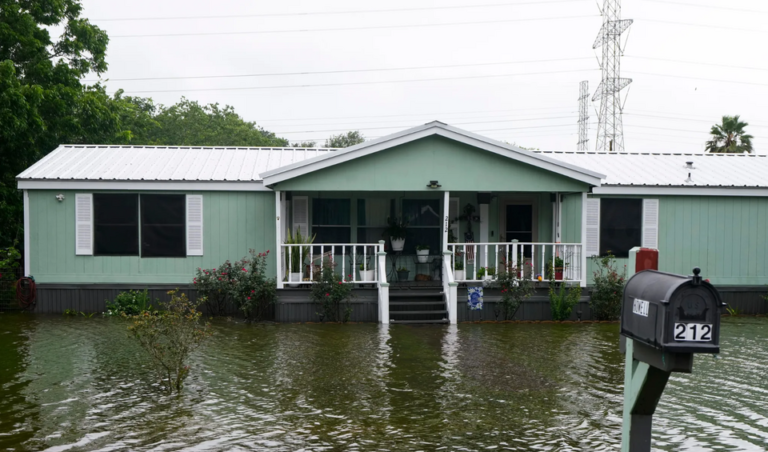
We are capable of calling a river holy while using it as a drain. We bless water in church and pour poison into it outside. We can stand beside a river, fold our hands in prayer, and then leave our plastic bottle on its bank.
Human beings are complicated creatures.
So perhaps the question is not simply, “Do we believe water is sacred?”
The question is, “Would water know that we believe it?”
If water carried us before anyone else could carry us, how might we carry water now?
We could begin by learning the name of the watershed where we live. We could find out where our drinking water comes from and where our wastewater goes. We might visit the nearest river, lake, or creek and sit quietly beside it.
We can learn who is harming the water and who is trying to protect it. We can use less plastic, take greater care over what we pour into soil and drains, and support communities working for clean water. We can listen to Indigenous communities, farmers, fisherfolk, and others whose lives are closely tied to rivers and seas.
We do not have to save every river by Tuesday. But we can stop living as strangers to the water that keeps us alive.
Each time we drink, bathe, cry, walk in rain, or bless ourselves with water, perhaps we can remember:
Before anyone carried us, water carried us.
Water was our first home, our first cradle, our oldest intimacy.
The water we bless is the water we must defend.


father Johnson, i have recently found your words abd these are amazing and helping me on ny faith and spiritual journey so thank you.