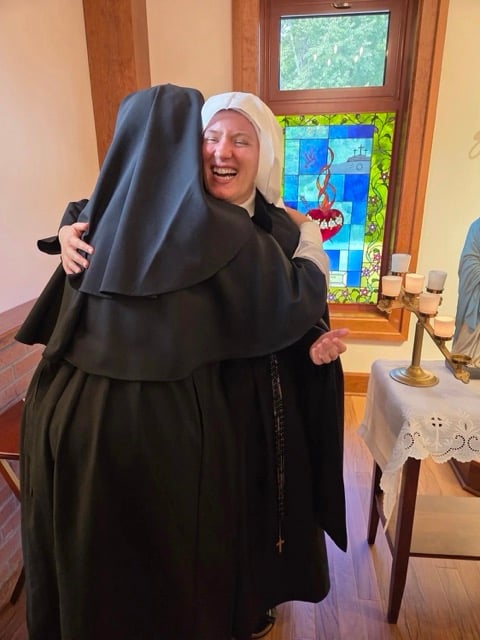
Father Aurélio Aparecido Miranda, CP, is from the Province of the Exaltation of the Holy Cross in Brazil and serves as a General Consultor of the Passionist Congregation in Rome. He sees many similarities between the culture of his home state, Minas Gerais, Brazil, and the Passionist charism.
The approach to suffering is one example.
“Human suffering is often understood through a redemptive lens,” explains Father Aurélio. “It is common to hear: ‘I am going through a problem, but I know that when I overcome it, I will be stronger.’ Suffering is not seen as merely destructive but a reality that can educate, purify and help a person mature. When we, as priests, visit the sick, we often witness this understanding of suffering as a passage, a reality in which pain is not denied, but integrated into a horizon of hope and transformation.”
“In God, we are one family, a family born of the love of a God who gave himself on the cross for the salvation of all.”
Father Aurélio Aparecido Miranda, CP
The people understand the importance of community, so everything is shared within the family and community, including care of children and the elderly.
“There is a saying in Brazil, ‘love tastes like grandparents’ homes,’ an expression that beautifully conveys the value of memory, affection and intergenerational life,” shares Father Aurélio.
“It is fair to say that in Brazil, the sense of belonging, whether to one’s family by blood, to a religious community or by a voluntary association, is extremely significant. It seems to be an intrinsic need to belong to something or someone, and this clearly influences spirituality, the living of faith, family and religious life.”
The Passionists share this celebration of community.
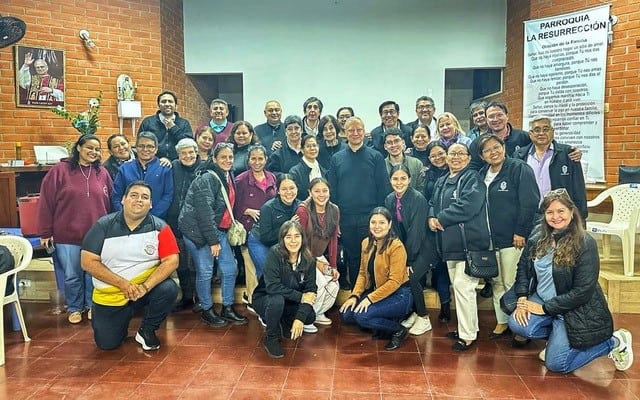
“The Passionist charism affirms and intensifies this cultural attribute. Passionists witness that we belong first and foremost to God, who covenants with us as brothers and sisters,” Father Aurélio says.
“In God, we are one family, a family born of the love of a God who gave himself on the cross for the salvation of all. To live the Passionist charism, therefore, is to recognize ourselves as redeemed by Christ in his Passion and Cross, and to consciously embrace our belonging to the same body: the community of those who are loved, reconciled and saved in Christ.”
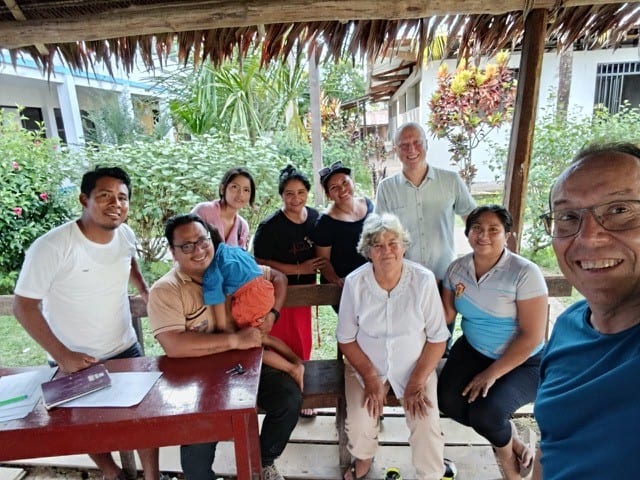
Love in Brazilian culture is not just spoken but lived. People from other cultures marvel at the breadth of the expressions of love in this culture.
“[L]iving the Passionist charism in daily life means transforming the contemplation of the Passion into simple yet meaningful actions, by which faith becomes visible in the concrete care of a wounded life.”
Father Aurélio Aparecido Miranda, CP
“We can say that in Brazil, love is expressed not only through words, but especially through care, affection and smiles. It is a love that becomes presence, closeness and attentiveness to the other,” Father Aurélio explains.
“In this context, the connection with the Passionist charism is especially profound. St. Paul of the Cross taught that on the forehead of the poor, and we may also say of those who suffer, the name of the Crucified Christ is written. He also reminds us that the Passion of Christ is both a sea of sorrow and a sea of love. To live the Passionist charism, therefore, means to love whoever is near. It is a love that does not remain merely an inner feeling but becomes gesture, presence and concrete self-giving alongside those who suffer.”
In Brazilian culture, like the Passionist charism, there is an understanding that remembering the Crucified Christ does not stop with contemplation.
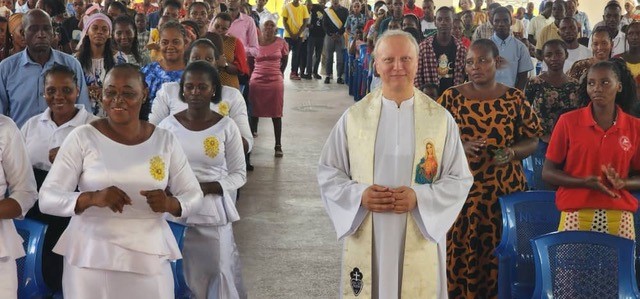
“In Brazilian culture, there is no strict separation between contemplating the Crucified Christ and caring for those who are crucified today. These two attitudes go hand in hand and are expressed especially in the simple gestures of daily life,” shares Father Aurélio. “It is very natural to help an elderly person cross the street, offer a sandwich to someone who is hungry, or listen attentively to someone carrying silent suffering.
For us, caring for those who suffer is, in a very concrete way, caring for the Crucified Christ himself. Religion is demonstrated less through isolated liturgical acts and more through human gestures of solidarity, closeness and compassion. In this sense, living the Passionist charism in daily life means transforming the contemplation of the Passion into simple yet meaningful actions, by which faith becomes visible in the concrete care of a wounded life.”
This transcript has been prepared for clarity, accessibility, searchability and readability, though minor variations from the original video may occur.
Suffering, Faith and Culture in Brazil
Brazil is a vast and multicultural country, shaped by many different peoples, climates and histories. Because of this, there is not just one way of understanding suffering, but many perspectives depending on region and cultural background.
In some areas, suffering is understood through a redemptive lens. People believe that going through hardship makes them stronger, helps them grow and deepens their understanding of themselves. Every experience of suffering carries meaning, whether it comes through illness, family struggles or work. It is seen as something that ultimately leads to growth.
In other regions, especially where life is more difficult due to climate or poverty, suffering is viewed more as something to carry, like a cross. People endure it with strength and resilience, even without fully knowing where it will lead.
Across Brazil, however, there is a shared spirit of resilience. Even in hardship, people continue forward with hope. As Passionists, this resonates deeply with the meaning of the cross. Jesus suffered, but his suffering was not the end. The cross does not have the final word, Christ does. This gives meaning to suffering and calls us to accompany those who suffer today.
Family and Belonging
Family is central to Brazilian life. It is not limited to blood relationships but often extends to friends and neighbors. There is a strong sense of belonging and mutual care.
Helping one another is natural. If someone needs help fixing something, others come, even if they do not know how, they try. If one person cannot help, they will find someone who can. This sense of community is deeply rooted and shapes how people live their faith.
Living alone is uncommon, especially at a young age. Family life remains closely connected across generations, and even small traditions, like sharing meals or remembering grandparents’ cooking, carry deep meaning.
The Passionist charism affirms this strongly. It reminds people that they belong not only to their families but also to God and to one another as brothers and sisters. It deepens the understanding that love sometimes involves sacrifice, just as Christ gave himself on the cross.
Community and Solidarity
Brazilian culture is deeply communal. Identity is shaped not only by the individual but by relationships and shared life. Even parishes are often described as “family.”
Solidarity is lived in simple, everyday ways. Offering help to a stranger, sharing food, assisting the elderly or supporting someone in need are common practices. These gestures reflect a deeper belief, that the suffering of another could easily be one’s own.
This awareness is shaped by the reality of inequality. In many places, wealth and poverty exist side by side. As a result, compassion and action become essential parts of daily life.
For Passionists, this is a natural expression of faith. To contemplate Christ crucified means also to recognize and serve those who are suffering today. Prayer and action are inseparable.
Authority and Authenticity
In Brazil, attitudes toward authority are changing. In the past, authority figures were respected automatically. Today, respect is earned through authenticity and integrity.
People expect leaders, including priests, to live what they preach. When they do, they are respected. When they do not, trust is lost. This shift can be challenging, especially in a culture shaped by social media and constant visibility.
The Passionist charism offers a response rooted in compassion and mercy. It reminds us that no one is perfect and that all people, including leaders, make mistakes. True authority is not about perfection but about sincerity, humility and service.
en la perfección, sino en la sinceridad, la humildad y el servicio.
Caring for the Elderly
Caring for elderly family members is deeply valued in Brazil. Whenever possible, families prefer to care for their elders at home rather than placing them in institutions.
Even when professional care is needed, there is often a sense of sadness because what elders most desire is the presence of family. Being cared for physically is important, but emotional and relational connection matters just as much.
The Passionist spirituality of presence speaks powerfully here. Simply being with someone, listening, holding their hand and offering companionship can be a profound expression of love. Like those who stood at the foot of the cross, presence itself becomes a ministry.
Expressing Love
Love in Brazilian culture is expressed openly and physically. Hugs, touch and gestures of care are natural and meaningful ways of showing affection.
Hospitality is another key expression of love. Welcoming others with food and warmth communicates belonging and acceptance. These actions reflect a lived faith, not just something internal but something embodied.
This aligns closely with the example of Jesus, who not only spoke of love but demonstrated it through touch, healing and presence. The Passionist charism encourages this same outward expression of love in daily life.
Faith in Daily Life
Brazil is a deeply religious country, though not limited to one tradition. Many different faiths coexist, and there is a general belief that God is with people, not against them.
Religious practices are especially strong during Holy Week, which is one of the most significant times of the year. Processions, prayers and communal celebrations draw people together, even those from different faith backgrounds.
The message of Christ crucified resonates widely because it speaks of love, sacrifice and redemption, themes that transcend denominational boundaries.
Hope Beyond Death
Most Brazilians believe in life after death, particularly in resurrection and eternal life. This belief provides comfort and hope, especially in times of suffering.
The Passionist focus on the cross and resurrection reinforces this hope. Death is not the end, and suffering is not meaningless. Christ’s resurrection is a promise of what is to come.
A Cultural Challenge: Avoiding Suffering
One growing challenge in modern culture is the desire to avoid suffering entirely and pursue only comfort and pleasure. Influenced by social media and idealized lifestyles, many young people struggle when faced with real hardship.
The Passionist charism offers a powerful alternative. It teaches that suffering is not something to be avoided at all costs but something that can lead to growth, transformation and deeper love.
Christ did not avoid suffering. He embraced it for the sake of others. This becomes a model for a meaningful and fulfilled life.
Faith in Action
In Brazil, faith is lived concretely. Contemplating Christ leads directly to action. Helping the poor, supporting those in need and sharing resources are natural expressions of belief.
Even small gestures, offering food, helping someone in need or simply being present, are seen as living out the Gospel.
As one saying expresses it, “If we do not have bread, let us be bread for others.” Presence, compassion and solidarity become the way faith is made real.
A Living Experience of the Cross
The Passionist charism in Brazil is not only a spiritual reflection but a lived experience. The cross is not distant or abstract. It is present in everyday life, in personal struggles and in the suffering of others.
To follow Christ means to live with him in both suffering and hope, not only in prayer but in action. It is a call to accompany, to serve and to love in real and tangible ways.