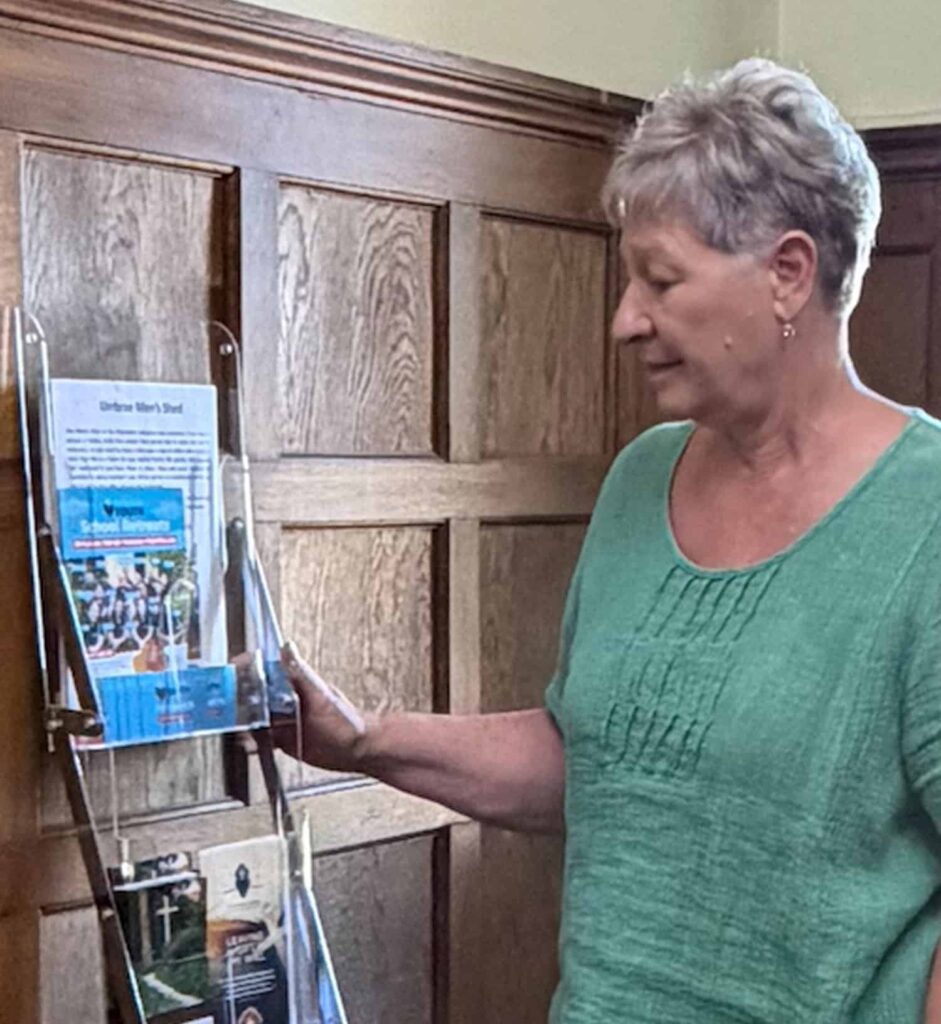
Donna Cooper is the Facilities Manager and Retreat House Coordinator at St. Paul’s Retreat and Conference Centre in Adelaide, South Australia. She has worked with the Passionists for 14 years and is thankful to share the grace and guidance she has received with others.
First, she reminds us that in Australian culture, the focus is not just on individualism or just on community.
“It is very hard to separate them,” Donna explains. “Individuals and community work together. Family and upbringing are central to people’s character. At the same time, we see that some individuals, through their own lived experience and with stunning originality, develop their own strengths and achievements over time.”
“I think our faith is our launching pad for our life ahead,” Donna shares. “Our Passionists guide us toward love and lead by their example. We are all growing toward Christ each day.”
At one time in Australian culture, it was thought that holiness was found only in religious life. Now people see holiness flowing from every sacrament they receive, beginning with baptism.
“Married life is the path to holiness for couples,” says Donna. “The family itself is the first church. The family, parents and children, is the most realistic image of God and God’s love that we can experience.”
“The Passionist charism supports families, especially the marginalized, and works with families to encourage them in their role.”
Donna Cooper
“The Cross will always be the centerpiece of Passionist ministry. I think God’s unconditional love supports parents who bring their children to know of God’s love for them.”
Love is at the heart of all relationships, and how love is expressed depends on cultural and familial norms.
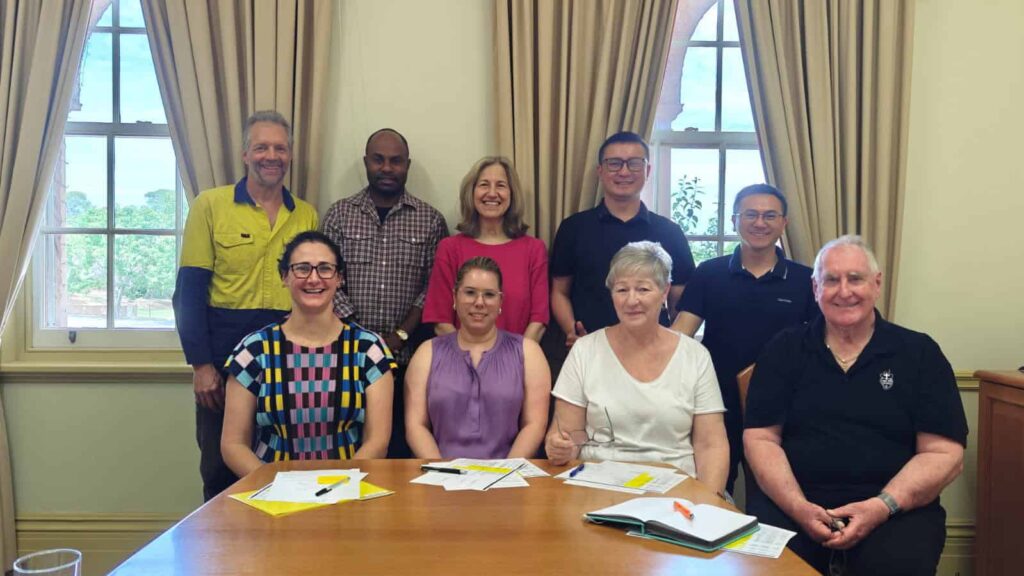
“Australia is a melting pot. We all do life a little bit differently,” Donna explains. “Each culture has its own ways of living love and expressing love. Sometimes, there are misunderstandings between different cultures, but, for the most part, people try to care for others and look after them. Passionists recognize the many faces of love, as seen in the gospels, scriptures and in daily life. The Passionist charism of acceptance gives us a deep understanding of what an individual has to offer the community.”
Love in families naturally includes the cherished elderly.
“Culturally, we respect our elders and care for the aged. We honor who they were and are now,” shares Donna. “When dementia or other illness steps in, it is always devastating for people who ‘lose’ their loved ones. While many may seek out nursing homes for their elders, the majority are doing so that their elders may be cared for in ways that the family cannot.
“Again, it is that unconditional love that Jesus offers us in order to help us to see our options more clearly. It is a very challenging time in life. Many of our priests are elderly as well. The Passionist charism helps with the pain and sacrifice of the decisions we must make. We need to look to the source of light for these esteemed people.”
The melding of cultures, Donna notes, is also an active part of the Australian Province, which includes New Zealand, Papua New Guinea and Vietnam. The cultural differences between the Australian and Vietnamese members could be a challenge, but the Passionist charism has guided the process.
Religion is not always a focus in the culture. The number of baptisms is still high, but fewer people are going to church.
Catholic school is still a choice for many families, but the reasons have changed for some families. Donna does see signs of hope that faith is making a comeback.
“They may choose Catholic schooling for its values and discipline, but not for church belonging and attendance,” says Donna. “Most young people though, when asked, do believe in mystery, and that there is more to life. Many pray in their own verbal and non-verbal ways.”
“We hold the example of Christ saying the greatest commandment is to love one another.”
Donna Cooper
The Passionist charism helps navigate these cultural challenges and guide the approach of evangelizing to young adults.
“Passionists, like Jesus, just accept people as they are and do not try to change them, or get them to go to church,” shares Donna.
This transcript has been prepared for clarity, accessibility, searchability and readability, though minor variations from the original video may occur.
Suffering, Community and Faith in a Passionist Context
Suffering is an inevitable part of life. As Christians, and especially as Passionists, we recognize that it is part of our human journey. The question is not whether we suffer, but how we respond to that suffering. We are called to take our hardships and transform them into a deeper understanding of others, especially those who are marginalized or experiencing similar pain. In the suffering of Christ on the cross, we find both meaning and direction, a way to live with compassion and to carry that understanding into our everyday lives.
This perspective invites us not only to endure suffering but to grow through it, allowing it to shape us into more compassionate and caring people who can support others in their struggles.
Culture, Suffering and Faith in Australia
In the Australian context, there is an awareness that pain and suffering are part of life, yet culturally there is still a strong desire to remove or avoid suffering whenever possible. While this is understandable, faith offers a deeper perspective. Through the example of Christ’s suffering on the cross, we are reminded that suffering can lead to growth, healing and greater empathy.
Even if we would choose to remove suffering, we can instead draw strength from it, using our experiences to support others and help alleviate their pain. In this way, suffering becomes not just something to endure but something that can lead to meaningful action and solidarity.
Family, Faith and Everyday Holiness
There has been a shift in how faith is lived within families. In the past, religious life was often seen as the highest calling, while marriage was viewed more narrowly. Today, there is a growing understanding that holiness begins at home. Baptism is the foundation, and family life becomes a path to holiness.
Parents and grandparents play a vital role in shaping faith, teaching children through love, example and daily life. The Passionist charism supports this by encouraging families to walk together in faith, guiding and accompanying one another, especially in times of struggle.
Community and Identity
Identity is shaped by both the individual and the community, but the two cannot be separated. Family becomes the place where values are formed and nurtured, and community plays a crucial role in raising and shaping individuals.
This aligns strongly with the Passionist emphasis on solidarity, recognizing that we grow together and support one another, especially through life’s challenges. Faith is not meant to be lived in isolation but within relationships that strengthen and guide us.
Authority, Authenticity and Trust
In Australian culture, authority is no longer automatically accepted. Roles such as priests, teachers and leaders must earn respect through authenticity and integrity. People are increasingly able to recognize whether someone is genuine or simply speaking words without living them.
This shift aligns with the Gospel itself. Like Christ, true authority comes from authenticity, honesty and lived experience. The Passionist charism reinforces this by emphasizing real relationships, truthfulness and a faith that is lived, not just spoken.
Faith in Everyday Life
Religious practice is changing. While many people are still baptized, fewer are actively engaged in church life, especially younger generations. However, this does not necessarily mean faith has disappeared. It may be expressed differently, through personal prayer, reflection or lived values rather than regular attendance.
There is hope in this, particularly when young people encounter meaningful experiences, such as retreats. These moments can ignite a deeper connection to faith that may continue to grow over time.
Aging, Care and Compassion
There is a deep cultural respect for the elderly, but caring for them can become challenging, especially when illness or disability arises. Families often struggle with the decision to seek professional care, even when it may be the best option.
The Passionist perspective offers guidance here through the values of love, sacrifice and trust. Caring for others sometimes means recognizing our limits and ensuring they receive the care they truly need, even when it is difficult.
Love, Expression and Growth Across Generations
Expressions of love have evolved over time. Earlier generations were often more reserved, while younger generations are more open in expressing affection and emotion. This shift reflects a growing awareness of the importance of both giving and receiving love.
The Passionist charism supports this development by encouraging openness, connection and genuine care for others. Love is not only something we feel but something we actively express and live out in relationships.
Life After Death and Hope
Faith offers a clear hope in life after death. Many believe in being reunited with Christ and with loved ones who have gone before us. This belief provides comfort and meaning, especially in times of loss.
Without this hope, it can be difficult to find purpose and direction. Faith allows us to trust that life continues beyond death and that we are held within God’s love.
Living the Passionist Charism in a Diverse World
One of the key challenges and gifts of the Passionist charism is its call to welcome others, especially those who are different. This includes embracing cultural diversity and learning from one another.
In multicultural settings, such as communities that include both Australian and Vietnamese traditions, differences in faith expression, authority and practice can be significant. Yet, the Passionist charism provides a shared foundation of love, respect and unity.
Rather than erasing differences, it helps people come together, learn from one another and grow in mutual understanding. This creates a balance where diversity becomes a source of strength and renewal.
A Living, Growing Faith
What is most striking is how the Passionist charism adapts and takes root in different cultures. In Australia, it is experienced as freeing and life-giving, encouraging openness and community. In other cultures, it may be expressed with greater structure and discipline.
Together, these differences enrich the community, allowing for growth, learning and a deeper understanding of faith. By listening, welcoming and sharing, people find a common path forward, rooted in hope, love and unity.